


The 5S method is a workplace organization system built on five steps: Sort, Set in Order, Shine, Standardize, and Sustain. Each step takes its name from a Japanese word — Seiri, Seiton, Seiso, Seiketsu, and Shitsuke — and together the five steps form a routine for keeping a work area clean, ordered, and easy to work in. The idea is simple: everything in the area has a purpose and a place, problems stand out fast because the normal state is so clear, and the standard holds day after day instead of sliding back into clutter. The 5S method began on Japanese factory floors and is now used in warehouses, workshops, hospitals, and offices around the world. This guide explains each of the five 5S steps in depth, the benefits of 5S, how to implement it step by step, and the mistakes that cause it to fail.
Where the 5S Method Comes From
Originally, 5S grew out of Japanese manufacturing practice in the decades after the Second World War, when factory managers needed order and discipline on the shop floor with limited resources. It became closely tied to the Toyota Production System, the production philosophy that later shaped lean manufacturing worldwide. The consultant Hiroyuki Hirano is widely credited with structuring 5S into the five named steps and spreading it through his books and training work.
The five steps usually run in order: sort, set in order, shine, standardize, sustain. That order matters. The first three steps change the physical area. The last two turn the change into a habit that survives busy weeks, staff changes, and production pressure. Treating 5S as a one-time cleanup misses the point — it is a working routine, not an event.
The 5S Method Steps in Detail
1. Sort (Seiri)
Sort means removing everything from the work area the current job does not need. The team goes through tools, materials, equipment, stock, and paperwork, and asks one question of each item: is this needed here, in this quantity, for the work we do now? Items that fail the test are removed — thrown away, recycled, returned to stores, or moved somewhere they belong.
In a warehouse packing area, Sort clears out packaging for discontinued products, damaged cartons stacked “just in case,” and personal items that drift onto benches. On a factory floor, it means taking broken gauges, worn tooling, and offcuts out of the workstation instead of letting operators work around them. The result is more usable space and a clear view of what the job actually needs.
2. Set in Order (Seiton)
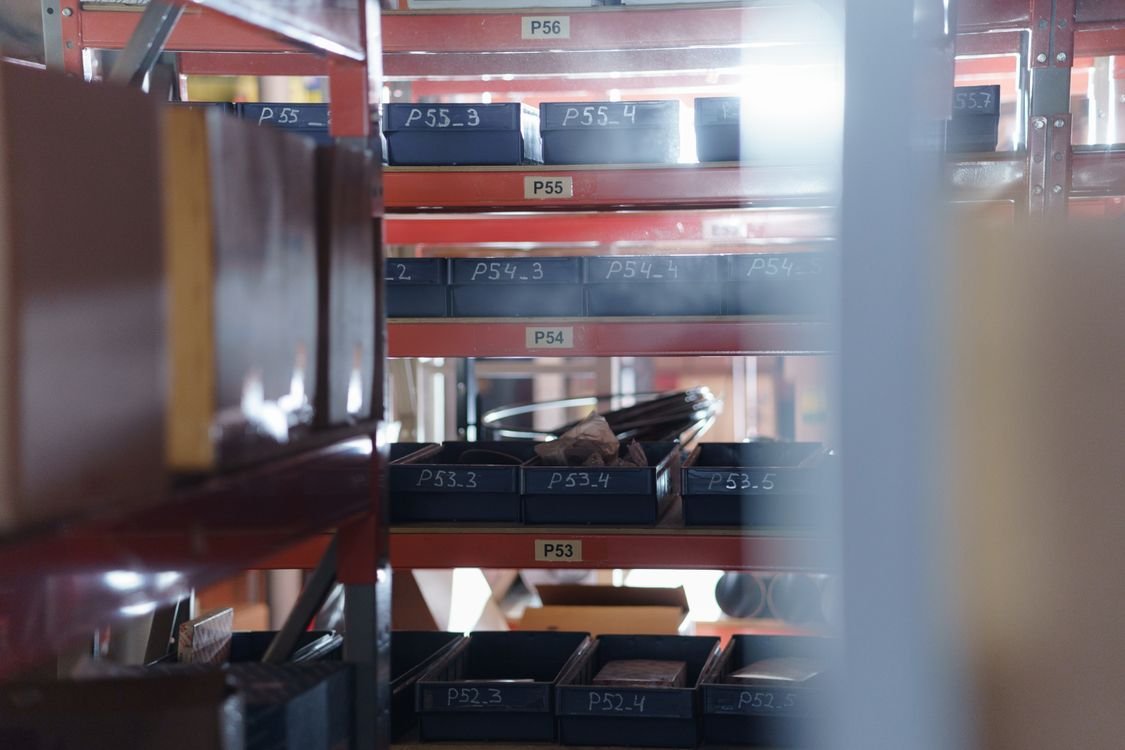
Set in Order gives every remaining item a fixed, visible home. Tools go on shadow boards where the outline shows what is missing. Shelves and bins get labels. Floor tape marks walkways, staging lanes, and the footprint of pallets and equipment. Items used most often sit closest to the point of use, in the order the job needs them.
In practice, the test of Seiton is that anyone — including a new starter or a colleague from another shift — can find an item, use it, and put it back without asking. In a warehouse, this is where pick faces get labelled locations and fast-moving lines move to the shelves nearest the packing benches. On an assembly line, hand tools are arranged in task sequence so the operator never searches a drawer mid-job.

3. Shine (Seiso)
Shine means cleaning the work area and the equipment in it — and cleaning with your eyes open. Wiping down a machine is also an inspection: oil leaks, loose fittings, cracked guards, frayed cables, and worn parts are far easier to spot on a clean surface than under a layer of dust and swarf. Cleaning is how small faults get found while they are still cheap to fix.
In practice, Shine is a short daily routine during the shift, not a monthly deep clean. Operators clean their own stations in the last few minutes of the shift. Warehouse teams sweep their aisles, clear shrink-wrap and banding from the floor, and check the forklift while wiping it down. The area is left in the state the next shift expects to find it.
4. Standardize (Seiketsu)
Standardize turns the first three steps into written, visible rules so the good state does not depend on who is working. Typical tools are a one-page checklist for opening and closing the area, a photograph of the workstation in its correct state fixed where everyone can see it, a cleaning schedule that names who does what and when, and colour coding that is the same across the site.
For example, visual management carries much of this step. Labels, floor markings, and simple signals tell people what “correct” looks like without a supervisor present. Many sites pair their standards with visual flow tools such as the kanban method, where a card or an empty bin signals that stock needs replenishing — the abnormal state is obvious at a glance. Standards are written by the people who do the work, then tested and adjusted until they are realistic.
5. Sustain (Shitsuke)
Sustain is the discipline of keeping the first four steps going. It is the hardest step, because nothing physical changes — what changes is behaviour. Sustain relies on short regular audits, team leaders who check the standard during normal walk-rounds, training for every new starter, and visible scores so teams can see how their area is doing.
For example, many plants post audit results on a visual management board; some track them alongside safety, quality, cost, delivery, and people measures on an SQCDP board reviewed at the start of each shift. The tone matters: audits are there to find where the system needs help — missing labels, a home that no longer fits the job — not to catch people out. When the standard slips, the question is what made the standard hard to follow.
In addition, if you prefer to watch the 5S steps explained, this short video walks through the 5S method with practical tips for each step:
The Benefits of the 5S Method
Done properly, the 5S method pays back in the workplace in everyday ways rather than dramatic one-off gains:
- Less time wasted searching. When every tool and material has a labelled home, people stop hunting through drawers, shelves, and neighbouring workstations.
- A safer work area. Clear walkways, no trailing stock on the floor, and hazards that stand out against a clean background make accidents easier to prevent.
- Faults found earlier. Cleaning-as-inspection surfaces leaks, damage, and wear before they stop a machine or spoil a delivery.
- Better use of space. Sorting removes what the area does not need, which frees floor and shelf space for work that earns money.
- More consistent quality. Standard setups and standard checks mean the job is done the same way on every shift.
- Faster training. New starters learn a workstation faster when everything is labelled, photographed, and in a fixed place.
- A better first impression. Customers and auditors read a tidy, labelled area as a sign of a controlled operation — because it usually is one.
How to Implement the 5S Method Step by Step
Generally, most successful rollouts start small, in a single warehouse zone, production line, or workshop.
- Pick a pilot area and get backing. Choose one visible area with a willing team. Photograph the current state for a before-and-after record and training material.
- Train the team briefly. A short session on the 5S steps and why the area is changing. Keep it practical and tied to the team’s own frustrations: the tool that is never there, the shelf nobody can read.
- Run the red-tag exercise. Walk the area with the team and red-tag every item whose presence nobody can justify — unused tools, mystery stock, broken equipment, old paperwork. Each tag records the item, date, and reason questioned. Tagged items move to a marked red-tag holding area. If nobody claims or uses an item within an agreed period — 30 days is common — the team disposes of, sells, repairs, or relocates it. The holding step lets people let go without fear.e.
- Work through Sort, Set in Order, and Shine in the pilot. Clear the area, assign labelled homes, mark the floor, and clean everything. This usually takes a planned block of time, not odd minutes between jobs.
- Write the standards. Photograph the finished area, write the checklists and cleaning schedule, and agree the end-of-shift standard.
- Audit and display the score. Audit weekly at first, then monthly once the standard holds. Post the scores where the team works, and fix what the audit finds — a missing label or a badly placed bin is a system fix, not a people failure.
- Roll out area by area. Use the pilot team as trainers for the next area. One area done well beats a thin site-wide launch.
5S Method Audit Checklist
In short, a simple 5S audit checklist keeps audits short and consistent. Score each line from 1 (poor) to 5 (standard fully met), and note the action needed for anything below 4.
| 5S step | Audit question | Score (1–5) |
|---|---|---|
| Sort | Are there any tools, materials, or stock in the area that are not needed for current work? | |
| Sort | Is the red-tag holding area clear of items past their decision date? | |
| Set in Order | Does every item have a labelled home, and is it in that home? | |
| Set in Order | Are walkways, staging lanes, and floor markings clear and respected? | |
| Shine | Are floors, benches, and machines clean, with no leaks or damage visible? | |
| Shine | Did the last team complete the end-of-shift clean-down? | |
| Standardize | Are the area photograph, checklist, and cleaning schedule displayed and current? | |
| Standardize | Do labels and colour codes match the site standard? | |
| Sustain | Did the team complete the last audit on time and close its actions? | |
| Sustain | Has the area trained its new starters in the 5S standard? |

5S in a Warehouse vs. 5S in an Office
Overall, the steps are the same in both settings; what changes is what you apply them to. With 5S in a warehouse, Sort tackles obsolete stock, empty pallets in the wrong place, and packaging leftovers. Set in Order means labelled racking locations, clear pick faces, and marked staging lanes — habits that sit at the heart of day-to-day warehouse management. Shine keeps aisles swept and spill-free, and Standardize shows up as location labels and end-of-shift checks that look the same in every zone.
By contrast, in an office, the clutter is paper and files rather than pallets. Sort means clearing desks, shredding or archiving dead paperwork, and deleting or filing the digital documents nobody can find. Set in Order becomes shared-drive naming rules, labelled stationery storage, and meeting rooms reset to a standard layout after use. Shine and Standardize cover clean-desk habits and shared checklists for shared spaces. The office version fails for the same reason the warehouse version does: the first cleanup happens, and Sustain never does.
Common Mistakes That Make the 5S Method Fail
- Treating 5S as a one-off cleanup. A big tidy-up with no standards or audits behind it drifts back to the old state within weeks.
- Skipping Standardize and Sustain. The first three steps are the easy part. Without written standards, checks, and habits, there is nothing to hold the gain.
- Management by announcement. Posters and speeches do not change a work area. Managers who never walk the area, ask about the audits, or fix what audits find are signalling that 5S is optional.
- Using audits to blame people. If a low score brings punishment, teams learn to stage the area before audits instead of working to the standard every day.
- Starting everywhere at once. A site-wide launch spreads effort too thin. A pilot area done properly creates trainers, photos, and proof for the next area.
- No time in the shift. If clean-down and checks are expected to happen in unpaid minutes that do not exist, they will not happen. Build the routine into the working day.
- Standards written by outsiders. Rules handed down by people who do not do the job rarely fit the job. The team that works the area should write its own standards, with guidance.
The 5S Method, Lean, and Kaizen
In short, the 5S method sits at the base of lean manufacturing. Lean aims to remove waste from a process, and 5S makes waste visible: time spent searching, walking, waiting, and reworking is hard to hide in an area where everything has a place and problems stand out. Methods such as just-in-time inventory management depend on exactly that stability — materials arriving in small, frequent batches only work when storage locations are disciplined and stock is where the system says it is.
Kaizen — small, continuous improvements from the people who do the work — is what keeps 5S alive after the rollout. Each audit finding and each awkward bin location is a small improvement waiting to be made. 5S gives Kaizen a stable starting point: you cannot improve a process that looks different every day.
Frequently Asked Questions
What are the five steps of the 5S method?
The five steps are Sort (Seiri), Set in Order (Seiton), Shine (Seiso), Standardize (Seiketsu), and Sustain (Shitsuke). The first three steps fix the physical state of the work area; the last two turn that state into a written standard and a lasting habit.
What is the difference between 5S and lean?
Lean is the wider philosophy of removing waste from processes, and 5S is one of its foundation tools. 5S deals specifically with the condition of the workplace — what is there, where it belongs, and how clean and standard it is. Lean programs often start with 5S because its results are visible and it builds the discipline other lean tools need.
How long does it take to implement 5S?
A team can sort, set in order, and clean a single pilot area in days, and write the standards soon after. The honest answer for a whole site is months rather than weeks, because Sustain — audits, training, and habit — is ongoing work. Plan for a staged rollout, area by area, instead of a single launch date.
What is a red tag in 5S?
A red tag is a label the team attaches to an item during the Sort step to mark it as not clearly needed. Tagged items are dated, recorded, and moved to a holding area. If nobody claims or uses the item within an agreed period, it is removed, repaired, sold, or sent to proper storage. It turns arguments about clutter into a simple, timed decision.
Can 5S be used in an office?
Yes. Offices apply the same five steps to desks, shared spaces, paper files, and digital folders: remove what is not needed, give what remains a labelled home, keep shared areas clean and reset, standardize naming and layouts, and check the standard regularly. The items differ from a factory floor, but the routine is identical.
Finally, start with one area, one willing team, and a camera. Sort it, set it in order, shine it, write the standard down, and check it every week. That small, held standard teaches more about the 5S method than any site-wide launch — and it is the version that is still standing a year later.
