



Warehousing is the business of receiving, storing, and moving goods through a dedicated facility so that products are available when customers need them, even though production and demand rarely happen at the same time. A warehouse does far more than hold boxes. It receives deliveries, checks them, puts stock away in known locations, picks and packs orders, and ships them out on time. In short, warehousing turns storage space into a working part of the supply chain.
Every business that sells physical goods faces the same timing problem. A factory produces in large batches, but customers buy in small amounts, at different times, in different places. Warehousing bridges that gap. It holds goods safely between production and sale, and it prepares them for the next step, whether that is a shop shelf, another factory, or a customer’s doorstep. This guide explains what warehousing means, the types of warehouses, the functions inside one, and how to choose the right model.
What Is Warehousing?
Warehousing means storing goods in a planned facility and managing everything that happens to them while they are there. The goods may be raw materials, work in progress, or finished products. The facility may be a small rented room or a huge automated building. In both cases, the purpose is the same: keep goods safe, keep them findable, and keep them moving.
It helps to separate warehousing from simple storage. Storage is just putting something somewhere. Warehousing adds management: records of what arrived, where it sits, how much is left, and when it leaves. That record-keeping is what makes a warehouse useful to a business, because it turns a pile of stock into reliable information. Our full guide to warehouse management covers how that daily control works in practice.
Warehousing also sits inside a wider system. Goods arrive by truck, ship, or plane, pass through the warehouse, and leave for the next link in the chain. That is why warehousing is a core part of logistics and of supply chain management as a whole. A warehouse that runs well keeps transport, production, and sales in step with each other.
Why Warehousing Matters
First, warehousing protects availability. When demand rises suddenly, a business with stock in a warehouse can keep selling. A business without it runs out and loses customers to competitors. Safety stock held in a warehouse buys time when a supplier is late or a shipment is delayed.
Second, warehousing cuts transport cost. Shipping one full truck from a factory to a warehouse, then sending smaller local deliveries from there, is usually cheaper than sending many small shipments over long distances. Warehouses let businesses move goods in bulk for the long leg and in small lots for the final leg.
Third, warehousing makes order fulfillment possible at scale. Picking, packing, and dispatching hundreds of orders a day needs space, equipment, and a system. A home garage cannot do it reliably. A warehouse can, and it can do it with accuracy checks that reduce wrong-item and damaged-item complaints. The steps involved are covered in our guide to the order fulfillment process.
Finally, warehousing supports better service. Goods stored near customers ship faster and cheaper. That shorter lead time is often the difference between winning and losing an order, especially in e-commerce.
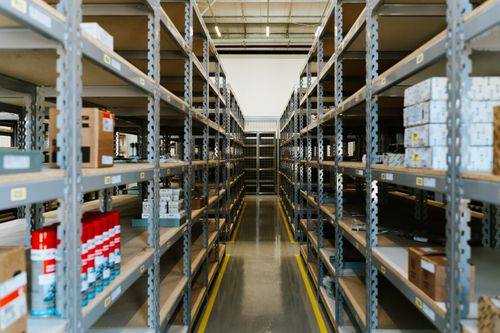
Types of Warehouses
Warehouses are usually grouped by who owns them, what function they serve, and what kind of goods they hold. The same building can fit more than one group, but the groups help a business match a facility to its needs.
By Ownership: Private, Public, and Contract Warehouses
A private warehouse is owned or leased long-term by one company for its own goods. It gives full control over layout, staff, and systems, but it also means fixed cost whether the space is full or half empty. Large manufacturers and retailers with steady, high volumes usually choose this model.
A public warehouse is shared. A third-party provider owns the building and rents space and handling to many customers, who pay for what they use. This suits businesses with seasonal peaks or uncertain volumes, because they can scale space up and down without a long lease.
A contract warehouse sits between the two. A provider runs a dedicated facility for one client under a longer contract, often with staff and systems tailored to that client. It blends the control of a private warehouse with the expertise of a provider. Many 3PL arrangements work this way.
By Function: Distribution Centers, Fulfillment Centers, and Cross-Docking
A distribution center holds goods briefly and moves them on to shops or customers in a region. Speed matters more than long-term storage here. Stock turns over fast, and the layout favors rapid picking and loading.
A fulfillment center is built for e-commerce orders. It stores many different products, picks single items or small orders, packs them, and ships them direct to customers. Accuracy and fast dispatch matter most, because each order is small and each customer is waiting.
A cross-docking facility barely stores anything at all. Incoming goods are sorted and loaded straight onto outbound vehicles, often within hours. Our guide to cross-docking explains when this fast-through model works and when it fails.
By Product: Cold Storage, Bonded, and Specialized Warehouses
Cold storage warehouses hold temperature-sensitive goods such as food and medicines at controlled temperatures. They need insulation, refrigeration, and monitoring, and they are a key part of cold chain logistics.
Bonded warehouses store imported goods under customs supervision before duties are paid. They let importers delay duty payments until goods are released for sale, which helps cash flow on large shipments.
Other specialized warehouses handle hazardous materials, bulk liquids, or very large items. The rule is simple: the building and its equipment must fit the product, not the other way around.
| Warehouse type | Best for | Main advantage | Main drawback |
|---|---|---|---|
| Private warehouse | High, steady volumes | Full control | High fixed cost |
| Public warehouse | Variable or seasonal volumes | Pay for what you use | Less control |
| Contract warehouse | Dedicated needs, outsourced running | Tailored service | Longer commitment |
| Distribution center | Fast regional supply | Quick throughput | Not for long storage |
| Fulfillment center | E-commerce orders | Fast, accurate dispatch | Complex picking |
| Cold storage | Perishable goods | Protects quality | High running cost |
| Bonded warehouse | Imported goods | Delays duty payment | Customs rules apply |
Core Functions Inside a Warehouse
Most warehouses run the same basic sequence, whatever their size. Each step feeds the next, and a weakness in one step shows up in the others.
Receiving and Inspection
Receiving starts when a delivery arrives. Staff check the goods against the delivery note and purchase order, look for damage, and record what actually came in. Shortages or damage found here can still be fixed with the supplier. The same problem found weeks later is far harder to prove.
Putaway and Storage
Putaway means moving goods to a planned location and recording it. Good locations follow simple rules: fast-moving goods near packing areas, heavy goods low down, and similar goods grouped together. A clear location system is the backbone of accurate picking, and it connects directly to inventory management, because the system must know both what is in stock and where it sits.
Picking, Packing, and Dispatch
Picking is the most labour-heavy job in most warehouses. Workers collect the items for each order from their locations. Packing then protects the items and adds labels and documents. Dispatch loads them onto the right vehicle at the right time. Errors here reach the customer directly, so checks at packing matter more than speed alone.
Returns and Value-Added Services
Many warehouses also handle returns: inspecting returned goods, deciding whether they can be resold, and restocking them. Value-added services sit alongside this work, such as labelling, kitting, repacking, or light assembly. These services turn a warehouse from a storage room into a service center for the business.

Warehousing vs Storage: What Is the Difference?
Storage is a place. Warehousing is a service built around that place. A rented lock-up stores goods, but it does not receive deliveries against orders, track stock levels, pick orders, or report accuracy. A warehouse does all of that, on a daily rhythm, with records a business can rely on.
The difference shows up in cost as well. Storage charges mainly for space. Warehousing charges for space plus handling, systems, and labour. For a business that only needs a place to keep spare stock, storage may be enough. For a business that ships orders every day, warehousing is the only option that keeps service levels up.
How to Choose the Right Warehousing Model
Start with volume and how much it changes. Steady high volume supports a private or contract warehouse. Variable or seasonal volume favors a public or 3PL warehouse, where space flexes with demand.
Next, look at location. A warehouse near customers cuts delivery time and cost. A warehouse near a port or factory cuts inbound cost. Most businesses balance the two, and the right balance depends on where orders actually go.
Then check the product. Perishable goods need cold storage. Fragile goods need careful handling and packing. Hazardous goods need licensed space. The product rules out more options than any other factor.
After that, weigh systems and service. Ask how stock is tracked, how accurate picking is, what reports you will receive, and how fast problems are flagged. A cheap warehouse with no accurate records will cost more in lost sales and complaints than a better-run one.
Finally, consider automation. Conveyors, scanners, and warehouse automation raise throughput and accuracy, but they need volume to pay back. Small operations usually gain more from a clear layout and disciplined processes than from expensive equipment.
The short video below walks through how warehouses work, why companies need them, and the main types of warehouse operations:
Common Warehousing Mistakes
- No location system. Staff waste hours searching for stock, and picking errors rise.
- Ignoring receiving checks. Damage and shortages get discovered too late to claim.
- Storing fast movers far from packing. Every order travels further than it needs to.
- Running out of space at peak. Seasonal peaks need a plan, not a surprise.
- Measuring nothing. Without accuracy and on-time figures, problems stay hidden until customers complain.
- Choosing on rent alone. A cheap building far from customers can cost more in transport than it saves in rent.
Frequently Asked Questions
What is warehousing in simple terms?
Warehousing is storing goods in a managed facility and handling everything that happens to them there: receiving, checking, putting away, picking, packing, and shipping. It keeps goods safe and available between production and sale.
What are the four major types of warehousing?
The four ownership models most often cited are private, public, bonded, and contract warehousing. Private warehouses serve one owner, public warehouses serve many renters, bonded warehouses hold imports under customs control, and contract warehouses are dedicated facilities run by a provider for one client.
What is the difference between warehousing and warehouse management?
Warehousing is the activity and the facility. Warehouse management is the control system inside it: the people, processes, and software that decide where goods go, how orders are picked, and how stock records stay accurate.
What is a distribution center vs a warehouse?
A warehouse often stores goods for longer periods, while a distribution center moves goods through quickly to shops or customers in a region. Many modern facilities do both, but the emphasis differs: storage versus speed.
How do I choose the right warehouse?
Match volume and variability to the model, place the building near customers or supply points, check that it fits your product, and judge the provider on accuracy and reporting, not rent alone. Start with a short trial period where possible.
