


Logistics is the part of the supply chain that plans, carries out, and controls the movement and storage of goods, services, and related information from the point where they start to the point where they are used, so that customer requirements are met.
That wording follows the definition used by the Council of Supply Chain Management Professionals (CSCMP), the body whose wording most of the industry works from.
In plain terms: logistics gets the right goods to the right place, at the right time, in the right condition, at a cost the business can afford. Every parcel delivered to a doorstep, every pallet moved into a shop, and every container unloaded at a port is logistics at work.
This guide explains the meaning of logistics, its main types and functions, the step-by-step process, the 7 Rs, and how logistics differs from supply chain management.
What Is Logistics? The Definition and Meaning
The logistics definition above has three parts worth pulling apart:
- Movement – goods travel from suppliers to factories, from factories to warehouses, and from warehouses to customers.
- Storage – goods wait somewhere safe and organised between each move.
- Information – orders, tracking updates, and stock records travel alongside the goods so people know where things are.
Logistics management is the work of planning and controlling those three parts together. A logistics manager decides how much stock to hold, where to hold it, which transport to book, and how each order will reach the customer.
The word itself comes from military practice, where it meant supplying troops with equipment, food, and shelter. Businesses adopted the term because the problem is the same: the right supplies, in the right place, at the right time.
When people search for the logistics meaning, they usually want the business sense above, not the military one. In business, logistics always serves a customer order at the end of the chain.
Types of Logistics
Logistics splits into types based on the direction goods travel and the stage of the chain they are in.
Inbound Logistics
Inbound logistics covers everything that flows into a business: raw materials, parts, packaging, and supplies arriving from suppliers.
The work includes booking supplier deliveries, receiving goods at the dock, checking them against the order, and storing them until production or sale needs them. Late or damaged inbound deliveries stop everything downstream, so this is where many problems start.
Outbound Logistics
Outbound logistics covers everything that flows out to customers: picking finished goods, packing them, shipping them, and delivering them.
For an online store, outbound logistics is the journey from the shelf to the customer’s door. The order fulfillment process sits inside this type and handles each order from checkout to delivery.
Reverse Logistics
Not everything flows one way. Reverse logistics moves goods backwards: customer returns, repairs, recycling, and disposal of products that can no longer be sold.
A clear returns process protects margin, because returned goods that sit unprocessed lose value every day. Goods that can be repaired, repackaged, or recycled need a planned route back, not an improvised one.

Third-Party Logistics (3PL)
Third-party logistics means handing some or all of the work to an outside provider. A 3PL company runs warehousing, transport, or both on behalf of its clients and sells these as logistics services.
Businesses use a 3PL when their own volume does not justify a warehouse lease, a fleet, or a full logistics team. Our guide to what a 3PL is and what it does explains the service models in detail.
The Four Areas of Business Logistics
Looked at by stage rather than direction, business logistics has four areas:
- Procurement logistics – getting materials from suppliers into the business, including supplier delivery scheduling and incoming quality checks.
- Production logistics – moving materials inside the factory: feeding workstations, moving part-finished goods between stages, and removing waste.
- Distribution logistics – moving finished goods through warehouses and transport networks to retailers or end customers. Fast-moving networks often use cross-docking to move goods from inbound to outbound trucks with little or no storage time.
- Disposal logistics – removing packaging, waste, and end-of-life products safely and legally. This overlaps with reverse logistics but focuses on what cannot be resold or reused.
Temperature-sensitive goods add one more special case: cold chain logistics keeps food, medicine, and similar products within a safe temperature range at every step.
The 7 Rs of Logistics
The best-known checklist in logistics is the 7 Rs. A logistics operation is doing its job when it delivers:
- The right product
- In the right quantity
- In the right condition
- To the right place
- At the right time
- To the right customer
- At the right cost
The list is a useful test because the Rs fail together. The right product sent to the right customer still fails if it arrives late, damaged, or at a delivery cost that wipes out the profit on the order.
When managers review logistics operations, the 7 Rs give them a plain language scorecard before they look at any detailed reports.
Key Functions of Logistics
The types above describe where logistics happens. The functions describe what the work actually consists of, day to day. These logistics functions — the core logistics activities — are the same in a small online store and a multinational manufacturer; only the scale changes.
- Transportation – choosing modes (road, rail, sea, air), booking carriers, and planning routes.
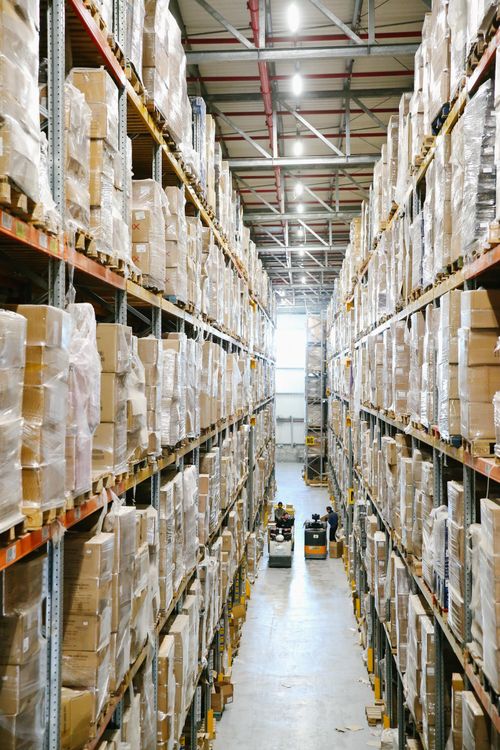
- Warehousing – receiving, storing, and organising goods so they can be found and picked quickly.
- Inventory control – deciding how much stock to hold, and where, so orders can be filled without tying up cash in goods that sit unsold.
- Order processing – taking the order, checking stock, picking, packing, and arranging delivery.
- Packaging – protecting goods for the journey and labelling them so carriers and customers can identify them.
- Materials handling – the physical work of moving goods inside a site: forklifts, pallets, conveyors, and loading.
- Information flow – order confirmations, tracking, and alerts. Tools that give supply chain visibility let staff and customers see where a shipment is at any moment.
The Logistics Process, Step by Step
Whatever the product, the logistics process follows the same sequence. Here is one order moving through it:
- Order received. The customer orders, and the system checks that the item is in stock and the delivery details are complete.
- Picking. Warehouse staff take the item from its storage location. The location system matters here: goods stored without a fixed place get picked slowly and wrongly.
- Packing and labelling. The item is packed for the journey ahead and labelled with the destination and a tracking code.
- Dispatch and transport. The parcel or pallet leaves with a carrier. Choosing between a part load and a full truck affects both cost and speed; our LTL vs FTL comparison explains the trade-off.
- In transit. The shipment is tracked, and delays are flagged while there is still time to warn the customer.
- Delivery. The goods arrive, the customer signs or the system confirms handover, and proof of delivery is recorded.
- After delivery. Invoices are matched, and any return enters the reverse flow described earlier.
Working backwards from the delivery date at each step gives the team its lead time plan: when the order must be picked, packed, and dispatched to arrive on time.
If you prefer to watch the process explained, this video walks through logistics management from start to finish:
Logistics vs Supply Chain Management
These two terms are often used as if they were the same. They are not.
Logistics is one part of supply chain management. Supply chain management is the wider discipline: it covers sourcing and buying, production planning, supplier relationships, demand forecasting, and logistics, all coordinated as one system. Our pillar guide to supply chain management covers that wider picture.
A short way to remember the difference:
- Supply chain management decides what flows through the chain, from which suppliers, and in what quantities.
- Logistics makes that flow happen physically: the transport, storage, and delivery.
So logistics in supply chain management is the movement-and-storage engine inside a bigger planning discipline. The parts of the supply chain show where logistics sits alongside procurement, production, and sales.
Neither works without the other. A strong supply plan fails if trucks and warehouses cannot execute it, and fast trucks cannot fix a plan that ordered the wrong goods.
Why Logistics Is Important: The Benefits
The importance of logistics shows up in three places: cost, service, and the ability to grow.
Cost. Transport and storage are a large share of what a product costs by the time it reaches the customer. Well-run logistics lowers that share through fuller loads, better routes, and less stock sitting idle.
Service. Customers judge a business on delivery: was it on time, complete, and undamaged? Those results are logistics results. Reliable delivery is also what turns a first-time buyer into a repeat buyer.
Growth. A business can only sell where it can deliver. Adding a new region, a new sales channel, or a faster delivery promise is mostly a logistics decision, taken before it becomes a sales decision.
The benefits of logistics, put simply: lower cost per order, happier customers, and a business that can take on more orders without the operation breaking down.
What Drives Logistics Costs
Logistics cost is not one number. It is a stack of separate costs, and each one has its own lever:
- Transport distance and mode – longer distances cost more; air is faster and pricier than road, which is faster and pricier than sea.
- Load size – a half-empty truck costs nearly as much to run as a full one, so consolidating orders onto fewer vehicles cuts the cost per item.
- Storage time – every day goods sit in a warehouse, they take up space that rent, heating, and staff must be paid for.
- Handling – every time goods are loaded, unloaded, or repacked, labour and damage risk go up.
- Returns – a returned item travels the whole chain again, often for goods that cannot be resold at full price.
- Fuel and labour prices – the two inputs a logistics manager can plan around but cannot set.
This is why two companies selling the same product can have very different delivery costs: the difference is in how the stack above is managed.

Common Logistics Mistakes
Most logistics problems are not caused by bad luck. They come from a short list of repeated mistakes:
- Holding stock “just in case” without a limit. Safety stock has a purpose, but without a set level it grows until the warehouse is full of goods nobody ordered.
- Choosing carriers on price alone. The cheapest carrier that damages goods or misses delivery windows costs more than the reliable one, once refunds and lost customers are counted.
- No fixed storage locations. If staff hunt for goods, picking slows down and errors rise.
- Poor delivery information. Wrong addresses and missing phone numbers cause failed deliveries, and a failed delivery usually means paying for the same journey twice.
- Ignoring returns until they pile up. Unprocessed returns lose resale value daily and hide quality problems that should be fed back to suppliers.
- Planning transport at the last minute. Late booking removes the choice of carrier and mode, which is when costs spike.
Logistics in Practice: A Worked Example
A small coffee roaster sells beans online and supplies local cafés. Here is its logistics on an ordinary week.
Green beans arrive from an importer on Tuesday (inbound). They are checked, weighed, and stored in a dry room (warehousing and inventory control). On Wednesday the beans are roasted; bags move from the roaster to the packing bench (production logistics), where they are sealed, labelled, and boxed.
Online orders placed before noon are picked, packed, and collected by a courier the same day (outbound). Café orders go out on the roaster’s own van on Thursday, routed so the van returns empty as rarely as possible (transportation).
One café reports a torn bag. The replacement goes out with the next delivery, and the damaged bag comes back on the same van for inspection (reverse logistics).
Nothing in this example needs advanced software. It works because each flow was decided in advance: when deliveries arrive, where goods are stored, which orders leave on which vehicle, and what happens when something goes wrong.
Building a Logistics Strategy
A logistics strategy is the set of standing decisions behind examples like the one above. It answers five questions:
- Where do we hold stock? One central warehouse, several regional ones, or none at all?
- What do we do ourselves, and what do we outsource? This is where 3PL providers and other logistics services are compared against in-house cost.
- Which delivery promises do we make? Next-day delivery is a logistics commitment before it is a marketing line.
- How do we choose carriers and modes? By cost, speed, reliability, or a set mix of the three.
- How will we measure it? Delivery on time, order accuracy, damage rate, and cost per order are the starting set.
Review the strategy when the business changes, not when something breaks: a new product range, a new market, or a sharp rise in returns all change what the logistics operation has to do.
If reading this has you thinking about the provider side of the industry, our guide on what a logistics company does covers that side in full.
Frequently Asked Questions
What is logistics in simple words?
Logistics means getting goods from where they are made or stored to where they are needed. It covers transport, storage, packing, and delivery, plus the information that tracks each step. If a product arrives at the right place, at the right time, and undamaged, logistics did its job.
What are the 7 Rs of logistics?
The 7 Rs are: the right product, in the right quantity, in the right condition, to the right place, at the right time, to the right customer, at the right cost. They are used as a checklist for judging whether a logistics operation is performing well.
What are the main types of logistics?
The main types are inbound logistics (goods arriving from suppliers), outbound logistics (goods going out to customers), and reverse logistics (returns, repairs, and recycling). By stage, logistics also divides into procurement, production, distribution, and disposal. Many businesses hand some of this work to a third-party logistics (3PL) provider.
What is the difference between logistics and supply chain management?
Logistics is the movement and storage of goods within the chain. Supply chain management is the wider discipline that also covers sourcing, buying, production planning, and forecasting. Logistics is one part of supply chain management, not a separate subject.
What are the main functions of logistics?
The main functions are transportation, warehousing, inventory control, order processing, packaging, materials handling, and information flow. Together, these activities move goods from supplier to customer and keep everyone informed about where each shipment is.
Why is logistics important for a business?
Logistics controls a large part of the cost of serving a customer and decides whether deliveries arrive on time and undamaged. Good logistics lowers cost per order, keeps customers coming back, and lets a business sell into new areas. Poor logistics does the opposite: higher costs, late deliveries, and customers who do not return.

7 Comments
Pingback: Warehousing Explained: Types, Functions & How to Choose
Pingback: Warehousing Explained: Types, Functions & How to Choose
Pingback: Warehousing Services: What They Include, Costs & 3PL
Pingback: Types of Logistics: Inbound, Outbound, Reverse, 3PL & 4PL
Pingback: Supply Chain Management Software: A Complete Guide
Pingback: Last Mile Delivery Challenges and Smart Solutions
Pingback: Procurement Process Steps: A Complete Guide