


The main types of logistics are inbound logistics, outbound logistics, reverse logistics, third-party logistics (3PL), and fourth-party logistics (4PL). Each type covers a different stage of moving goods, from receiving raw materials to delivering finished products and handling returns. Together, they form the backbone of every working supply chain.
In simple terms, logistics is the planning and control of how goods move and where they are stored. It covers transport, warehousing, order handling, and information flow. When these parts work well together, products arrive on time and in good condition. When they do not, delays and extra costs follow quickly.
This guide explains each type in plain language, compares inbound and outbound logistics, and offers practical tips for choosing the right setup.
What Is Logistics Management?
Logistics management is the process of planning, carrying out, and controlling the movement and storage of goods. It also covers the services and information linked to those goods. The goal is simple: get the right product to the right place at the right time, in the right condition, and at a reasonable cost.
Logistics management sits inside the wider field of supply chain management. The supply chain covers everything from sourcing materials to serving the final customer. Logistics, on the other hand, focuses on the movement and storage part of that chain. Therefore, strong logistics management supports the whole supply chain, but it does not replace it.
Good logistics management brings transport, warehousing, inventory management, packaging, and order processing together as one system rather than separate jobs. The result is smoother and more reliable.
The Main Types of Logistics
Logistics is often grouped by the direction goods travel and by who manages the work. The five types below are the ones most businesses deal with. Some companies use only one or two of them. Others use all five at different stages.
1. Inbound Logistics
Inbound logistics is the movement of materials and goods into a business. It covers everything that arrives from suppliers before production or sale begins. For a manufacturer, this means raw materials and parts. For a retailer, it means finished goods arriving from suppliers.
Typical inbound activities include sourcing, ordering, transport from suppliers, receiving, inspection, and storage. Procurement decisions sit close to this stage, because what a business buys shapes what must be received and stored. Once goods arrive, they are checked and placed in the warehouse until they are needed.
Strong inbound logistics keeps production running without gaps. If materials arrive late or damaged, work stops and orders slip. As a result, many businesses plan inbound flows carefully, agree clear delivery schedules with suppliers, and track every incoming shipment.
2. Outbound Logistics
Outbound logistics is the movement of finished goods out of a business and toward customers. It begins when an order is placed and ends when the product reaches the buyer. For this reason, outbound logistics is often called order fulfilment.
Typical outbound activities include order processing, picking and packing, warehousing of finished goods, transport, and delivery. Warehouse management plays a central role here, since accurate picking and packing decide whether the right item ships on time. The final step is often last-mile delivery, the journey from a local hub to the customer’s door.
Outbound logistics shapes how customers judge a business. A late, damaged, or wrong delivery harms trust at once, even if the product itself is good. Therefore, clear tracking, careful packing, and reliable carriers matter just as much as speed.
3. Reverse Logistics
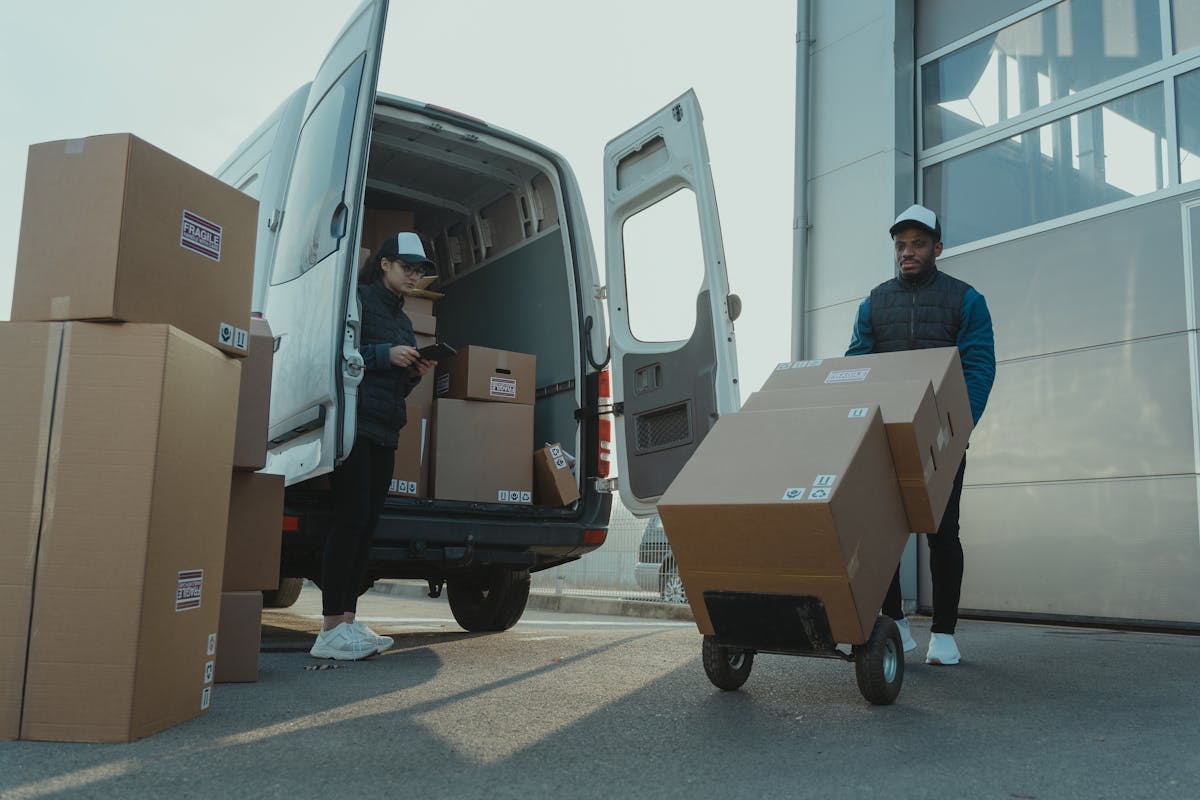
Reverse logistics is the movement of goods from the customer back toward the business. It handles returns, repairs, refurbishment, recycling, and safe disposal. In short, it runs the supply chain in reverse.
A customer may return a product because it is faulty, wrong, or no longer wanted. In other cases, a business may take back used products for repair or recycling. Each case needs its own path: some items go back to stock, some are repaired, and some are recycled or disposed of safely. You can read more in our guide on what reverse logistics is and how it works.
Reverse logistics matters for two reasons. First, a clear and fair returns process builds customer trust. Second, recovered products and materials can hold real value instead of becoming waste. As an illustrative example only, not a reported result: a small online shop that inspects every return, restocks items in good condition, and repairs the rest may recover value that would otherwise be lost.
4. Third-Party Logistics (3PL)
Third-party logistics, known as 3PL, means outsourcing logistics work to an outside specialist. Instead of running its own warehouses and fleets, a business hires a 3PL provider to handle some or all of its logistics tasks. Common 3PL services include warehousing, transport, order fulfilment, and returns handling.
A 3PL provider can also support inbound, outbound, and reverse flows under one roof. For instance, it may receive goods from suppliers, store them, pick and pack customer orders, and accept returns. Freight forwarding is another service many 3PL providers offer, arranging transport across carriers and routes. To learn the basics, see our guide on what a 3PL is.
Businesses often turn to a 3PL when order volumes grow faster than their own team can handle. A provider brings ready-made warehouses, systems, and carrier links. As a result, the business can grow without building its own logistics network from scratch.
5. Fourth-Party Logistics (4PL)
Fourth-party logistics, known as 4PL, goes one step further than 3PL. A 4PL provider does not only carry out logistics tasks. It manages and coordinates the whole logistics operation on behalf of the business, including other providers such as 3PL firms and carriers.
In practice, a 4PL acts as a single point of control. It designs the logistics network, selects and manages providers, oversees technology and data, and looks for ways to improve performance over time. The business itself keeps far less day-to-day logistics work in-house.
The main difference is scope. A 3PL performs logistics tasks, while a 4PL manages the full system. Therefore, 4PL suits businesses with complex, multi-provider supply chains that need central oversight. Smaller operations, on the other hand, often find a 3PL more than enough.
You may also hear about 1PL and 2PL. First-party logistics means a business handles its own transport with its own vehicles, while second-party logistics means hiring a carrier for a single transport leg. These simpler models often lead toward 3PL or 4PL arrangements as businesses grow.
Inbound vs Outbound Logistics: Key Differences
The difference between inbound and outbound logistics comes down to direction. Inbound logistics brings goods into the business. Outbound logistics sends finished goods out to customers. One feeds production and stock, while the other serves orders and buyers.
Their daily tasks differ as well. Inbound work centres on supplier orders, receiving, inspection, and storage of incoming goods. Outbound work centres on order processing, picking, packing, shipping, and delivery. Both need accurate records, but they serve opposite ends of the operation.
Another difference is who feels the impact of a mistake. An inbound delay usually hits internal teams first, through stalled production or empty shelves. An outbound delay hits the customer first, through a late or wrong delivery. For this reason, businesses need clear controls on both sides. A weakness on either side can disrupt the whole chain.
Special cases add variety. Cold chain logistics keeps temperature-sensitive goods chilled or frozen across all flows, while cross-docking moves incoming goods almost directly to outbound transport with little storage in between.
How to Choose the Right Type of Logistics for Your Business
Choosing well starts with mapping your own flows. First, list what comes in, what goes out, and what comes back. Next, note where delays or errors happen most often. This simple map shows which type needs the most attention.
Then, weigh control against cost and capacity. Handling logistics in-house gives direct control but needs space, staff, and systems. A 3PL provider reduces that burden and adds ready capacity, while a 4PL adds full oversight for complex, multi-provider operations. However, outsourcing means trusting a partner with a core part of your service, so the choice deserves care.
Finally, review the fit as your business changes. A setup that works for a small operation may strain under higher volumes or new markets. Regular reviews of routes, warehouse space, and provider performance keep logistics aligned with real demand. Careful supply chain planning supports this, because it links logistics choices to expected demand rather than guesswork.
Frequently Asked Questions About the Types of Logistics
What are the 4 main types of logistics?
The four types most often named are inbound logistics, outbound logistics, reverse logistics, and third-party logistics (3PL). Inbound brings goods into a business, outbound delivers finished goods to customers, reverse handles returns and recycling, and 3PL outsources logistics work to a specialist provider. Fourth-party logistics (4PL) is a fifth, higher-level model in which one provider manages the whole logistics operation.
What is the difference between inbound and outbound logistics?
Inbound logistics deals with the movement of materials and products from suppliers into a business. Outbound logistics deals with the movement of finished products from the business to customers. In short, inbound flows in, and outbound flows out.
What is the difference between 3PL and 4PL?
A 3PL provider carries out logistics tasks such as warehousing, transport, and order fulfilment. A 4PL provider manages the entire logistics operation, including other providers, systems, and strategy. In other words, a 3PL does the work, while a 4PL runs the whole system.
What is logistics management?
Logistics management is the planning, execution, and control of moving and storing goods, along with the related services and information. Its aim is to deliver the right product to the right place at the right time, in good condition, and at a reasonable cost.
What is the difference between logistics and supply chain management?
Logistics focuses on the movement, storage, and flow of goods within the supply chain. Supply chain management is broader: it covers planning, sourcing, production, logistics, and delivery to the customer. Logistics is therefore one important part of supply chain management, not the whole of it.
What are examples of reverse logistics?
Common examples include customer product returns, warranty repairs, refurbishment of used goods, recycling of packaging and materials, and safe disposal of items that cannot be reused. Each path returns value or reduces waste instead of sending goods straight to landfill.
In summary, inbound logistics brings goods in, outbound logistics sends them out, reverse logistics brings them back, and 3PL and 4PL describe how much of that work a partner handles. Understand these five types, and you can build a setup that fits your business today and grows with it tomorrow.
