



What Is Just-in-Time (JIT) Inventory Management?
Just-in-time (JIT) is an inventory management strategy. Businesses receive materials, make products, and move components only when they actually need them. Instead of storing large amounts of stock, companies keep the right resources ready at the right place and time.
JIT follows a demand-driven approach. It helps companies produce goods without relying on excess supplies sitting in a warehouse.
Why Businesses Use JIT
The goal of JIT is not just to keep minimal inventory. It aims to eliminate waste and stop excess stock from consuming money, space, and attention.
Traditional systems often stockpile raw materials, work-in-progress, and finished goods for long periods. JIT instead delivers and produces items based on real demand.
This shift changes how a business operates. Lower inventory levels reduce holding costs and free up capital for other priorities. Companies also use their space more productively and often cut rental costs.
How Does JIT Work?
JIT connects production directly to actual customer demand. When a customer places an order, the manufacturer starts production and arranges the supply chain to deliver only the required parts.
This model cuts inventory costs, reduces storage costs, and increases daily efficiency. For example, a car manufacturer sources parts and assembles vehicles only after receiving an order, avoiding unnecessary stock.
JIT depends on steady production, high-quality work, reliable machinery, and dependable suppliers. Companies usually build long-term supplier contracts because even a small delay can disrupt the entire system.
The Pull System
JIT relies on a pull system. Actual customer demand triggers production, unlike traditional push systems that manufacture based on sales forecasts.
Kanban acts as the signal for this pull system. Cards, containers, or digital alerts tell the previous process when to deliver the next batch of components.
Continuous Improvement (Kaizen)
JIT also depends on Kaizen, the Japanese practice of continuous, incremental improvement. Teams regularly review processes, fix small problems, and refine operations rather than waiting for one major overhaul.
Key Principles of JIT
- Pull-based production – Output responds to real customer orders, not forecasts.
- Waste elimination – Businesses cut excess inventory, defects, and unnecessary steps.
- Continuous improvement – Kaizen drives ongoing, incremental process gains.
- Strong supplier relationships – Reliable, high-quality, on-time deliveries keep the system running.
- Small lot sizes and quick changeovers – These reduce work-in-process inventory and support flexible production.
Advantages of JIT Inventory Management
Lower costs. Reduced inventory means lower holding, storage, insurance, and obsolescence costs. This frees up capital for growth, R&D, or automation.
Better cash flow. Less money stays tied up in stock, so companies gain more financial flexibility.
Improved space use. Businesses can reallocate warehouse space to production or other priorities.
Higher responsiveness. Companies react faster to changing demand and market trends, giving them a competitive edge.
Fewer defects. Smaller batches make mistakes easier to catch before they spread across large volumes of finished goods.
Disadvantages and Challenges of JIT
JIT depends heavily on precise timing, which creates real risks:
- Supply chain vulnerability. A single supplier delay can halt production and cause stockouts.
- Limited buffer. With minimal inventory, sudden demand spikes or supply chain disruptions can quickly lead to lost sales.
- Higher transportation costs. Frequent, smaller shipments can raise logistics expenses.
- Implementation complexity. JIT needs process redesign, employee training, and real-time visibility across the organization.
- External shocks. Natural disasters, geopolitical issues, and pandemics can expose weaknesses in a lean supply chain.
Businesses considering JIT should evaluate supplier reliability, production flexibility, and their tolerance for stockout risk before adopting it.
The Role of Kanban in JIT
Kanban is the visual coordination system that makes JIT work. It uses cards, labeled containers, or digital signals to show exactly what materials or products are needed next.
When a customer order creates demand, a Kanban signal moves from the downstream process to the upstream process. This tells the earlier stage what to supply and when.
Kanban keeps work-in-progress under control, reduces overproduction, and makes problems visible quickly — which is exactly why it fits so naturally into a pull-based system.
Technologies That Support JIT
Modern tools make JIT more reliable and easier to scale:
- IoT sensors track real-time inventory and trigger automatic reordering.
- AI-powered demand forecasting predicts customer needs more accurately using historical and real-time data.
- Robotics and automation handle repetitive material movement and reduce manual labor.
- ERP and warehouse management software connect inventory, purchasing, and logistics into one system.
- Simple lean tools, like Karakuri mechanical devices, solve small material-handling problems without expensive electronics.
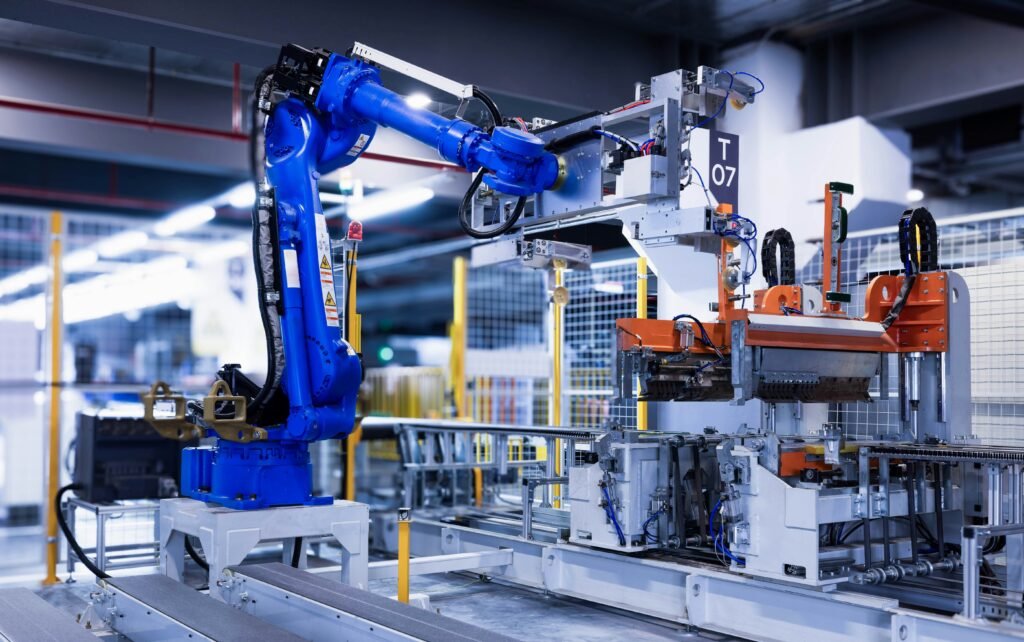
Together, these technologies give managers the accurate forecasting and visibility that JIT depends on.
Real-World Examples of JIT
- Toyota pioneered JIT through the Toyota Production System, syncing raw materials with actual customer orders.
- Dell builds computers only after receiving an order, avoiding large finished-goods inventory.
- Zara produces roughly half its clothing line closer to the selling season, reacting quickly to fashion trends.
- Amazon and Procter & Gamble coordinate warehouse space so products move straight to customers with minimal storage.
- Boeing applies JIT at an enterprise level, integrating suppliers closely into its manufacturing network.

How to Implement JIT Successfully
- Analyze current processes to find inefficiencies and bottlenecks.
- Build strong supplier relationships based on quality and reliable delivery — the right logistics partner makes this far easier to manage.
- Adopt lean practices like 5S, Kaizen, and value stream mapping.
- Train employees so everyone understands JIT goals, not just their individual task.
- Invest in technology for real-time tracking and demand forecasting.
- Monitor and refine continuously using clear performance metrics.
Is JIT Right for Your Business?
JIT works best for companies with predictable demand, reliable suppliers, and flexible production. Businesses with unpredictable demand or long lead times may need larger inventory buffers instead.
Before adopting JIT, ask:
- Can our suppliers guarantee consistent, on-time, high-quality delivery?
- Can our production respond quickly to changing customer demand?
- What is our real tolerance for stockout risk?
- Do our current systems support real-time inventory visibility?
Frequently Asked Questions
What is a JIT inventory system?
It’s an inventory strategy where businesses receive and produce goods only when actual demand requires them, instead of holding large stock reserves.
Who invented JIT?
Toyota developed JIT as part of the Toyota Production System in post-war Japan, refining it through the 1970s.
What’s the difference between JIT and just-in-case (JIC)?
JIT keeps inventory low and reacts to real demand. JIC keeps larger buffers to protect against unexpected disruptions.
How does JIT differ from Economic Order Quantity (EOQ)?
JIT focuses on receiving exact quantities based on real-time need. EOQ calculates an ideal order size that balances ordering and holding costs.
Is JIT risky?
Yes — minimal inventory means less protection against supplier delays or demand spikes. Strong supplier relationships and contingency planning help reduce this risk.
For a deeper look at the strategy’s origins and terminology, see Investopedia’s overview of just-in-time inventory.

1 Comment
Pingback: JIT Meaning: What Is Just-in-Time Inventory?