



What Is a Logistics Company?
A logistics company is a specialized business that plans, manages, and carries out the movement and storage of goods. This includes raw materials and products moving from the point of origin to the final destination.
From my experience, the easiest way to understand logistics is to follow the goods. A logistics company connects transportation, warehousing, inventory control, packaging, and document handling. It also manages the flow of goods and information within an organized system. This makes it an operational backbone and a backbone of the supply chain.
The main purpose is reliable and on-time delivery. Logistics companies also reduce costs and improve efficiency. The goal is for products to reach customers in the right condition and at the right moment.
A logistics provider can coordinate multiple activities. It can receive inventory and store inventory. It can also manage the entire order fulfillment process, from when an order is placed to its arrival at the customer’s doorstep. This includes picking and packing items and selecting a cost-effective shipping option.
What Does a Logistics Company Do?
A logistics company manages several activities within supply chain operations. These include transportation, warehousing, shipment documents, and customs-related steps.
It also handles cargo, packing, labeling, distribution, and reverse logistics. A logistics provider coordinates these activities. A logistics organization can handle supply chain operations end-to-end.
Core Responsibilities of Logistics Companies
The work starts with organizing transportation. This can involve Sea Freight, air freight, and land shipping. Logistics companies also handle managing inventory and storage services.
Another responsibility is customs clearance and documentation. A provider may also be responsible for coordinating with a freight forwarder in Egypt. Tracking and delivery updates help manage the movement of cargo.
A cargo shipping company may focus on international container transport. A full-service provider can manage the process from pickup to final delivery.
What Services Does a Logistics Company Offer?
A logistics company can provide several services based on the movement and storage of goods. These services cover transportation, warehousing, inventory, supply chain activities, and order fulfillment.
Shipping Services
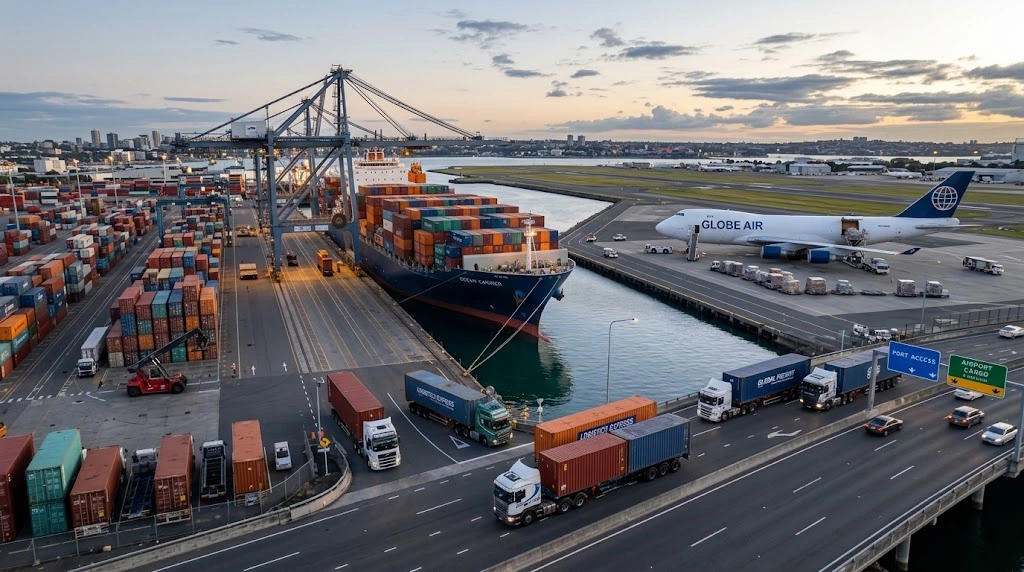
Transportation is at the center of moving goods to customers. Managing transportation requires resources and expertise when the complex flow of goods involves different modes of transport.
Planning routes helps manage transportation. On-time delivery keeps products moving toward customers as required.
Expert Warehousing
Expert warehousing addresses inefficient warehouse operations. This can be a concern for small and medium enterprises facing high costs with operations managed in-house.
Proper product organization supports streamlined inventory management. Products remain ready to ship instead of becoming messy and disorganized. A more streamlined and efficient process also supports the customer experience and provides peace of mind.
Streamlined Inventory Management
Effective logistics partners provide more than basic storage. They can use cutting-edge tools and data analysis to optimize inventory levels.
Better inventory levels can reduce storage costs and dead stock. They can also support customer loyalty and retention. Inventory can be distributed across warehouses in key markets. This puts products closer to your customers, supporting faster delivery and reduced shipping costs.
Optimized Supply Chain
The market can change, so businesses need to adapt. This supports success and a competitive presence, especially with increasing demand.
Logistics companies can address bottlenecks and inefficiencies by streamlining processes. This includes route optimization, order fulfillment, and demand forecasting. These activities support faster deliveries, reduced costs, and a responsive supply chain when facing a challenge.
Seamless Order Fulfillment
Customers expect a flawless experience from the moment they click buy until the product’s arrival at the doorstep.
A logistics company manages the order fulfillment process. This includes managing inventory, picking and packing, and shipping products accurately and quickly. The result is a seamless and efficient experience that supports customer satisfaction.
Last-Mile Logistics and Fast Delivery Networks

Last-mile logistics covers the final stage of delivery. This is where goods move from a distribution center to the customer’s doorstep.
This stage directly affects the customer experience. It determines how fast and accurately an order reaches the customer. Fast delivery companies can use motorcycles, light vehicles, and smart routing technologies. These options help complete deliveries quickly and efficiently.
This matters in e-commerce and urban deliveries. A large part of the total logistics cost and service quality is shaped during this final stage.
What Are the Main Types of Logistics Companies?
Logistics companies operate through different models. Carriers handle transportation directly. Freight forwarders work as intermediaries and coordinate shipping, documentation, and customs clearance.
Other models include 3PL, Third-Party Logistics, 4PL, and Fourth-Party Logistics. Specialized options include cold chain logistics, project cargo logistics, and last-mile delivery services. The most suitable type of service can depend on specific market needs, volume, product type, and final destination.
Here’s a quick side-by-side view of how the main models differ before we walk through each one:
| Model | Owns Fleet/Warehouse? | Main Role | Best Suited For |
|---|---|---|---|
| Carrier | Yes | Physically transports goods (ships, trucks, planes) | Direct point-to-point transport |
| Freight Forwarder | No | Arranges routes and rates through a carrier network | Businesses needing shipping expertise without owning assets |
| 3PL | Often yes | Manages warehousing, packaging, and transport for a client | Businesses outsourcing part of their supply chain |
| 4PL | Not necessarily | Oversees the entire supply chain, including multiple 3PLs | Large companies needing centralized, strategic control |
Third-Party Logistics Companies (3PL – Third-Party Logistics)
3PL companies manage part of the supply chain or the entire flow for businesses. Their services can include warehousing, packaging, inventory management, transportation, and order processing.
They can have access to fleets, distribution centers, and networks. This allows them to deliver services faster and at a lower cost.
Businesses can use 3PL services when they want to expand logistics operations without building internal infrastructure. The model can remain flexible, affordable, and efficient.
Fourth-Party Logistics Companies (4PL – Fourth-Party Logistics)
4PL providers operate at a higher level than 3PL companies. They take responsibility for the full supply chain, from planning to final delivery.
A 4PL provider does not necessarily own warehouses or transportation fleets. Instead, it can integrate multiple 3PL providers, suppliers, and technology systems. This helps coordinate the entire operation.
For large companies, this model provides strategic supply chain management. It also supports coordination between multiple suppliers and centralized control.
Freight Forwarders
A freight forwarder works as an intermediary. It relies on a network of carriers to arrange the best route, rate, and service for the shipper.
The difference becomes clearer when compared with a carrier. A carrier performs transportation directly. This can include shipping lines, airlines, and trucking companies.
Carriers
A carrier can be a company or fleet that performs transportation directly. Shipping lines, airlines, and trucking companies are examples within this model.
The carrier is the direct transporter. A freight forwarder is the intermediary that uses a network of carriers. The forwarder arranges the best route, rate, and service for the shipper.
NVOCCs
An NVOCC, or Non-Vessel Operating Common Carrier, operates in a similar space. These issues its own bill of lading and leases cargo space from major shipping lines.
It works like a shipping line without owning vessels. It manages capacity and documentation under its own name. The direct transporter and forwarder have different roles, while the NVOCC manages its own shipping capacity.
Specialized Logistics: Cold Chain, Project Cargo, and Fulfillment Centers
Specialized logistics is designed for goods that require specific conditions. Cold chain logistics supports food, pharmaceuticals, and temperature-sensitive products.
These goods require precise temperature control throughout the journey. Project cargo logistics handles large, heavy, and oversized shipments. These can include industrial equipment and power plant components.
This type of movement requires route planning, special permits, and careful handling. Fulfillment centers support e-commerce through order processing, packaging, and fast delivery.
These specialized models help businesses handle unique, sensitive, and non-standard logistics needs.
What Are the Three Types of Logistics?
The three main types of logistics are inbound logistics, outbound logistics, and reverse logistics. Together, they cover the movement of goods and help manage that movement efficiently.
Inbound Logistics
Inbound logistics focuses on receiving goods from suppliers. These goods move into warehouses or production facilities.
This includes raw materials and supplier shipments. It also ensures inventory availability for operations and helps reduce supply chain delays.
Outbound Logistics
Outbound logistics manages the delivery of finished products to customers. It covers packaging, shipping, and distribution.
This supports eCommerce and retail businesses. It also improves delivery speed and customer satisfaction.
Reverse Logistics
Reverse logistics handles returned goods, recycling, and disposal processes. It is important for product returns and exchanges.
It also supports sustainability and cost recovery. The process is common in retail and electronics industries.
How Logistics Companies Support E-commerce and Businesses
Logistics companies help businesses in Egypt streamline operations, reduce costs, and expand into global markets. They can provide access to international logistics company networks and advanced shipping solutions.
Overland Freight supports Services Egypt through Secure Land Transport. Logistics providers also support the global economy by optimizing supply chains and supporting the seamless movement of goods.
Benefits for Businesses
Using logistics services in Egypt provides measurable advantages. These include faster delivery, optimized shipping routes, reduced operational costs, and efficient planning.
Businesses can also gain access to transportation companies in Egypt, better inventory management, and tracking. Small businesses can work with shipping companies in Egypt that cater to small business needs, allowing them to scale operations without building their own logistics infrastructure.
Benefits of Working With a Logistics Company
The main benefits include faster delivery and optimized shipping routes. Businesses can also achieve reduced operational costs through efficient planning.
Better inventory management and tracking provide further operational support. Access to transportation companies in Egypt also supports the movement of goods.
What Is the Role of Logistics Companies in the Global Supply Chain?
From my experience, this role becomes easier to understand by looking at the entire chain. Logistics companies manage inbound logistics from suppliers and outbound logistics toward customers.
They coordinate the flow of goods, information, and financial processes. Logistics companies sit at the center of the global supply chain and connect these activities through a reliable movement of goods.
In inbound logistics, they receive raw materials and essential goods from suppliers. They transport and store these goods for production and daily operations.
In outbound logistics, they manage finished products moving to distribution centers, retailers, and end customers. This requires transportation, packaging, and delivery schedules.
Accurate data and financial documents are also part of the process. Shipping documents, billing, and timing must be managed carefully. Errors can create delays and higher costs.
Managing these activities together supports international markets. It also helps keep the supply chain stable and efficient. Logistics companies therefore form one of its key pillars.
When Should Businesses Use the Services of a Logistics Company?
Businesses can compare small and large companies to understand when logistics support becomes useful. Companies often turn to logistics providers when their volume of operations, required speed, complexity of documentation, or size of market becomes difficult to handle internally.
Small and medium-sized enterprises (SMEs), or Small and Medium-sized Enterprises, often outsource logistics earlier. They may have limited resources and lack warehouse infrastructure or fleet infrastructure. Reducing operational costs can also influence this decision.
A logistics business provides these services as a commercial operation. It helps companies manage transportation, warehousing, documentation, distribution, and delivery planning without building all logistics capacity in-house.
Large companies may need logistics support when entering new markets. They may also face rapid growth in order volume or manage multiple routes and distribution centers at the same time. These conditions can make operations more complex.
What Should You Look for in a Logistics Partner?
Choosing the right logistics partner starts with careful evaluation. The first step is understanding business needs and available service providers.
The evaluation can include shipping requirements, cargo type, experience, and international logistics operations. Businesses can also review pricing, contracts, service flexibility, communication, and customer support.
Key Features of a Reliable Logistics Company
A reliable logistics company offers consistent service, transparent pricing, and strong operational capabilities. These qualities help businesses evaluate a suitable logistics partner.
Important Features Include
A suitable provider can offer real-time shipment tracking systems. International shipping and customs clearance experience are also important.
Businesses can look for flexible logistics solutions for different industries. A strong network of global and local partners can also support operations.
The evaluation can include expertise in how to choose a customs clearance agent. These features matter when evaluating a logistics company near me or selecting a long-term logistics partner.
How to Choose the Best Logistics Company
Choosing the right logistics company starts with understanding how well a provider matches business needs. A good logistics partner should deliver reliable transportation, warehousing, documentation, international coordination, and order management with consistent quality.
Businesses can compare the service range, network coverage, industry expertise, cost structure, and operational support. They can also review the range of services, reputation, pricing structure, and hidden costs.
Other criteria include licenses, compliance record, technology, SLAs, and customer support. These factors help businesses evaluate how a provider manages the movement of goods, information flow, and final delivery.
The right provider can reduce costs, support market expansion, and improve customer satisfaction. It can help businesses operate faster, accurately, and at lower costs.
In a fast-moving environment, rising order volumes and expanding supply chains can create risks. A strong logistics company can help save time and boost customer satisfaction. Logistics is therefore more than a support function. It can become a core element of success and long-term stability for a business.
Step-by-Step Selection Process
Start by defining shipping requirements and cargo type. Then compare logistics companies in Egypt based on their services.
Next, evaluate their experience in international logistics operations. Review pricing, contracts, and service flexibility. Finally, test communication and customer support.
This process helps businesses identify the best shipping company in Egypt based on reliability and performance.
What Is an Example of a Logistics Company?
Examples include freight forwarders, courier companies, and integrated providers like Seagate Company. These providers offer full logistics solutions.
Types of Logistics Companies in Egypt
There are different types of logistics companies in Egypt. Each can specialize in specific services.
Common Examples Include
Common examples include freight forwarding companies, courier and last-mile delivery providers, warehousing and storage companies, and international shipping companies.
The best shipping companies in Egypt can combine multiple services. Seagate Company provides coordinated logistics services that include transportation, storage, and customs support. This makes it suitable for businesses with complex shipping needs.
Common Mistakes When Choosing a Logistics Company
- Picking based on price alone. The cheapest quote often excludes fees that show up later — fuel surcharges, accessorial charges for liftgate service or inside delivery, or storage fees once inventory sits past a free period. Ask for a full breakdown before comparing quotes.
- Ignoring the technology gap. Some logistics companies still rely on manual updates and phone calls for shipment status. Others offer real-time tracking integrated into your own systems. If visibility matters to your business, ask specifically what tracking tools are included, not just whether “tracking is available.”
- Assuming bigger means better. A large national 3PL might not prioritize a small account the way a regional provider would. Smaller logistics companies sometimes offer more responsive service precisely because your business represents a bigger share of their attention.
- Not checking capacity during peak seasons. A logistics company that performs well in a normal month can struggle during a demand spike if it hasn’t planned staffing and carrier capacity around seasonal patterns. A company that plans ahead for volume swings handles peak season far more reliably than one reacting to it as it happens.
Where the Standard Advice Breaks Down
Not every business needs a full-service logistics company. A business shipping a handful of large, predictable orders each month might get more value from a direct carrier relationship than from paying for a 3PL’s bundled services it doesn’t use.
International shipping changes the calculation, too. Customs complexity, duty calculations, and country-specific regulations make working with a logistics company that specializes in international freight worth the cost, even for businesses that handle domestic logistics themselves. Trying to manage cross-border compliance without that expertise creates real risk of delays, fines, or seized shipments.
Event-based logistics is another edge case. A company shipping trade show materials or temporary installations needs different expertise than standard freight — tighter timing, more fragile handling, and often on-site coordination that a specialized event logistics provider handles better than a general-purpose 3PL.
FAQs
What is the meaning of “logistics company”?
A logistics company is a business that helps move, store, coordinate, document, and deliver goods from one point to another.
In simple terms, the meaning of a logistics company is a service provider that manages the practical movement and storage of goods for businesses.
What does a logistics company do?
A logistics company plans transportation, arranges warehousing, and manages shipment documents. It also coordinates customs-related steps, tracks cargo, and helps goods reach the right destination on time.
Some logistics companies also support packing, labeling, distribution, and reverse logistics.
Is “logistic company” the same as “logistics company”?
In business searches, “logistic company” and “logistics company” are used to mean the same thing.
However, “logistics company” is the more common and natural term in professional English.
What is a logistics business?
A logistics business provides services that help companies move and manage goods.
These services include transportation, warehousing, inventory coordination, shipping documents, customs support, distribution, and delivery planning.
Is FedEx considered a logistics company?
Yes. FedEx is a global courier and logistics company that provides transportation, shipping, and delivery services for businesses and individuals around the world.
What is 1PL, 2PL, 3PL, 4PL, and 5PL logistics?
Logistics tiers from 1PL through 5PL classify how much of a company’s supply chain and shipping operations are handled internally or outsourced to outside experts.
What are the 7 pillars of logistics?
The 7 pillars of logistics include Planning and Forecasting, Procurement and Sourcing, Inventory Management, Transportation and Distribution, Warehousing and Storage, Order Fulfillment, and Information and IT Systems.
These are core functional areas for an efficient, responsive, and cost-effective supply chain.
Planning and Forecasting covers market demand, scheduling production, and resources before movement begins. Procurement and Sourcing involves reliable suppliers, raw materials, and purchasing costs.
Inventory Management focuses on stock levels, shortages, and excess holding costs. Transportation and Distribution involves moving goods through road, rail, air, and ocean freight.
Warehousing and Storage covers facilities, short-term and long-term inventory storage, organization, and stock flow. Order Fulfillment includes processing, picking, packing, labeling, and shipping orders to the final customer.
Information and IT Systems use technology, inventory management software, and transport management software for real-time tracking and decision-making.
How much does it cost to use a logistics company?
Costs vary too much by service type, volume, and distance to give a single figure. Freight brokerage might charge a flat fee or percentage of the shipment cost, while a 3PL contract often includes storage fees, per-order fulfillment fees, and shipping costs bundled together. Getting an itemized quote is the only reliable way to compare providers.
What’s the difference between logistics and supply chain management?
Logistics is one piece of supply chain management, not the whole thing. Supply chain management includes sourcing raw materials, manufacturing, and demand planning; logistics specifically covers the movement and storage of goods within that broader process. Logistics is one component among several, not a synonym for the entire system.
