

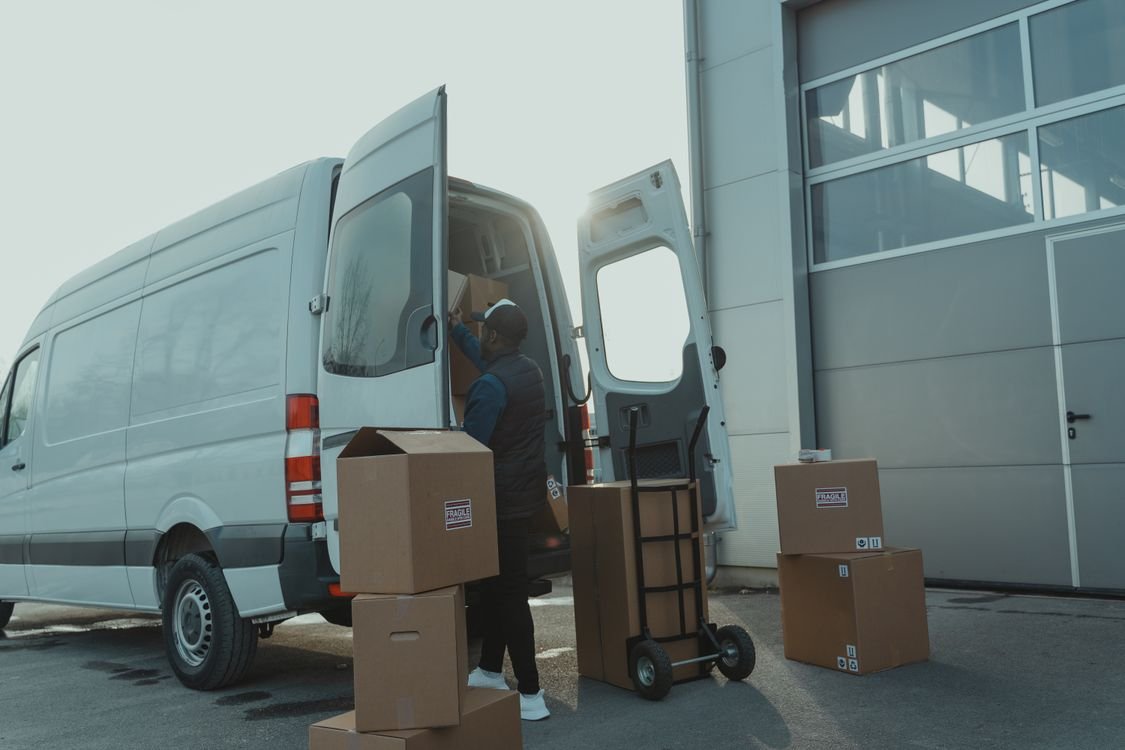
The main last mile delivery challenges are high delivery costs, failed deliveries, inefficient routes, weak delivery tracking, traffic and access problems in cities, and customer expectations that keep rising. The final leg is often the hardest part of the journey, because one driver must make many individual stops, each with its own address, time window, and customer. In short, last mile delivery challenges come from turning a bulk shipment into dozens of separate doorstep handovers, and every missed handover adds work, cost, and frustration. The good news is that each challenge has a practical fix, and this guide pairs every major problem with a last mile delivery solution you can actually use.
Last mile delivery is the final step in logistics: goods move from a local hub, store, or depot to the customer’s door. It is also the only part of delivery most customers ever see, so a problem here shapes how they judge the whole business.
Last Mile Delivery Challenges: High Costs and Low Drop Density
The first challenge is cost. A long-distance truck can carry a large load to one destination, but a delivery van in a neighbourhood must stop again and again, often for a single parcel at each address. Driver time, fuel, vehicle wear, and dispatch work all apply to every stop, so a route with stops spread far apart costs far more per delivery than a dense route in one area.
The solution starts with density. Group deliveries by area instead of sending drivers back and forth across a city, and use local micro-hubs or stores as dispatch points so vans start closer to their stops. Businesses should also give far-apart or hard-to-reach addresses realistic time windows rather than promises the route cannot keep. Better density is one of the strongest last mile delivery solutions, because it cuts wasted driving without cutting service quality. Good supply chain planning pays off on every route.

Failed Deliveries: The Most Expensive Non-Delivery
A failed delivery happens when a parcel reaches an address but the handover does not: nobody is home, there is no safe place to leave it, an access code is missing, or the address itself is wrong. Nothing was delivered, yet the driver’s time, fuel, and vehicle use are already spent. Then the parcel must be stored, re-sorted, and sent out again, or returned to the sender.
The fix is to prevent failures before the van leaves. First, validate addresses at checkout and ask customers to confirm flat numbers, building names, and access notes. Second, offer choices that fit real life: a delivery time slot, a safe-place instruction, a parcel locker, or a nearby pickup point. Third, send a clear message on delivery day with a realistic arrival window, and let the customer reschedule or redirect the parcel before the driver sets out. Together, these steps raise first-attempt success, which is the simplest way to cut last mile delivery costs.
Route Optimization Problems and How to Fix Them
Route optimization means putting delivery stops in the best possible order, and poor routing quietly causes many last mile delivery challenges. A route planned by hand, or in the order orders arrived, can send a driver across the same area several times and run late by the afternoon. Static routes also cannot adapt when traffic builds, a road closes, or a customer cancels.
Good route optimization solves this in three ways: it sequences stops to reduce backtracking, groups stops by area and time window, and updates during the day when conditions change. Even a small business can start simply by sorting stops by zone, setting realistic time windows, and reviewing completed routes each week to spot repeated problems, such as one street that always causes delays. Strong routing also supports earlier stages of the journey, from warehouse management to dispatch, because a well-loaded van leaves on time and follows a route the driver can complete. For the wider journey, see our guide to freight forwarding and our overview of supply chain management.
Delivery Tracking Gaps and Poor Visibility
Customers now expect to know where their order is, and vague tracking creates support tickets, worry, and missed handovers. When tracking goes quiet between “out for delivery” and the doorbell, customers cannot plan to be home, and failed deliveries become more likely.
The solution is proactive delivery tracking, not just a tracking link. Share live status updates at each key step, give an honest arrival window, and send an alert if the window changes. For the business, tracking should also cover the fleet: where drivers are, which stops are complete, and where exceptions need help. This turns tracking from a customer comfort into an operating tool, because problems get spotted while they can still be fixed. Our last mile delivery guide explains how this final stage fits into the full delivery chain.

Last Mile Delivery Challenges in Cities: Traffic, Parking, and Access
Urban delivery challenges deserve their own section, because cities combine almost every difficulty at once. Traffic congestion slows vans, narrow streets block large vehicles, parking is scarce, and apartment buildings add access codes, elevators, and concierge rules. A driver can lose more time looking for a legal parking spot than making the delivery itself, and every delay pushes later stops later still.
Practical urban delivery solutions include smaller vehicles for dense areas, such as cargo bikes or small vans, and off-peak delivery windows where customers and local rules allow them. Micro-hubs on the edge of busy districts let drivers reload close to their stops instead of driving back across the city. Parcel lockers and pickup points also help, because one locker stop can serve many customers who collect at a time that suits them. For chilled goods, see our guide to cold chain logistics.
Rising Customer Expectations and Peak Demand
Customers now compare every delivery with the fastest one they have ever received, and they expect speed, flexibility, and updates as standard. Promising a delivery day at checkout that the operation cannot meet is one of the most common last mile delivery challenges, because it creates disappointment before the parcel even ships.
The answer is honest promises and flexible capacity. Set delivery options from real cut-off times, stock levels, and carrier capacity, not from hope, and show slower or cheaper options alongside faster ones so customers can choose. For peaks, plan early: confirm extra driver and vehicle capacity, agree backup carriers, and prepare parcel lockers or pickup points as overflow options. Small businesses that cannot build a large fleet can work with a third-party provider instead; our guide on what is a 3PL explains how that partnership works. Accurate inventory management also stops the business from promising items that are not ready to ship.
Returns, Failed Attempts, and the Reverse Journey
The last mile does not end at the doorstep. Returns, refused parcels, and failed attempts all travel backwards, and without a plan they clog up vans, depots, and support teams. A return with no label, no pickup window, and no sorting rule can cost as much handling as the original delivery, so this reverse flow is part of the same final-leg problem.
Keep returns simple and visible: give clear return instructions with the original delivery, offer a scheduled pickup or a drop-off point, and track returned parcels the same way as outbound ones. Cross docking can help at busy hubs, since returned and outbound goods move through without sitting in storage longer than needed. For the full picture, read our guide to what is reverse logistics.
A Practical Plan: Last Mile Delivery Solutions That Work Together
No single tool fixes the last mile on its own. The strongest approach combines several last mile delivery solutions into one routine. As an illustrative example only, not a reported case study, imagine a small online store that groups its city deliveries by zone, offers lockers as an alternative to home delivery, and sends a morning message with a two-hour arrival window. Each step is small, but together they raise first-attempt success, shorten routes, and cut support questions.
Start with a short weekly review. Look at failed deliveries and ask why each one happened, check which routes ran late and where, and read the reasons customers contacted support. Fix the biggest cause first, then the next one.
Frequently Asked Questions About Last Mile Delivery Challenges
What are the biggest last mile delivery challenges?
The biggest last mile delivery challenges are failed first attempts, inefficient routing, high delivery costs, limited tracking visibility, city traffic and access problems, driver capacity limits, and rising customer expectations.
Why is last mile delivery so expensive?
Last mile delivery is expensive because it breaks one bulk shipment into many individual stops, and each stop carries driver time, fuel, vehicle use, and handling. Low drop density, failed attempts, and re-deliveries add further cost.
What causes failed deliveries?
Failed deliveries are usually caused by the customer not being home, an incorrect or incomplete address, a missing access code, no safe place to leave the parcel, or a delivery option that did not fit the customer’s day. Address validation, time-slot choice, pickup points, and day-of-delivery messages all reduce these failures.
How does route optimization help last mile delivery?
Route optimization puts stops in the best order, groups them by area and time window, and adapts when traffic or cancellations change the plan. This cuts wasted driving, helps drivers finish routes on time, and lowers fuel use and failed attempts.
How can small businesses improve delivery tracking?
Small businesses can improve delivery tracking by sharing live status updates, giving a realistic arrival window, and sending an alert when that window changes. Even simple updates at pickup, out-for-delivery, and delivered stages help customers plan to be home and reduce support questions.
What is the best way to reduce failed deliveries?
The best way to reduce failed deliveries is to prevent them before dispatch: validate the address, offer a time slot or pickup point, confirm safe-place instructions, and message the customer on delivery day with a chance to reschedule.
Last mile delivery will always be the most hands-on part of the supply chain, but it does not have to be the most chaotic. Tackle the challenges in order — costs, failed deliveries, routing, tracking, and city access — and measure the result by first-attempt success and on-time arrivals rather than by speed alone.
