


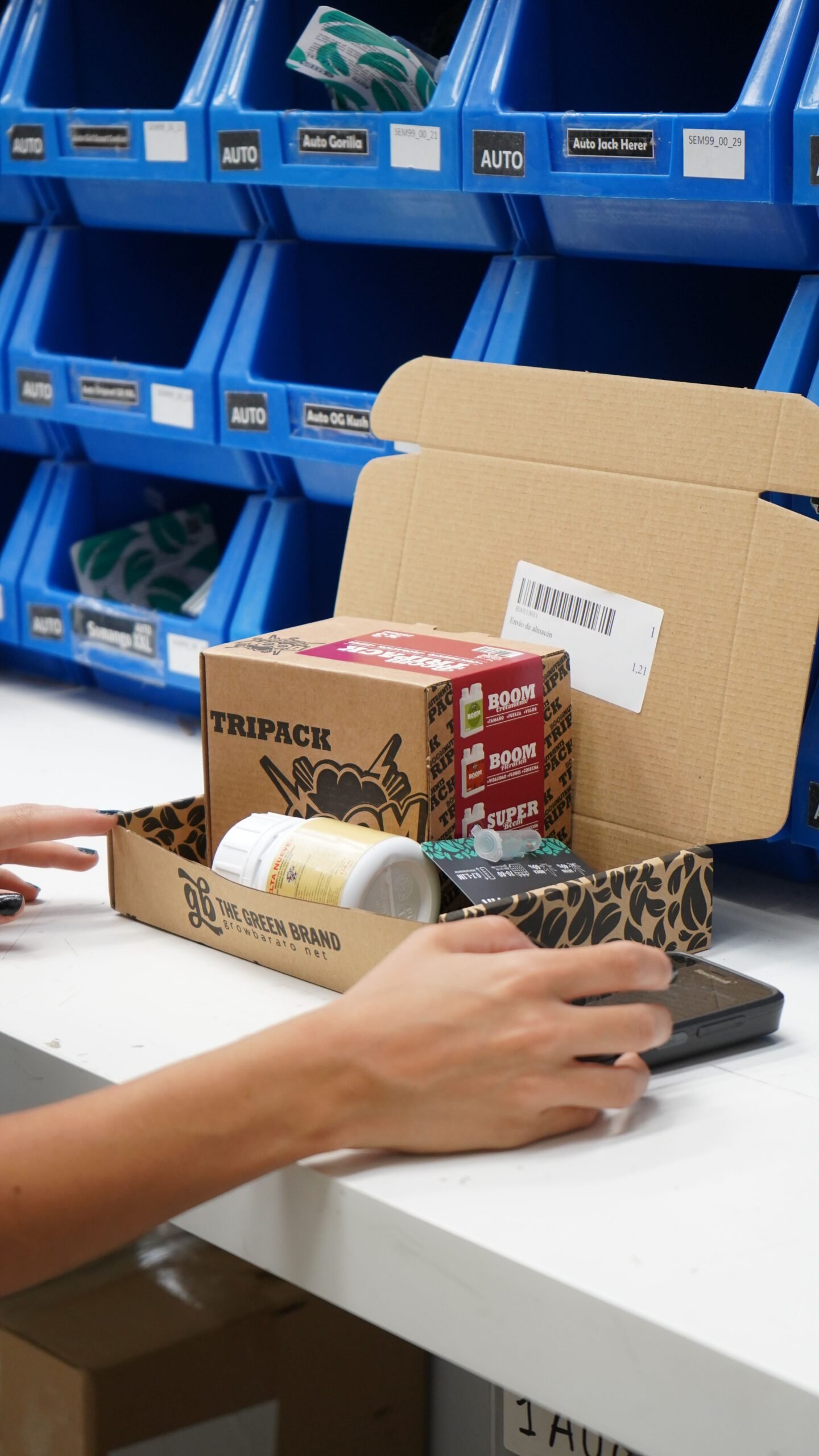
What They Are and How They Work
Kitting and fulfillment services combine several individual products into one pre-packaged unit before an order ships. That single change cuts picking time, lowers shipping costs, and reduces packing mistakes compared with shipping each item on its own. A skincare set that arrives as one clean package, or a device that ships with its charger and manual already tucked inside, got that way because someone kitted it in advance.
Kitting is one specific service inside the larger world of order fulfillment. It’s worth understanding on its own terms before comparing providers or pricing.
Say you run a small skincare brand and sell a three-piece starter set: cleanser, serum, moisturizer. Without kitting, a warehouse worker pulls all three from separate shelves every time someone orders the set, then boxes them together and hopes nothing gets missed. With kitting, that same set already exists as one pre-built unit sitting on a shelf with its own barcode.
The order comes in, someone grabs one box, and it’s done. Three picks versus one pick is the entire idea in miniature.
What Kitting Actually Means
Kitting takes several separate products and assembles them into a single unit ahead of time, so that unit becomes its own item with its own SKU. A warehouse worker filling an order doesn’t chase down four or five components across different shelves. They pick one thing.
People often use “kitting,” “bundling,” and “assembly” as if they mean the same thing, but they don’t. Bundling is a pricing decision. It groups products together for a promotional offer, sometimes without the items ever being physically combined until they land in the same shipping box.
Kitting is the physical, hands-on version of that idea. Someone builds the unit, packages it, and stores the finished kit as inventory in its own right. Assembly sits a step further along the same spectrum, often involving light manufacturing, like attaching parts or putting together a finished product, rather than grouping items that are already complete on their own.
The table below lays out the distinction more directly:
| Kitting | Bundling | Assembly | |
|---|---|---|---|
| What it is | Physically combining finished items into one shippable unit | Grouping products for pricing or marketing purposes | Building a product from raw components |
| When it happens | Before or at the point of an order | Can exist purely as a sales offer | Before the item counts as a finished product |
| Inventory effect | Creates a new SKU for the kit | May not need a new SKU if items ship separately | Consumes raw materials to create something new |
| Common example | A skincare set packaged as one unit | “Buy the shampoo and conditioner together and save” | Building a device from its internal parts |
How a Kit Actually Gets Built
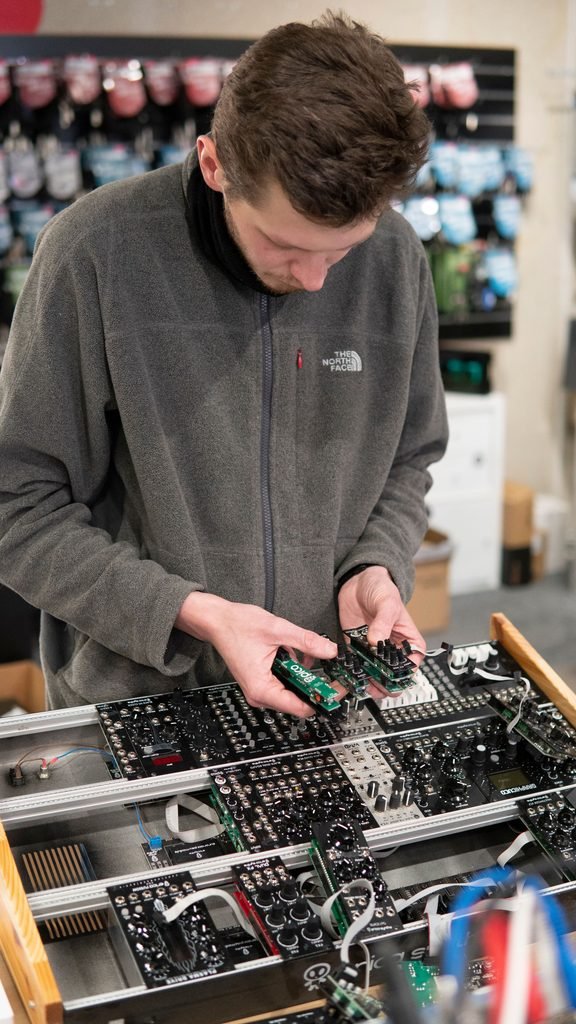
Every kitting operation starts with a document that spells out exactly what goes into a kit, sometimes called a bill of materials, sometimes just kit logic. It defines which components, in what quantity, arranged in what way. Skip this step, and kitting turns into guesswork fast.
From there, a fairly consistent sequence plays out. Components get pulled from inventory and moved to a dedicated kitting station. The kit gets assembled according to spec, including any inserts, padding, or promotional material that belongs inside it.
Once built, it receives its own barcode and SKU, separate from anything inside it. A quality check confirms everything matches before the finished kit gets shelved, ready to be picked as a single unit the next time an order comes through.
Timing splits into two general approaches. Some businesses pre-kit in batches ahead of expected demand, which fits predictable, high-volume combinations like a subscription box that ships the same set every month. Others kit to order, building the bundle only once a customer actually places it.
A monthly snack subscription box is a good example of the first approach. The company knows roughly how many boxes ship on the first of every month, so it makes sense to pre-build a batch the week before, ready the moment orders start coming in.
Compare that to a gift-set retailer that lets customers pick their own combination of items. Pre-building every possible combination in advance would tie up shelf space in kits nobody may ever order, so building each one only after the order lands avoids that waste entirely.
Why This Saves Money (and Where It Doesn’t)
The cost argument is the one most businesses hear about first, and it holds up. Five items shipped in five separate boxes means five sets of packaging materials, and often five separate shipping charges calculated on dimensional weight rather than actual product weight. Combine those same five items into one kit, and the shipping cost drops to whatever the single, tighter package actually costs to send.
Take an electronics accessory brand shipping a phone case, a screen protector, and a charging cable as one order. Shipped separately, that’s three package dimensions, three labels, and three sets of dimensional-weight math working against the seller. Kitted together into one slim box, it often qualifies for a cheaper shipping tier entirely, not just a proportionally smaller one.
Picking accuracy improves for a related reason. A worker filling an order with five individual SKUs has five separate chances to grab the wrong item or the wrong count. Reduce that to one pre-built kit, and most of those chances disappear along with it.
There’s a softer benefit too, one that’s easy to dismiss as marketing fluff but shows up in how customers actually respond. A well-built kit tends to read as more considered than the same items arriving loose in one shipment. That perception has a practical side effect: kits introduce someone to more of a product line in a single purchase.
None of this makes kitting free money, though. Building kits in advance ties up cash in finished inventory that hasn’t sold yet. If demand shifts or a component gets discontinued, that inventory can turn into a write-off rather than a shortcut. Kitting to order avoids that risk but gives up some of the speed advantage.
Where Kitting Shows Up
Ecommerce and subscription boxes are where kitting is most visible, largely because the entire business model depends on shipping a consistent, pre-defined set of items on a recurring schedule. Plenty of other industries lean on it just as heavily.
Electronics brands kit devices with chargers, cables, and printed manuals so an order ships as one unit instead of several loose parts. Healthcare and medical supply companies build procedure kits, where a specific set of instruments needs to arrive together, intact, and correctly counted.
Automotive and industrial businesses kit repair parts so a technician gets everything a job requires in one delivery instead of five separate ones. Consumer packaged goods brands use kitting heavily for seasonal gift sets and promotional bundles.
What It Actually Costs
Pricing here varies more than most people expect walking in, mainly because cost tracks labor, materials, and complexity rather than a flat industry rate. A few pricing structures show up repeatedly across fulfillment providers.
Per-kit flat fees cover picking, assembly, and packing in one price, and they work best for simple, consistent kits that don’t change much order to order. Per-component fees charge separately for each item picked plus an assembly fee, fitting kits with a variable SKU count or optional add-ons.
Labor-minute pricing bills by actual time spent, which suits kits whose complexity swings from batch to batch. Tiered volume pricing lowers the per-kit cost as monthly volume grows, common for high-volume, recurring kits like subscription boxes.
As a rough benchmark, a mid-complexity kit (a few minutes of labor, basic packaging, a label) often lands somewhere around two to three dollars once everything gets added together. Quoted rates from actual providers swing much wider in practice, running anywhere from under a dollar to well over ten dollars per kit.
It’s worth asking upfront what falls outside the base rate entirely. Returns handling, rework on damaged or miscounted kits, and one-off change orders are commonly billed separately rather than folded into the standard fee.
Choosing a Provider

A few questions matter more here than comparing headline rates:
- Does their warehouse management system actually support kit-level SKUs, or is kitting bolted onto a system built for single-item picks?
- Who builds and maintains the bill of materials, and what happens when a component gets swapped or discontinued?
- What does quality control look like specifically for finished kits, not just individual item picks?
- What are the minimum order volumes, setup fees, and volume-based pricing tiers?
- What happens to unsold or discontinued kit inventory if demand shifts mid-run?
- Which activities get billed separately from the base kitting rate, such as returns, rework, or change orders?
- Can they support both pre-kitting in batches and kitting to order, in case your needs change later?
Common Questions
Is kitting the same as fulfillment? No. Fulfillment is the broader process of receiving inventory, storing it, picking and packing orders, and shipping them out. Kitting is one specific service that can sit inside that process, focused narrowly on pre-assembling items into a single unit before the picking stage starts.
Isn’t kitting basically the same as bundling? Not exactly, even though the two terms get mixed up constantly. Bundling is a pricing decision that groups products for a promotional offer, and the items can still ship separately. Kitting always involves physically combining the products first.
What does kitting typically cost? It depends heavily on component count and assembly complexity, but per-kit fees commonly range from under a dollar to over ten dollars. A simple two-item kit costs far less than one with several components or parts that need individual tracking.
Should this be handled in-house or through a 3PL? It comes down to volume and space more than anything else. Lower, predictable volume can often be kitted in-house with a dedicated table or small assembly area.
Once volume outgrows what a small team can handle accurately, or storage for finished kits starts eating into warehouse space, moving kitting to a third-party provider usually makes more sense.
Can kitting work for customizable or made-to-order products? Yes, though it’s usually called kitting to order rather than pre-kitting. Components stay separate until an order actually arrives, then get assembled to match that specific order. This fits products with a lot of optional add-ons far better than pre-building fixed kits ever could.
Kitting isn’t one decision so much as a set of smaller ones: how far in advance to build, which pricing model fits your order pattern, and whether the volume justifies handing it off to a provider at all. Getting those details right upfront usually separates a kitting setup that pays for itself from one that just adds another line to the invoice.

2 Comments
Pingback: What Is Reverse Logistics? How the Return Process Works
Pingback: Event Logistics Company Cardiff | Complete Guide