



Planning an event in Leeds is not simply a matter of getting equipment from one address to another. When the delivery involves staging, LED screens, lighting, exhibition stands, broadcast equipment, or high-value AV cases, a small transport problem can quickly become an event-day problem.
That is why working with an event logistics company Leeds organisers can rely on often means planning for the things that might go wrong before they happen.
Leeds presents its own operational challenges. City-centre traffic restrictions, controlled parking areas, loading restrictions, busy roads around major venues, and limited time for unloading can all affect the movement of event equipment. Leeds City Council, for example, confirms that the city centre has a Controlled Parking Zone and that specific loading restrictions apply in some locations.
For event organisers, the goal is not simply faster transport. It is creating a delivery plan that still works when traffic builds up, access changes, equipment is delayed, or a vehicle develops a problem.
This guide focuses on the practical side of event logistics in Leeds: identifying operational risks, checking venue access, protecting equipment, and preparing realistic contingency plans.
Why Event Logistics in Leeds Requires More Than Standard Transport
A normal freight delivery can often tolerate some flexibility. If a pallet arrives an hour later than expected, the receiving warehouse may still be able to accept it.
Live events are different.
A truck arriving late can leave a production crew waiting. A vehicle that cannot reach a loading area can create a queue outside the venue. If equipment is damaged in transit, replacing it may not be possible before doors open.
The transport schedule therefore needs to be built around the event programme rather than treated as a separate delivery task.
A useful event logistics plan should answer questions such as:
- Where exactly does the vehicle need to arrive?
- When can it enter the venue area?
- Where can it legally wait?
- How long is available for unloading?
- Who will receive the equipment?
- What happens if the planned route becomes congested?
- What happens if the vehicle breaks down?
- Where can equipment be held temporarily if the venue cannot receive it?
- Who makes the final decision when something changes?
Those questions turn transport planning into operational risk management.
Leeds Access Restrictions Can Affect Event Deliveries
One of the easiest mistakes is to plan a route using a standard navigation app and assume the vehicle can stop wherever the destination appears on the map.
That is not always how city-centre event deliveries work.
Leeds has a city-centre Controlled Parking Zone, and the council sets specific rules around waiting, loading and unloading. Some locations have restrictions that can apply even when loading activity is taking place.
For an event delivery, that means the final approach to a venue deserves as much attention as the motorway journey.
Check the Final Approach, Not Just the Main Route
A route may look straightforward from the M621 or A58(M), yet the final few streets can create the biggest operational problem.
Before dispatch, the logistics team should check:
- Vehicle access to the venue entrance
- Width and height restrictions
- Current road restrictions
- Loading and unloading arrangements
- Parking or waiting restrictions
- Temporary road closures
- Suitable stopping points
- Alternative approaches
- The distance between the vehicle and the event space
Leeds City Council advises checking permanent Traffic Regulation Orders and temporary restrictions because restrictions can change for particular streets or periods.
For a high-value event delivery, this information should be confirmed before the vehicle leaves the warehouse.
The Main Risks an Event Logistics Company in Leeds Should Plan For
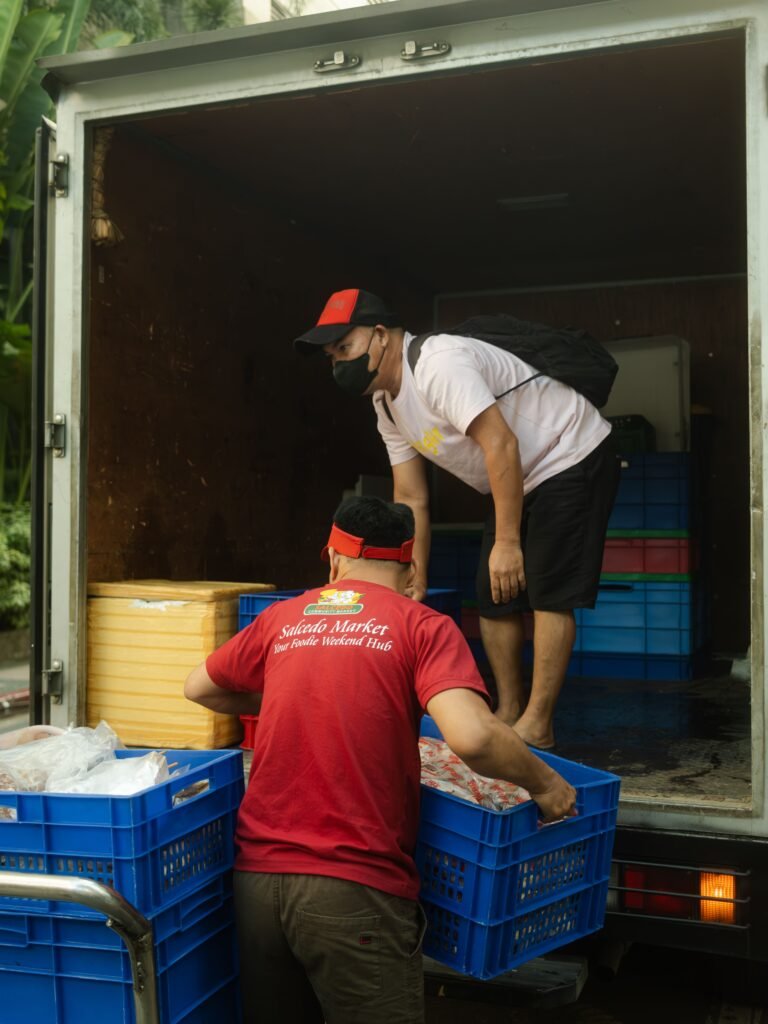
Risk management becomes much easier when potential problems are identified before the event.
| Operational Risk | What Can Cause It | Possible Consequence | Preventive Action |
|---|---|---|---|
| Traffic delay | Congestion, roadworks or incidents | Late arrival and reduced setup time | Build route alternatives and dispatch buffers |
| Venue access problem | Incorrect access information or restrictions | Vehicle cannot reach the planned unloading point | Confirm access instructions directly with the venue |
| Loading delay | Another supplier using the same area | Crew and vehicle waiting | Coordinate arrival sequence with venue operations |
| Equipment damage | Poor securing, movement or unsuitable handling | Damaged AV or exhibition equipment | Use appropriate cases, restraints and trained handlers |
| Vehicle breakdown | Mechanical or tyre failure | Delivery interruption | Maintain breakdown and replacement-vehicle procedures |
| Last-minute equipment change | Client adds or removes equipment | Original vehicle plan no longer works | Keep capacity or secondary transport options available |
| Temporary road restriction | Closure, works or traffic order | Original route becomes unsuitable | Monitor restrictions and maintain an alternative route |
| Communication failure | Driver, organiser and venue lack shared information | Confusion at the point of delivery | Use one clear operational contact chain |
The important point is that risk management should not stop at identifying a problem. Each significant risk needs a practical response.
Venue Access Planning in Leeds
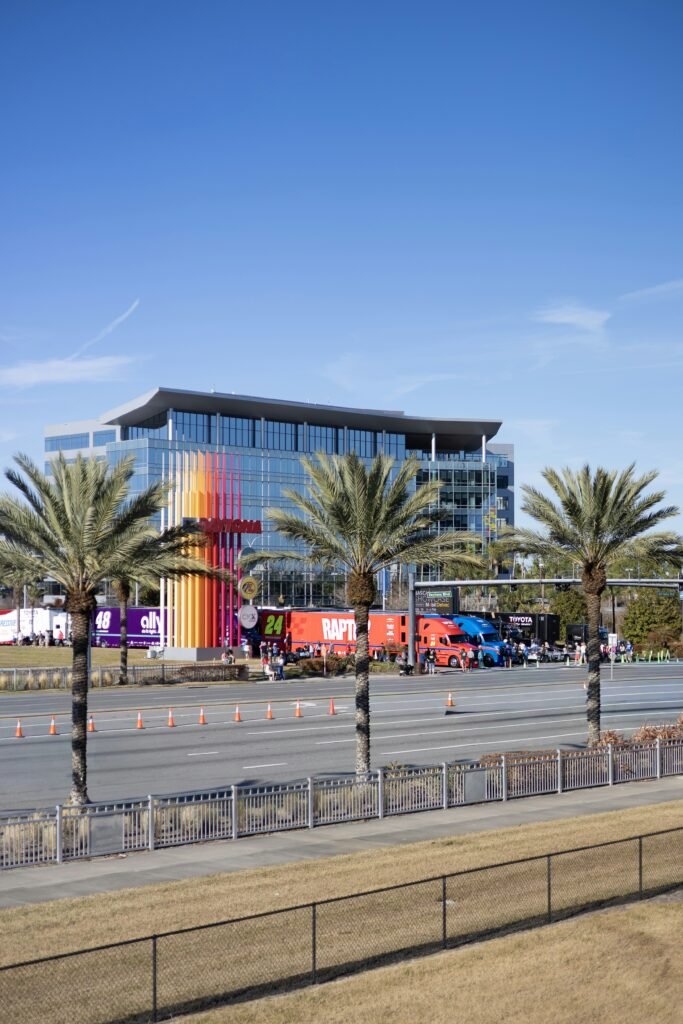
Different venues create different operational requirements. Even when two venues are relatively close geographically, their access arrangements can be completely different.
The safest approach is to treat every venue as a separate logistics site.
Royal Armouries Museum and New Dock Hall
The Royal Armouries in Leeds is used for exhibitions, conferences, meetings and events, and New Dock Hall forms part of its commercial event facilities.
For event logistics, the important issue is not simply the venue address. The delivery team needs to establish exactly where equipment is expected to arrive and how the venue wants suppliers to coordinate access.
The Royal Armouries publishes separate access information and provides a dedicated contact route for access enquiries, which makes direct confirmation preferable to relying on assumptions about vehicle access.
Before dispatch, confirm:
- Delivery location
- Event-day contact
- Vehicle access instructions
- Unloading procedure
- Any restrictions affecting the delivery
- Where the vehicle should go after unloading
- Whether additional handling is required
The principle is simple: the venue’s current instructions should override assumptions made from an old delivery plan.
First Direct Bank Arena
The first direct bank arena is located on Arena Way in Leeds city centre and sits close to the A58(M) Inner Ring Road, with road connections towards the A64, M621, M62 and M1.
For large events, the surrounding road network can therefore be an important part of transport planning.
The arena hosts concerts, comedy, sport and other major events, so transport planning needs to take the event schedule and surrounding traffic conditions into account.
Do not assume that a route suitable for a passenger car will automatically be suitable for an event vehicle.
A logistics plan should confirm:
- The correct delivery contact
- The approved delivery point
- Vehicle dimensions
- Access times
- Security or venue procedures
- Unloading arrangements
- The procedure for collecting equipment after the event
The venue’s own event team should be treated as the source of truth for event-specific delivery arrangements. The arena provides direct event-enquiry channels for organisers planning conferences, exhibitions and other functions.
Horizon Leeds and Smaller City-Centre Venues
Not every event takes place at a large arena.
Horizon Leeds, for example, operates as a central Leeds conference and events venue with spaces for smaller meetings, conferences, awards, training sessions and hybrid events. Its official site also provides organiser resources covering areas such as health and safety, floorplans, accessibility and getting to the venue.
Its location at Brewery Wharf means the final approach should still be checked rather than assumed. Horizon Leeds provides specific driving directions from the M621 and details about nearby parking.
For smaller venues, a smaller vehicle can sometimes make the final delivery easier, but vehicle selection should be based on the actual equipment list and confirmed site access rather than simply choosing the smallest available van.
Build a Risk Register Before Dispatch
A simple risk register can prevent last-minute decisions.
For every important delivery, record:
Risk: What could go wrong?
Likelihood: How realistic is the problem?
Impact: What happens if it occurs?
Prevention: What can be done before dispatch?
Response: What will the team do if it happens anyway?
For example:
Risk: Vehicle cannot use the planned final approach.
Prevention: Check current restrictions and confirm the venue access route.
Response: Use the approved alternative route or contact the venue before attempting another entrance.
Another example:
Risk: Equipment arrives but cannot immediately enter the venue.
Prevention: Confirm the receiving contact and delivery procedure.
Response: Keep the vehicle in a lawful waiting location and agree the next step with venue operations rather than creating an obstruction.
This approach makes contingency planning much more practical.
Protecting High-Value AV and Exhibition Equipment
Event equipment is often expensive, fragile and difficult to replace at short notice.
A broken monitor is not just a damaged item. It can affect a presentation, exhibition stand, broadcast setup or stage design.
Protection should therefore begin before the equipment is loaded.
Use the Right Packaging
Depending on the equipment, protection may include:
- Flight cases
- Padded cases
- Protective blankets
- Corner protection
- Internal foam
- Custom restraints
- Anti-slip materials
Large or fragile items should be secured so they cannot move during acceleration, braking or cornering.
Match the Vehicle to the Equipment
Vehicle selection should consider:
- Equipment dimensions
- Total weight
- Loading height
- Tail-lift requirements
- Internal vehicle dimensions
- Number of cases
- Access conditions at the venue
A vehicle that technically has enough cubic capacity may still be unsuitable if the loading height, payload or access arrangement does not work.
Brief the Handling Crew
Drivers and crew should know what they are carrying and which items require special treatment.
For example, LED panels, lighting equipment, glass displays and sensitive electronics should not simply be treated like ordinary cartons.
The handling plan should identify:
- Fragile items
- Heavy items
- Items requiring two-person handling
- Cases that must remain upright
- Equipment that needs priority unloading
- Items needed first during setup
That last point is especially useful. If the production team needs certain cases first, loading the vehicle in reverse setup order can reduce unnecessary handling at the venue.
Emergency Scenario 1: The Vehicle Breaks Down
Vehicle breakdowns are one of the clearest examples of why event logistics needs contingency planning.
A basic delivery plan may only contain the original vehicle and driver.
A stronger plan asks:
What happens if that vehicle stops working halfway through the journey?
Possible contingency actions include:
- Contact the event logistics control point.
- Establish the vehicle’s exact location.
- Assess whether the vehicle can safely continue.
- Contact breakdown support.
- Identify whether a replacement vehicle is available.
- Determine whether equipment needs to be transferred.
- Inform the venue and event manager of the revised ETA.
- Update the delivery sequence if necessary.
The exact response will depend on the equipment, vehicle and location. The important part is having the decision-making process ready before the breakdown occurs.
Emergency Scenario 2: Venue Access Is Delayed
Sometimes the vehicle arrives on time but the venue cannot receive it immediately.
The wrong response is to improvise by parking wherever space happens to be available.
Leeds has specific rules governing waiting, loading and unloading, including restrictions in controlled areas and locations where loading may be prohibited.
Instead:
- Contact the venue immediately.
- Confirm whether the vehicle should wait or move.
- Follow the venue’s approved procedure.
- Keep the organiser informed.
- Avoid blocking traffic or unauthorised areas.
- Use an agreed alternative holding location if one has been arranged.
If the equipment cannot be delivered immediately, the logistics team should also assess whether temporary secure storage or a revised delivery sequence is appropriate.
Emergency Scenario 3: The Client Adds More Equipment
Last-minute changes are common in event production.
A speaker may require another display. A sponsor may add branding. A production team may need additional lighting or AV cases.
The problem is not simply fitting extra items into a vehicle.
The additional equipment can change:
- Vehicle capacity
- Payload
- Loading sequence
- Delivery time
- Number of crew members required
- Number of collection stops
- Handling requirements
Before accepting the change, the logistics team should check whether the existing transport plan can safely accommodate it.
If not, a second vehicle or additional collection may be more appropriate than overloading the original delivery.
Create One Clear Communication Chain
Many event-day problems become worse because too many people are giving different instructions.
A practical communication chain might include:
Logistics coordinator → Driver → Venue contact → Event manager
Everyone should know:
- Who is the primary contact
- Who can approve route changes
- Who can approve additional transport
- Who receives the driver’s ETA
- Who communicates venue delays
- Who authorises changes to the delivery sequence
Having one clear logistics coordinator can prevent the driver from receiving conflicting instructions from several people.
A Leeds Event Logistics Checklist
Use this checklist before the delivery leaves the warehouse.
Several Weeks Before the Event
- Build a complete equipment inventory.
- Record dimensions and weights.
- Identify fragile and high-value equipment.
- Confirm the venue’s delivery contact.
- Request current access and unloading instructions.
- Check the planned route and alternative routes.
- Identify any relevant road or loading restrictions.
- Confirm insurance requirements.
One Week Before
- Confirm vehicle type and dimensions.
- Confirm payload requirements.
- Check tail-lift requirements.
- Confirm driver details if required by the venue.
- Recheck venue instructions.
- Review temporary road restrictions.
- Confirm emergency contacts.
- Check backup transport options.
The Day Before
- Finalise the vehicle loading plan.
- Check cases and equipment labels.
- Confirm delivery time.
- Share the driver’s contact details with the event team.
- Confirm the latest route information.
- Make sure the driver has the correct venue address and delivery instructions.
On Event Day
- Track the vehicle’s progress.
- Monitor traffic conditions.
- Contact the venue if the ETA changes.
- Confirm the receiving person before arrival.
- Follow the approved unloading process.
- Record damaged or missing equipment immediately.
- Confirm the collection plan before the vehicle leaves.
When Choosing an Event Logistics Company in Leeds, Focus on Risk Capability
The right question is not simply whether a provider can move your equipment.
Ask whether they can manage the delivery when the original plan changes.
Before appointing a provider, ask:
- How do you handle vehicle breakdowns during an event delivery?
- How do you monitor traffic and route disruptions?
- Can you provide backup vehicles if required?
- How do you protect fragile AV equipment?
- How do you coordinate with venues?
- What information do you need from us before dispatch?
- How do you handle last-minute equipment changes?
- What happens if the venue cannot receive the delivery?
- Who will be our operational contact on event day?
- What insurance cover applies to our equipment?
A provider that can answer these questions clearly is demonstrating operational planning rather than simply offering transportation.
For a broader explanation of the role logistics providers can play in event operations, see our guide to an event logistics company.
Frequently Asked Questions
Why is event logistics in Leeds different from standard freight transport?
Event logistics is driven by event schedules rather than ordinary warehouse delivery windows. Equipment may need to arrive at a specific time, reach a particular venue area, be unloaded in a planned sequence and then be collected immediately after the event.
The equipment can also be more fragile and valuable than standard freight, making handling and contingency planning especially important.
What should I check before sending an event vehicle into Leeds city centre?
Check the exact venue access instructions, current road restrictions, loading arrangements, vehicle dimensions and the planned final approach.
Leeds City Council publishes information on city-centre parking controls and loading restrictions, so the legality of stopping or unloading should never be assumed from the venue address alone.
What if the planned route becomes unavailable?
The logistics team should already have an alternative route and a clear escalation process.
If the restriction affects the final approach to the venue, contact the venue before attempting an unfamiliar access route. Temporary traffic restrictions can change, so current information should be checked close to the event date.
How can high-value AV equipment be protected?
Use suitable cases and restraints, select a vehicle appropriate to the equipment, secure every load correctly and brief the handling team on fragile or high-value items.
The loading sequence should also reflect the event setup sequence so that equipment does not need to be unnecessarily moved or unloaded multiple times.
What insurance should event organisers consider?
The appropriate cover depends on the equipment, contract and logistics arrangement. Organisers should confirm the value of the equipment being transported and check that the relevant transit and onsite liabilities are adequately covered.
Do not assume that a standard carrier liability limit automatically matches the replacement value of specialist AV, staging or exhibition equipment.
Should every Leeds event have a backup vehicle?
Not necessarily. The need depends on the value of the equipment, event schedule, distance, number of vehicles and consequences of a failed delivery.
For a critical production where a missed delivery could stop setup, however, having a defined replacement-vehicle option can significantly improve the contingency plan.
Final Thoughts
Successful event logistics in Leeds is largely about controlling uncertainty.
Traffic will change. Venue schedules can move. Equipment lists can grow. Vehicles can experience mechanical problems. Access arrangements can be different from what a route planner suggests.
The strongest logistics plan is therefore not the one that assumes everything will happen perfectly. It is the one that already has a sensible response when something does not go according to plan.
By checking venue access early, monitoring Leeds road restrictions, protecting high-value equipment, maintaining clear communication and preparing realistic emergency procedures, organisers can reduce the operational risks that can turn a routine delivery into an event-day crisis.
For venue-specific arrangements, always confirm the latest instructions directly with the venue. The Royal Armouries provides dedicated access contacts, while venues such as Horizon Leeds provide organiser resources covering health and safety and event planning.
