



If you’re budgeting for an event in Bristol, the transport line on your spreadsheet can look deceptively simple: vehicle, driver, delivery, done.
In practice, event logistics can involve much more than the journey itself.
A delivery may need a specific vehicle, a timed loading slot, additional crew, temporary storage, multiple collections, evening or weekend access, or a second trip after the event. If your venue is in central Bristol, you may also need to account for local traffic restrictions and Bristol’s Clean Air Zone (CAZ).
That makes the difference between a £500 logistics quote and a £900 quote much more understandable — provided you know what is actually included in each price.
This guide is for event organisers who are budgeting for, comparing or preparing to hire an event logistics company in Bristol. The focus is deliberately practical: what you may pay for, what can increase the final bill, when self-managed transport makes sense, and what to check before signing with a supplier.
What Should an Event Logistics Budget Include?
Before comparing companies, separate the logistics budget into its individual cost components.
A useful event logistics budget can include:
| Cost area | What you may be paying for |
|---|---|
| Vehicle | Van, Luton, rigid truck or other suitable vehicle |
| Driver | Driver time and travel |
| Fuel and mileage | Distance travelled and operating costs |
| Loading | Loading at the collection point |
| Unloading | Unloading and moving goods at the venue |
| Additional crew | Porters, handlers or event crew |
| Multiple collections | Picking up equipment from several locations |
| Multiple deliveries | Delivering to different venues or sites |
| Storage | Holding equipment before or after the event |
| Waiting time | Time spent waiting for access, loading or unloading |
| Out-of-hours work | Early morning, evening, overnight or weekend operations |
| Return collection | Taking equipment away after the event |
| Equipment handling | Fragile, bulky, heavy or specialist items |
| Special vehicle requirements | Tail lift, larger vehicle or other requirements |
| Bristol CAZ | Applicable Clean Air Zone charge for a non-compliant vehicle |
| Contingency | Allowance for realistic unexpected costs |
The important point is that not every supplier charges each item separately.
One company might offer an all-inclusive project price. Another might quote transport separately and add labour, waiting time and storage.
So don’t compare the headline numbers until you’ve compared the scope.
How Much Does Event Logistics Cost in Bristol?
There isn’t a single standard price for hiring an event logistics provider in Bristol.
A straightforward local delivery involving one compliant van, one collection and one delivery is a very different job from moving exhibition equipment between several suppliers and a city-centre venue, storing it for two days and collecting everything after the event.
Your final price can be affected by:
- distance
- vehicle type
- number of stops
- number of items
- weight and dimensions
- loading requirements
- number of staff required
- delivery window
- waiting time
- storage
- return collection
- venue access
- event duration
- weekend or out-of-hours work
- vehicle emissions compliance
- urgency
A simple way to think about the quote
Instead of asking:
“How much does an event logistics company charge?”
ask:
“What resources will my particular event require?”
For example, imagine two Bristol conference deliveries.
Event A
One van collects 20 boxes from a local office and delivers them to a venue during normal working hours.
Event B
Three suppliers need to be collected from different locations. The goods include exhibition stands and AV cases. Everything must arrive within a fixed venue access window, two crew members are needed for unloading, the goods need overnight storage, and the equipment has to be collected the following evening.
Both jobs involve “event transport”, but their costs can be dramatically different.
The Main Event Logistics Cost Factors in Bristol
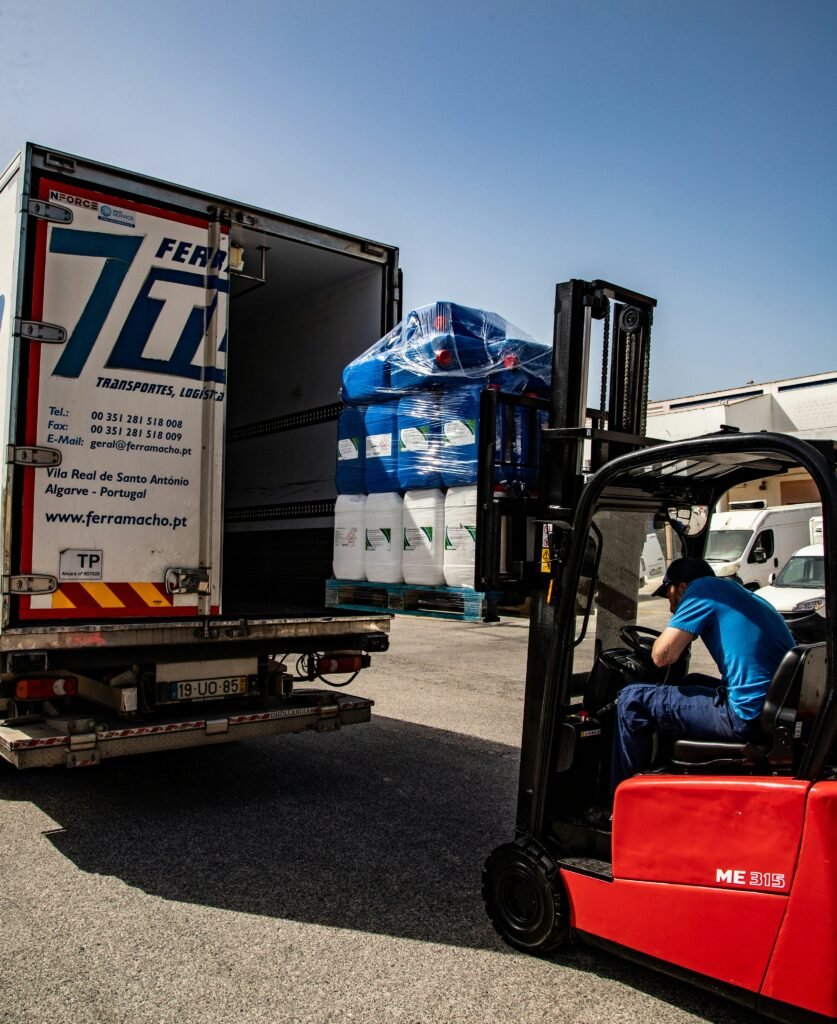
1. Vehicle Size and Type
The vehicle is one of the first things that affects the quote.
A small van may be enough for boxes, banners and lightweight event materials. Larger exhibitions or production events may require a Luton van, rigid truck or another larger vehicle.
Choosing too small a vehicle can create a second problem: you may need two journeys instead of one.
So the cheapest vehicle rate isn’t necessarily the cheapest overall option.
Ask the logistics provider to assess:
- total volume
- individual item dimensions
- total weight
- number of cases or pallets
- whether items can be stacked
- loading equipment
- access at both ends
For valuable or fragile equipment, the cheapest suitable vehicle isn’t always the right choice either. Handling and protection requirements matter.
2. Distance, Mileage and Travel Time
A Bristol delivery can involve much more than the distance shown on a map.
A quote may reflect:
- mileage
- fuel
- driver hours
- motorway travel
- congestion
- return travel
- time spent at the venue
For a multi-location event, calculate the whole route rather than only the distance from the first collection to the final venue.
If three suppliers are involved, ask the provider whether they can consolidate collections into one route.
That can sometimes reduce unnecessary vehicle movements.
3. Loading and Unloading Labour
Transport and labour aren’t always the same thing.
A driver collecting several lightweight boxes may be enough for one job. A large exhibition stand, staging equipment or heavy flight cases may require additional people.
Before accepting a quote, check:
Does the price include loading and unloading?
If not, ask:
- How many crew members are recommended?
- How many hours are included?
- Is there a minimum labour period?
- Is equipment movement inside the venue included?
- Are stairs, lifts or long carrying distances charged separately?
This is one of the areas where two apparently similar quotations can turn out to be quite different.
4. Waiting Time
Waiting can become a genuine event logistics cost.
Suppose a vehicle arrives at 8:00 am but the venue cannot accept the delivery until 9:00 am.
The vehicle and driver haven’t stopped existing during that hour.
Some logistics companies may include a certain amount of waiting time in their quotation. Others may charge after a specified allowance.
Don’t assume either approach.
Ask the supplier:
“How much waiting time is included, and what happens if the vehicle has to wait longer?”
This is especially relevant when your event depends on a strict venue loading schedule.
5. Loading Bay and Access Restrictions
A delivery vehicle may reach the correct address and still be unable to complete the delivery efficiently.
Central Bristol venues can have specific access arrangements, road restrictions, loading areas or timed delivery requirements.
Bristol City Council publishes traffic and parking restrictions, including designated loading arrangements in controlled areas.
That means your logistics plan should identify the actual delivery point rather than simply using the venue’s postal address.
Ask the venue:
- Where does the logistics vehicle enter?
- Is there a dedicated loading area?
- Is access time booked?
- How long can the vehicle remain there?
- Is unloading included?
- Can the vehicle wait after unloading?
- Are there vehicle-size restrictions?
- Does the supplier need a permit or prior approval?
If a venue or supplier charges for extended waiting, loading access or additional handling, treat those charges as part of the logistics budget rather than an unexpected bill.
Bristol’s Clean Air Zone: A Cost You Should Check Before Booking
Bristol’s Clean Air Zone is one of the local costs that should be checked when planning event transport.
Bristol City Council states that vehicles that don’t meet the zone’s emissions standards must pay a daily charge unless an exemption applies. The current published charges are £9 for light goods vehicles under 3.5 tonnes and £100 for heavy goods vehicles over 3.5 tonnes, with different categories applying to buses and coaches.
Many vehicles don’t incur the charge because they meet the required emissions standard. The council advises checking the individual vehicle rather than assuming whether a charge applies.
This matters when comparing logistics quotations.
Imagine a supplier quotes £650 for a delivery but uses a vehicle that attracts a £100 CAZ charge. Another supplier quotes £690 using a compliant vehicle.
The £650 quote isn’t necessarily the lower-cost option once all charges are considered.
Add this question to your quote request
“Will the vehicle used for this delivery incur a Bristol Clean Air Zone charge, and if so, is that charge included in your quotation?”
That’s a small question that can prevent an avoidable surprise.
Also remember that CAZ charges are based on the vehicle and its use. Don’t automatically add £9 or £100 to every Bristol event delivery. Check the actual vehicle and journey.
Out-of-Hours and Weekend Logistics
Event schedules don’t always fit neatly between 9 am and 5 pm.
You may need:
- early-morning delivery
- evening collection
- overnight transport
- Sunday collection
- bank-holiday work
- late-night event breakdown
These arrangements can affect staffing, vehicle availability and the supplier’s operating costs.
A logistics company may apply an out-of-hours or weekend surcharge, while another may include certain hours in its standard rate.
Get the exact terms in writing.
For example:
| Requirement | Question to ask |
|---|---|
| Early delivery | Is there an early-morning surcharge? |
| Evening collection | Is collection outside normal hours charged differently? |
| Saturday | Is weekend work included? |
| Sunday | Is there a Sunday rate? |
| Overnight | Does the vehicle or crew remain available? |
| Emergency job | Is there a same-day or urgent premium? |
The important thing isn’t whether a surcharge exists. It’s whether you know about it before approving the quote.
Storage Can Change the Total Cost
Storage is easy to overlook when building an event budget.
Consider an exhibition where your equipment arrives in Bristol on Monday, but the venue doesn’t accept deliveries until Wednesday.
You have three choices:
- Keep the equipment at the original location.
- Arrange your own storage.
- Have the logistics provider receive and store it.
A logistics company offering storage may charge for:
- receiving goods
- warehouse space
- handling
- inventory management
- delivery into the venue
- collection after the event
Ask whether storage is priced per pallet, item, day, cubic metre or as part of a project rate.
Don’t compare a quote that includes storage with one that doesn’t without adjusting the figures.
Self-Managed Transport vs Hiring a Specialist
For some events, organising transport yourself can be perfectly reasonable.
For others, it creates more work than expected.
Here’s how the two approaches compare.
| Factor | Self-managed / in-house | Specialist logistics provider |
|---|---|---|
| Vehicle | You arrange or use your own | Provider supplies suitable vehicle |
| Driver | Internal staff or hired separately | Usually included or arranged |
| Scheduling | Managed by your team | Managed by logistics provider |
| Multiple collections | Your team coordinates them | Provider can consolidate routes |
| Loading | Internal staff or separate labour | Can often provide crew |
| Venue communication | Usually your responsibility | Can often coordinate delivery details |
| Storage | You arrange it separately | May be available through provider |
| CAZ compliance | You must check vehicle | Provider can identify suitable vehicle |
| Waiting time | Your staff and vehicle absorb it | Provider’s terms determine charges |
| Out-of-hours work | Staff availability needed | Specialist provider may offer it |
| Contingency | Your team handles problems | Provider may have alternative resources |
| Admin | More coordination internally | Less day-to-day transport coordination |
| Control | High | Shared with supplier |
| Upfront cash cost | Can be lower for simple jobs | Usually higher than a very simple self-run delivery |
| Complexity | Becomes harder as stops increase | Designed for more complex movements |
When self-managed transport can make sense
Self-management may be practical when:
- the event is small
- there are very few items
- everything is at one location
- delivery times are flexible
- you already have a suitable compliant vehicle
- your staff can safely load and unload
- there is no storage requirement
- the event doesn’t require specialist handling
When a specialist provider becomes more attractive
A professional logistics company becomes more useful when you have:
- multiple suppliers
- large or heavy equipment
- strict venue delivery windows
- exhibition stands
- valuable AV or production equipment
- multiple venues
- storage requirements
- complicated collection schedules
- evening or weekend work
- long-distance transportation
- limited internal staff
The key isn’t simply whether outsourcing costs more.
It’s whether the extra cost buys enough capacity, reliability and coordination to justify taking the logistics workload away from your event team.
The Hidden Cost of Managing Transport Yourself
A common budgeting mistake is comparing a logistics company’s quotation only with fuel.
Suppose you decide to use your own vehicle.
The real cost could include:
- fuel
- vehicle depreciation
- insurance
- driver wages
- staff time
- loading time
- unloading time
- parking
- tolls where applicable
- CAZ charges if applicable
- overtime
- return journey
- vehicle cleaning or preparation
- time spent coordinating suppliers
There’s also the opportunity cost.
If your event manager spends half a day coordinating collections, waiting for deliveries and solving access problems, that’s time that isn’t being spent managing the event itself.
For a small event, that may not matter.
For a complex event, it can.
How to Build a Realistic Bristol Event Logistics Budget
A useful budget should start with the actual movement of goods.
Step 1: List every collection
Write down where each item is coming from.
For example:
| Source | Materials |
|---|---|
| Office | Registration materials |
| Printer | Signage and brochures |
| AV supplier | Screens and equipment |
| Exhibition contractor | Stand components |
| Warehouse | Furniture |
This immediately tells you whether you have a one-stop or multi-stop logistics job.
Step 2: List every destination
Don’t assume everything is going to the main event venue.
You may have deliveries going to:
- the venue
- a hotel
- an exhibition contractor
- a temporary storage facility
- another event location
Step 3: Record delivery windows
Write down the earliest and latest acceptable delivery time for every location.
A vehicle arriving outside the approved window may create waiting, rebooking or additional transport costs.
Step 4: Record the equipment
For every shipment, capture:
- number of boxes
- cases
- pallets
- dimensions
- weight
- fragile items
- unusual shapes
- handling requirements
Step 5: Add the return journey
Ask what happens after the event.
Do the materials:
- return to your office?
- go back to suppliers?
- go into storage?
- travel to another event?
The return plan belongs in the original budget.
Step 6: Add contingency
Don’t invent a random percentage simply because every event budget has one.
Instead, identify the realistic risks.
For example:
- supplier delay
- additional collection
- longer unloading time
- venue access problem
- replacement vehicle
- last-minute delivery
- additional labour
Then decide how much contingency your event can reasonably carry.
Venue-Specific Logistics Costs in Bristol
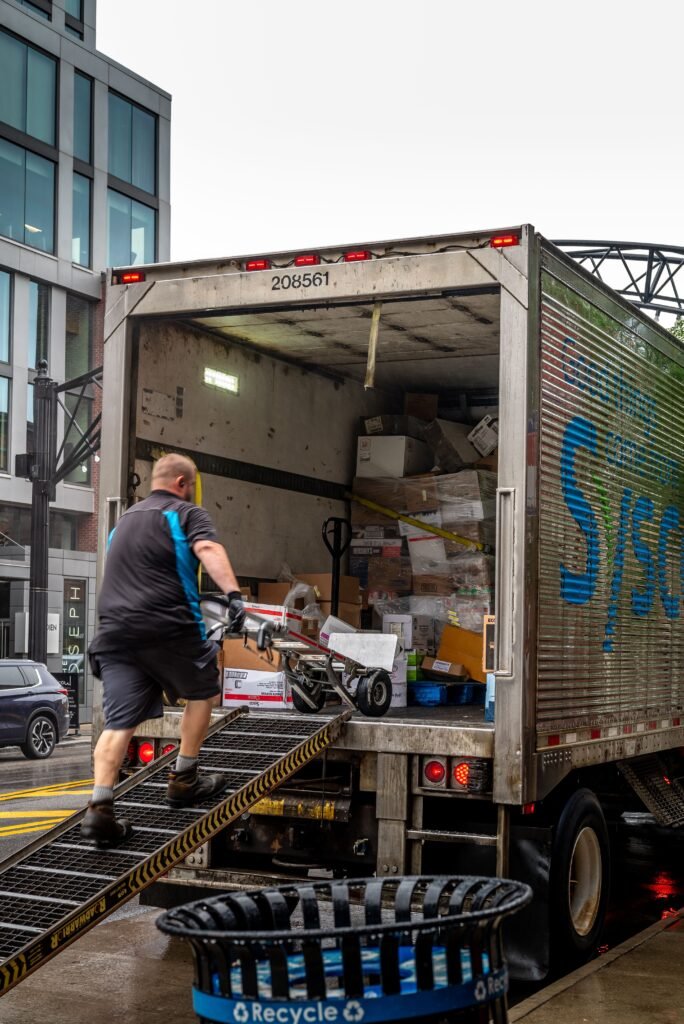
A venue can affect the cost of logistics even when the distance from your warehouse hasn’t changed.
The reason is simple: the vehicle doesn’t just need to reach the postcode. It needs to reach the correct access point within the correct window.
Here are three Bristol examples worth checking during budgeting.
Bristol Beacon
Bristol Beacon is a major central Bristol venue with spaces including Beacon Hall and Lantern Hall. Its published venue information shows that different event packages can include technical staffing, staging, lighting and sound, while other requirements can be added depending on the event.
From a logistics budgeting perspective, don’t automatically assume that every piece of production equipment needs to be transported independently.
First ask the venue what is already included in your package.
For example, Beacon Hall’s standard venue-hire package includes the stage, dressing rooms, green room and certain lighting, sound and technical staffing provisions.
That could affect how much external equipment you actually need to move.
Access also needs attention. Bristol City Council documentation has included loading arrangements associated with Trenchard Street around Bristol Beacon, so the current delivery and loading arrangements should be confirmed directly with the venue before the event.
Budget questions for Bristol Beacon:
- What is the approved delivery entrance?
- What loading window has been allocated?
- What vehicle size is permitted?
- How long can a delivery vehicle remain?
- Is internal movement included?
- What technical equipment is already included?
- Are additional crew members required?
- What are the collection arrangements after the event?
M Shed
M Shed sits on Bristol’s harbourside and is used for meetings, receptions, conferences and other events.
Venue listings identify a loading bay among its facilities, while the venue’s location means organisers should also consider parking and access arrangements rather than treating it as a conventional roadside delivery.
Parking facilities around M Shed are independently operated, and Host Bristol specifically advises users to check current charges, rates and availability directly with the relevant car park operators.
For logistics budgeting, that means you should distinguish between:
vehicle loading access and ordinary event parking.
They’re not necessarily the same thing.
Budget questions for M Shed:
- Where is the approved loading point?
- What is the delivery window?
- Can the vehicle remain during setup?
- Where can the logistics crew park if they need to leave the vehicle?
- Is internal movement from the loading area to the event room included?
- Where and when can equipment be collected?
University of Bristol
The University of Bristol operates a number of event spaces across Clifton, Stoke Bishop and the wider university campus, including venues suitable for conferences and larger events. Its venues can accommodate events ranging from smaller meetings to events of up to 800 delegates.
Because the university operates multiple venues, don’t simply give a logistics company “University of Bristol” as the destination.
Give the exact building, room and delivery instructions.
The University’s Venues and Events team also recommends discussing requirements early and visiting venues where necessary to establish suitability and accessibility.
Budget questions for a University of Bristol venue:
- Which campus and building?
- Which entrance should suppliers use?
- Is there a designated loading area?
- What time can deliveries arrive?
- Is a booking required for vehicle access?
- How far is the unloading point from the event room?
- Are lifts available for the equipment?
- Who receives deliveries?
- What are the collection arrangements?
These details can directly affect labour time.
Your Event Logistics Hiring Checklist
Once your budget is ready, move on to supplier selection.
Use this checklist before booking an event logistics company in Bristol.
Before Requesting Quotes
☐ Confirm event date and times
☐ Confirm venue and exact delivery point
☐ List every collection address
☐ List every delivery address
☐ Record item quantities
☐ Record dimensions and weights where possible
☐ Identify fragile or specialist equipment
☐ Confirm venue loading windows
☐ Confirm vehicle access requirements
☐ Check whether the venue has storage
☐ Confirm setup and breakdown times
☐ Determine whether return transport is required
When Requesting the Quote
Ask the supplier to confirm:
☐ Vehicle type
☐ Number of vehicles
☐ Driver costs
☐ Labour costs
☐ Loading and unloading
☐ Waiting-time allowance
☐ Additional waiting charges
☐ Storage charges
☐ Multiple-stop charges
☐ Out-of-hours charges
☐ Weekend charges
☐ Emergency or same-day charges
☐ CAZ charges, if applicable
☐ Parking or access-related costs
☐ Return collection
☐ Insurance
☐ Cancellation terms
☐ VAT treatment
The goal is to turn a vague transport quote into a clearly defined project price.
How to Compare Two Event Logistics Quotes
Suppose you receive these two quotes:
| Cost item | Provider A | Provider B |
|---|---|---|
| Transport | £650 | £720 |
| Loading/unloading | Included | £100 |
| Waiting time | 30 mins included | 60 mins included |
| Storage | £150 | Included |
| Return collection | £250 | £220 |
| CAZ | Extra if applicable | Included where applicable |
| Out-of-hours | £100 | Included |
| Total before applicable extras | £1,150 | £1,040 |
Provider A initially looks cheaper because the transport price is lower.
But once the complete project is compared, Provider B may have the lower quoted total.
That’s why “What’s your price?” isn’t enough.
Ask:
“Can you provide an all-in quotation showing every charge that could apply to this job?”
Then compare like with like.
Questions to Ask an Event Logistics Company Before Hiring
A short conversation with the supplier can reveal more than a website’s service page.
“Have you handled this type of event before?”
A company experienced with exhibitions may approach an exhibition delivery differently from a standard courier.
“Will you communicate with the venue?”
If yes, clarify what they will actually handle.
“What happens if the venue makes us wait?”
Find out the waiting-time policy.
“What happens if one supplier is late?”
Ask whether the route can be rearranged and whether additional costs would apply.
“Is the vehicle CAZ compliant?”
Don’t leave this assumption to the last day.
“What happens during breakdown or vehicle failure?”
You don’t need a dramatic contingency plan, but you should understand the supplier’s process for a time-critical event.
“Are loading and unloading included?”
Get the answer in writing.
“Who is responsible for the equipment once it has been collected?”
This is particularly important for valuable AV, exhibition and production equipment.
What to Check in the Final Contract or Quote
Before approving the booking, make sure the document clearly identifies:
Collection
Where, when and from whom?
Delivery
Where exactly, and within what window?
Equipment
What is being transported?
Vehicle
What type or capacity is being supplied?
Labour
How many people are included?
Waiting
How much is included and what is the additional rate?
Storage
How long and at what price?
Return
When and where will the equipment be collected?
Additional charges
Which circumstances can increase the price?
Cancellation
What happens if the event date changes?
Insurance
What level of cover applies, and are there exclusions?
A written quotation should make the commercial relationship easier, not harder to understand.
When Is the Cheapest Logistics Quote Not the Cheapest Option?
This is where event organisers can get caught out.
Imagine one company quotes £800 and another quotes £1,050.
The £800 quote might exclude:
- loading labour
- return collection
- storage
- waiting time
- out-of-hours work
- applicable CAZ costs
The £1,050 quotation might include all of them.
If you compare only the first number, you aren’t really comparing prices.
You’re comparing different packages.
A better approach is to calculate the expected total cost of the complete logistics job.
How Early Should You Book an Event Logistics Company in Bristol?
There isn’t one booking deadline that applies to every event.
A simple local delivery may be arranged relatively close to the event date if vehicle availability exists.
A larger event needs more planning because the logistics company may need to coordinate:
- multiple vehicles
- specialist crew
- several suppliers
- storage
- venue access
- timed deliveries
- return collections
For major exhibitions, conferences and large events, start the logistics conversation as soon as the venue schedule and equipment requirements are reasonably clear.
Early planning also gives you time to compare quotations rather than accepting the first available supplier.
A Practical Bristol Event Logistics Budget Template
You can use the following structure when building your own spreadsheet:
| Budget line | Estimated cost |
|---|---|
| Main delivery | £_____ |
| Additional collections | £_____ |
| Return collection | £_____ |
| Loading crew | £_____ |
| Unloading crew | £_____ |
| Storage | £_____ |
| Waiting time allowance | £_____ |
| Out-of-hours work | £_____ |
| Weekend work | £_____ |
| Parking/access costs | £_____ |
| CAZ, if applicable | £_____ |
| Specialist equipment/handling | £_____ |
| Contingency | £_____ |
| Estimated logistics total | £_____ |
Keep the supplier’s original quotation alongside this calculation.
That makes it easier to see whether a revised invoice contains something you didn’t originally budget for.
Final Thoughts
Hiring an event logistics company in Bristol isn’t simply a question of finding the lowest transport rate.
The real cost comes from the complete job: vehicles, labour, timing, venue access, waiting, storage, return transport and any local charges that apply to the vehicle and journey.
Bristol’s Clean Air Zone is one specific cost to check, particularly when a supplier is using a vehicle that may not meet the required emissions standards. The council’s current published charges are £9 for light goods vehicles under 3.5 tonnes and £100 for heavy goods vehicles over 3.5 tonnes when the applicable vehicle isn’t compliant.
Venue requirements matter just as much. Bristol Beacon, M Shed and University of Bristol venues can have very different access arrangements, so the exact building, delivery point and loading schedule should form part of the logistics brief rather than being left for the driver to work out on the day.
The safest way to budget is straightforward:
define the complete movement plan → identify every possible cost → request itemised quotations → compare the total scope → confirm venue requirements → get the final price in writing.
That approach gives you a much clearer idea of what you’re actually paying for — and leaves fewer unpleasant surprises when the event gets underway.
FAQs
How much should I budget for event logistics in Bristol?
There is no universal event logistics rate. The cost depends on vehicle size, mileage, number of collections, labour, waiting time, storage, venue access, timing and return transport. The most reliable way to budget is to obtain an itemised quotation based on your actual event requirements.
Does Bristol’s Clean Air Zone add to event transport costs?
It can. Bristol City Council currently lists a £9 daily charge for light goods vehicles under 3.5 tonnes and £100 for heavy goods vehicles over 3.5 tonnes when the vehicle does not meet the applicable emissions standard. Many vehicles are compliant and therefore won’t incur the charge, so the actual vehicle should be checked rather than adding a CAZ charge automatically.
Are loading and unloading normally included in an event logistics quote?
Not necessarily. Some providers include basic loading and unloading, while others price labour separately. Ask for loading, unloading and internal equipment movement to be identified clearly in the quotation.
Can waiting time increase my event logistics bill?
Yes, depending on the supplier’s terms. If a vehicle arrives but cannot load or unload because access isn’t available, the provider may apply waiting-time charges. Confirm the included waiting allowance and additional hourly rates before booking.
Do event logistics companies charge more for evening or weekend work?
Some do. Out-of-hours, weekend and urgent work can require additional staff or different operating arrangements. Ask the supplier for the exact surcharge structure rather than assuming that standard weekday pricing applies.
Is it cheaper to manage event transport myself?
It can be for a simple event, particularly if you already have a suitable vehicle and staff. But your real cost should include fuel, staff time, vehicle costs, loading, unloading, parking, potential CAZ charges and the time spent coordinating the delivery. For complex events, a specialist provider may reduce the workload even if its direct quotation is higher.
What should I ask an event logistics company before hiring them?
Ask about vehicle type, loading and unloading, waiting time, CAZ compliance, storage, multiple collections, return transport, out-of-hours work, insurance, cancellation terms and additional charges. Also ask whether they have experience with your specific type of event.
Does the venue affect event logistics pricing?
Yes. A central venue with restricted access or a short delivery window can require more careful scheduling and potentially more labour or waiting time than a venue with straightforward vehicle access.
What should I check when using Bristol Beacon for an event?
Confirm the exact delivery entrance, loading arrangements, permitted delivery window, vehicle requirements, internal movement, equipment included with the venue package and collection procedure. Bristol Beacon publishes venue-specific information and recommends enquiries for tailored event requirements.
What should I check when planning logistics for M Shed?
Confirm the approved loading location, delivery window, vehicle access, unloading procedure, internal route and collection arrangements. M Shed listings identify a loading bay, while nearby parking is independently operated, so don’t treat ordinary parking and supplier loading access as the same thing.
What should I provide when asking for an event logistics quote?
Provide the event date, venue, exact delivery point, collection addresses, item quantities, dimensions and weights where available, delivery and collection windows, storage requirements, loading information and any special handling requirements. The more complete the brief, the easier it is to compare quotations accurately.
How can I avoid unexpected logistics charges?
Request an itemised quotation and specifically ask about waiting time, additional labour, storage, multiple stops, out-of-hours work, weekend work, return collection, parking or access charges and Bristol CAZ costs where applicable. Confirm which items are included before approving the booking.
