


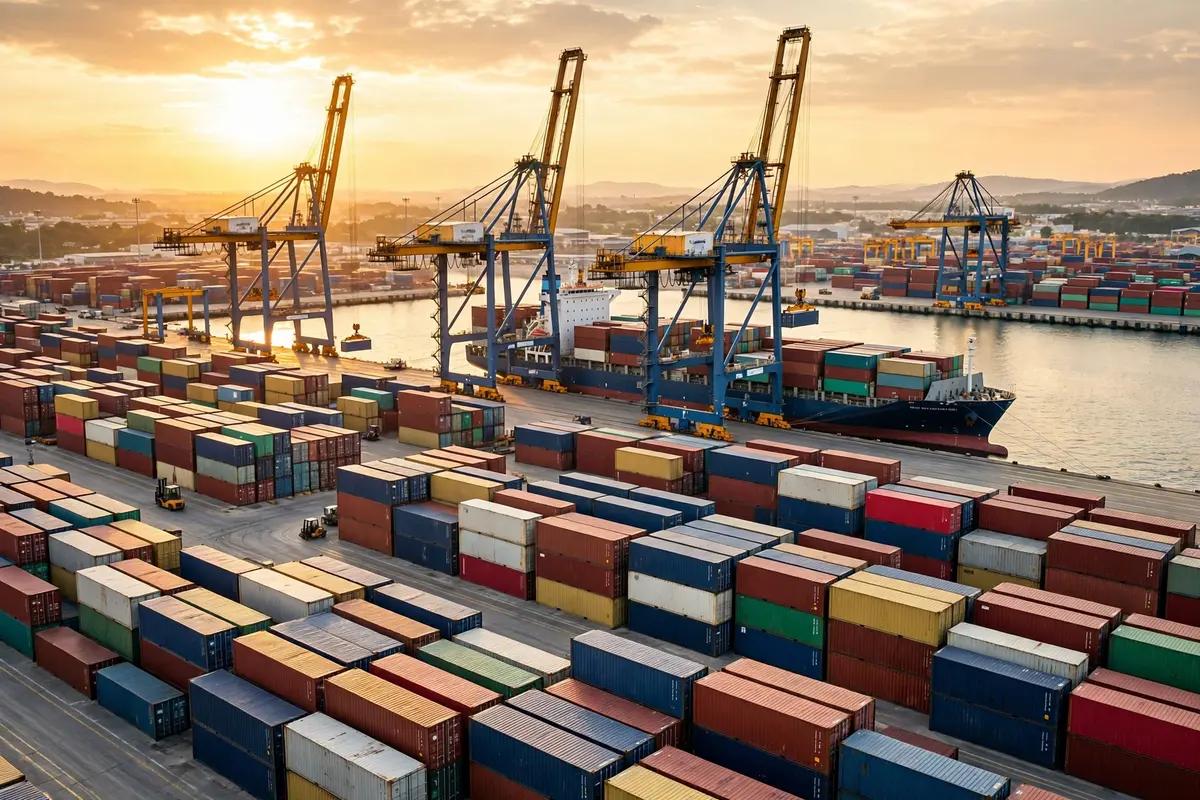
A freight forwarder is a specialist company that organizes shipments on behalf of a shipper — planning the route, booking space with carriers, preparing the paperwork, and coordinating each handover until the goods reach their destination. So, what is a freight forwarder in practical terms? It is the coordinator of your shipment, not the company that physically carries it. Most forwarders own no ships, planes, or trucks of their own. Instead, they buy transport from ocean lines, airlines, rail operators, and trucking companies, then manage the whole movement for you.
FIATA, the international federation of freight forwarders’ associations, describes the forwarder as the “architect of transport.” That phrase captures the job well. The forwarder designs the journey, hires the parties who perform each leg, and stays responsible for keeping the shipment on track when schedules slip or paperwork is questioned.
This guide explains what forwarders actually do all day, how the process runs step by step, what it costs, and how a forwarder differs from a customs broker, a carrier, a freight broker, a 3PL, and an NVOCC — five roles that get confused with each other constantly. It is part of our complete logistics guide, which collects our practical guides to freight, warehousing, and delivery.
What does a freight forwarder do?
A forwarder’s work starts before your goods leave the building and ends after they arrive. The core freight forwarding services look like this:
- Route and mode planning. The forwarder weighs cost, speed, and cargo type, then recommends ocean, air, road, rail, or a combination. A container of furniture and a pallet of phone parts should not travel the same way.
- Booking and rate negotiation. Forwarders buy cargo space in volume across many clients. That buying power, plus consolidation, often gets a small shipper a better rate than it could negotiate alone.
- Freight consolidation. If your cargo doesn’t fill a container, the forwarder groups it with other shippers’ goods (LCL, or less-than-container-load) so you pay for the space you use rather than a whole box.
- Documentation. The forwarder prepares or checks the bill of lading, commercial invoice, packing list, and certificate of origin, and handles export filings such as the Electronic Export Information (EEI) required for many US exports.
- Customs coordination. The forwarder prepares the shipment for clearance at both ends and works with licensed customs brokers where the law requires one.
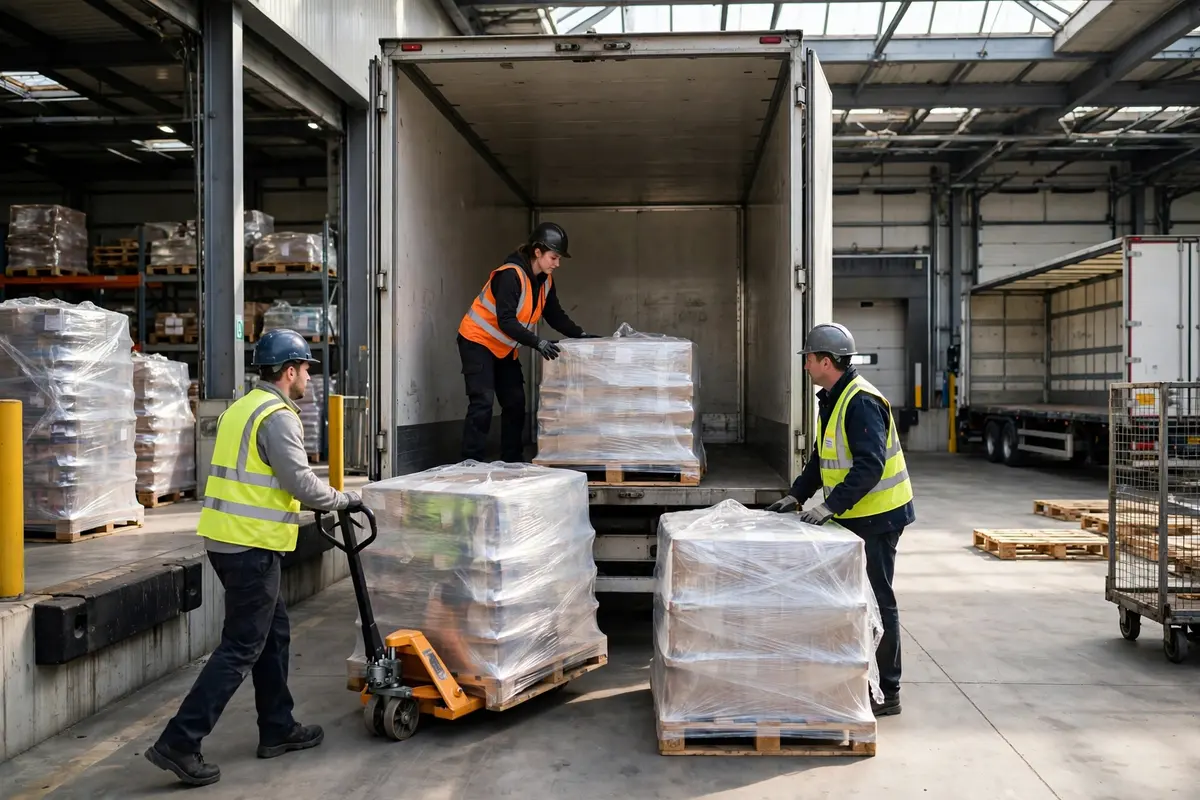
- Warehousing and handling. Many forwarders store goods briefly before departure or after arrival, and arrange packing, palletizing, and labelling.
- Cargo insurance. A forwarder can arrange insurance for the shipment and help you file a claim if something goes wrong.
- Tracking and problem-solving. Rolled cargo, a missed sailing, a document mismatch at the port — the forwarder is the party who finds out first and rearranges the plan.
Notice what is missing from that list: driving, flying, or sailing anything. The forwarder’s product is coordination and expertise, sold as a service on top of transport bought from others.

How does freight forwarding work, step by step?
The exact sequence varies by route and cargo, but most international shipments follow the same skeleton:
- Quote and booking. You give the forwarder the cargo details — what the goods are, weight, dimensions, pickup and delivery addresses, and the Incoterm you sold or bought under. The forwarder prices the route and books space with the carrier.
- Pickup and origin handling. The goods are collected from the supplier or your warehouse, checked against the packing list, and consolidated if the shipment is LCL.
- Export customs. The export declaration is filed with the origin country’s customs authority, using the commercial invoice and other documents prepared earlier.
- The main leg. The carrier moves the cargo by sea, air, road, or rail. The forwarder monitors the booking and passes you tracking updates.
- Import clearance. At destination, a customs entry is filed, duties and taxes are assessed, and customs may examine the goods. A licensed customs broker usually files this entry, either in-house at the forwarder or as a separate partner.
- Final delivery. The cargo is released, deconsolidated if it shared a container, and trucked to the final address.
Your own responsibilities shrink but never disappear. You still owe everyone accurate information about what the goods are and what they are worth, and — as explained below — the legal duty for a correct customs entry stays with the importer.
What is a freight forwarder vs. a customs broker?
The freight forwarder vs customs broker comparison causes more confusion than any other in shipping, so it deserves a direct answer. A freight forwarder manages the movement of goods from origin to destination. A customs broker manages one specific event inside that journey: clearing the goods through customs at the border.
| Freight forwarder | Customs broker | |
|---|---|---|
| Main job | Arranges and coordinates transport end to end | Files the customs entry and clears goods at the border |
| Scope | The whole journey, possibly several countries | The import (and sometimes export) declaration in one country |
| Typical documents | Bill of lading, air waybill, packing list, booking confirmation | Customs entry, tariff classification, duty and tax calculation |
| Licensing | Varies by country and mode (in the US, ocean forwarders are licensed by the Federal Maritime Commission) | Licensed by the customs authority — in the US, by Customs and Border Protection (CBP) |
| Works with | Shippers, carriers, warehouses, brokers | Importers, customs officials, surety companies |
Three points matter more than the table. First, the broker’s work is a legal act performed as your agent: classification, valuation, and duty calculation all carry penalties if done wrong. Second, hiring a broker does not transfer your liability. The importer of record stays responsible for the accuracy of the entry, because the duty of “reasonable care” under US customs law cannot be delegated to anyone. Third, the two roles often live under one roof. Many forwarding companies employ licensed brokers or own a brokerage division, while a pure customs brokerage rarely arranges transport. So you may buy both services from one provider — but they remain two different, separately licensed functions.
How is a freight forwarder different from a carrier, a freight broker, a 3PL, or an NVOCC?
Four neighbouring roles round out the picture:
- Carrier. The company that physically moves the goods and owns or operates the ship, aircraft, or truck. A carrier issues the master bill of lading and carries legal responsibility for the cargo while it is in its custody.
- Freight broker. A matchmaker, mostly in domestic road freight. A broker connects a shipper with a trucking company, takes no possession of the cargo, and usually plays no part in documentation or customs.
- NVOCC. A non-vessel-operating common carrier buys space from ocean lines and resells it, but — unlike a pure forwarder — it steps into the carrier’s legal shoes for the ocean leg and issues its own house bill of lading. In the US, both NVOCCs and ocean freight forwarders are licensed by the FMC as ocean transportation intermediaries; the difference is the role each one takes on your shipment.
- 3PL (third-party logistics provider). The broadest term of the five. A 3PL may run warehouses, pick and pack orders, manage returns, and arrange transport. Freight forwarding is often one service inside a 3PL’s menu rather than the whole business.
One honest warning about liability, because guides tend to state it too simply. You will read that forwarders “never” take responsibility for cargo, and elsewhere that they “always” do. Both versions are incomplete. A forwarder acting purely as your agent is generally not liable for a carrier’s loss or delay. A forwarder that issues its own house bill of lading, or that also operates as an NVOCC on that shipment, has accepted carrier-level responsibility. Many companies hold both hats and wear a different one on different bookings. The document you receive — and the licence the company operates under — tells you which role it took on yours. Ask before you ship, not after something goes missing.
What types of freight forwarders are there?
Forwarders are usually grouped in two ways. The first is by transport mode:
- Ocean freight forwarders arrange container shipping — full containers (FCL) and consolidated part-loads (LCL) — and handle port documentation.
- Air freight forwarders book cargo space with airlines, often as IATA-accredited agents, and suit urgent, light, or high-value goods.
- Road and rail forwarders focus on land transport, cross-border trucking, and rail corridors.
- Multimodal forwarders combine modes under one contract, for example sea to the port, rail inland, truck for the final stretch.
The second grouping is by reach. Some forwarders are local specialists with one office near a single port or airport. Others are national networks, and the largest run their own offices across continents. Smaller firms cover the world through partner agents in each country instead. A third, newer split cuts across both: traditional forwarders who work by email and phone, and digital forwarders who quote, book, and track through an online platform. The service underneath is the same; the difference is how you buy and monitor it. For a broader view of the companies in this space, see our explainer on what a logistics company is and what it does.
How much does a freight forwarder cost?
There is no standard tariff, and anyone who quotes you one fixed “typical price” is oversimplifying. Your invoice has two layers. The larger one is the pass-through transport cost — the carrier’s freight charge, fuel and security surcharges, and terminal handling fees at both ends. This layer moves with the market: ocean spot rates can change week to week, and Drewry’s World Container Index put the price of shipping a single 40-foot container at $4,255 at the end of July 2026. The smaller layer is the forwarder’s own charges: a service or handling fee per shipment, documentation fees, a customs clearance fee if brokerage is included, and optional extras such as insurance, warehousing, and delivery appointments.
Published fee guides disagree with each other sharply — handling fees appear anywhere from a few tens of dollars to a few hundred per shipment depending on the guide, the country, and what is bundled in. Treat those tables as rough orientation, not as a price list for your lane. Insurance is usually priced as a small percentage of the cargo’s value, and even there, quoted ranges vary between guides.
The practical way to compare forwarders is to request all-in, door-to-door quotes from two or three of them for the same shipment, then ask what each quote excludes. Demurrage, port storage, and customs exam fees are the charges most often left out — and most often blamed for an invoice that grows after the goods land.
Do you need a freight forwarder?
Legally, no. Nothing forces an importer or exporter to hire one; a forwarder is an optional specialist, not a permit requirement. Whether you should hire one depends on the shipment. A forwarder earns its fee when the movement crosses borders, changes mode or carrier more than once, ships as LCL, involves regulated goods, or lands in a country whose customs process you have never dealt with. The fee also makes sense when your team ships too rarely to build carrier relationships of its own.
You can reasonably skip the forwarder when the journey is simple: one domestic carrier, a standard lane you run every week, or small parcels that a courier handles door to door. In those cases the coordination a forwarder sells is work you barely need done.
How do you choose the right freight forwarder?
Treat the choice like hiring any other professional who will hold your money and your deadlines:
- Check the licences. For US ocean freight, look for an FMC licence as an ocean transportation intermediary. For air freight, IATA accreditation signals the forwarder can book directly with airlines. If customs clearance is bundled, confirm a licensed customs broker actually files your entries.
- Match experience to your cargo and lane. A forwarder strong on Asia–US container traffic may know little about perishables into the Gulf or project cargo into Africa. Ask what they ship most.
- Ask about the destination end. Your goods are most vulnerable where you have no presence. A forwarder with its own office or a long-standing partner at destination solves problems faster than one improvising.
- Demand an itemized quote. A single lump sum with no breakdown hides where your money goes and makes comparisons meaningless.
- Test communication before you commit. Send a detailed enquiry and judge the reply: speed, specifics, and whether they flag problems — such as a cut-off you would miss — before you ask.
- Check references and insurance support. Speak to a current customer in your industry, and confirm the forwarder can arrange cargo insurance rather than waving the question away.
The clearest red flags are a quote far below every competitor with no explanation, reluctance to show a licence, and vagueness about who handles customs at destination.
Frequently Asked Questions
Is a freight forwarder legally required for importing or exporting?
No. Importers and exporters may handle their own logistics and filings in most countries. What you cannot escape is responsibility: if you file your own customs entries, errors in classification, valuation, or documentation are yours, with the penalties attached. Many businesses hire forwarders and brokers to reduce that risk, not because the law orders it.
Does a freight forwarder own the ships or trucks that carry my goods?
Usually not. The classic forwarder is asset-light: it buys capacity from carriers and coordinates them. Some large forwarders do own warehouses, trucks, or even aircraft through sister companies, and integrators such as the big courier groups run forwarding divisions alongside their own fleets. If asset ownership matters to you, ask the specific company rather than assuming either way.
If my cargo is lost or damaged, is the freight forwarder responsible?
It depends on the role the forwarder took on that shipment. Acting as your agent, it generally is not liable for the carrier’s failure — your claim runs against the carrier, whose liability is limited by international conventions and calculated largely by weight, not by what the goods were worth. If the forwarder issued its own house bill of lading or acted as an NVOCC, it accepted carrier-level responsibility and the claim runs against it. Either way, the gap between legal liability limits and your cargo’s real value is exactly why forwarders recommend separate cargo insurance.
Can a freight forwarder clear customs for me?
Sometimes. Customs brokerage is a separately licensed activity — in the US, entries must be filed by a licensed customs broker. Larger forwarders employ licensed brokers in-house and can bundle clearance into your quote; smaller ones hand the entry to a partner broker. The forwarder coordinating your shipment is normal either way, but confirm who the filing broker is, because that licence is what makes the entry valid.
How do freight forwarders make money?
From two streams: explicit service charges (handling, documentation, clearance fees) and, on many bookings, a margin between the carrier rate they negotiate and the rate they quote you. Neither is improper — the margin pays for the volume discounts and coordination you are buying — but it is why two quotes for the same shipment can differ. Comparing all-in totals, and asking what is excluded, matters more than haggling over any single line.
What does a freight forwarder need from me to give an accurate quote?
The commercial details of the shipment: what the goods are (with the HS code if you know it), weight and dimensions, how they are packed, the pickup and delivery addresses, your buying or selling Incoterm, and any special requirements such as refrigeration, dangerous goods paperwork, or delivery by a fixed date. Quotes built on guesses come back as invoices with corrections, so the more exact your input, the more exact the price.
