


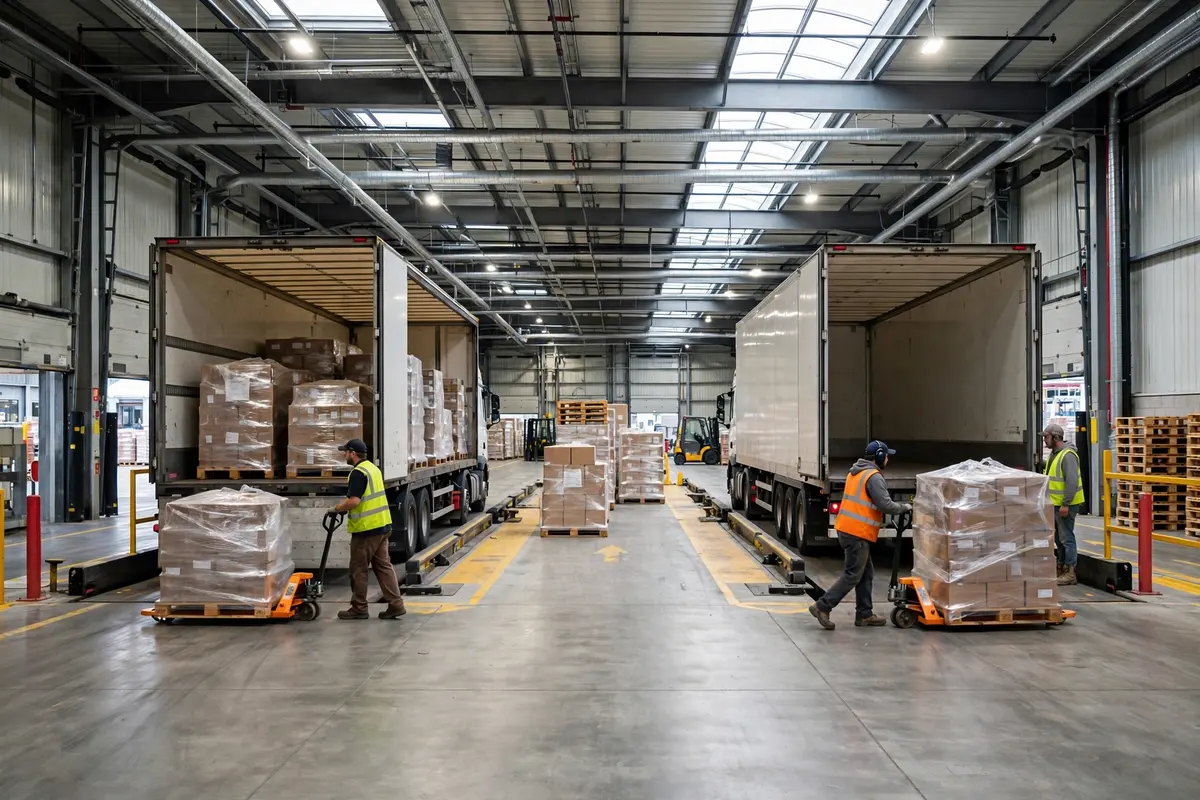
Cross docking is a logistics method where goods are unloaded from an inbound truck, sorted, and loaded straight onto an outbound truck, with little or no time spent in storage in between. Instead of going onto warehouse shelves, products cross the dock from the receiving side to the shipping side, often leaving the building within 24 hours. Companies use cross docking to cut storage costs, shorten delivery times, and keep fast-moving products flowing rather than sitting.
A traditional warehouse receives goods, puts them away, and picks them days or weeks later when an order arrives. A cross-dock terminal skips the middle steps entirely. The building works as a sorting hub rather than a storage space, which is why cross-dock facilities usually have many dock doors and very little racking. This article is part of our complete logistics guide to freight, warehousing, and distribution.
How Does Cross Docking Work, Step by Step?
The process looks simple from the outside, but it depends on information arriving before the freight does. Here is how a typical shipment moves through a cross-dock terminal:
- The supplier sends an advance shipping notice (ASN). Before the truck arrives, the facility already knows what is coming, in what quantity, and where each item needs to go. This data drives the whole operation.
- The inbound truck is unloaded at a receiving door. Workers unload pallets or cartons and move them a short distance into a staging area, not into storage racks.
- Goods are scanned and checked. Each pallet or carton is scanned against the ASN so the system confirms it matches the plan. Damaged or unexpected freight gets pulled aside as an exception.
- Freight is sorted by destination. Items heading to the same store, customer, or route are grouped together. Shipments from several suppliers can be combined into one outbound load at this stage.
- Goods are staged at an outbound door. Sorted freight waits briefly in a marked lane in front of the correct departure door.
- The outbound truck is loaded and departs. The consolidated load leaves for its destination, often on the same day it arrived.
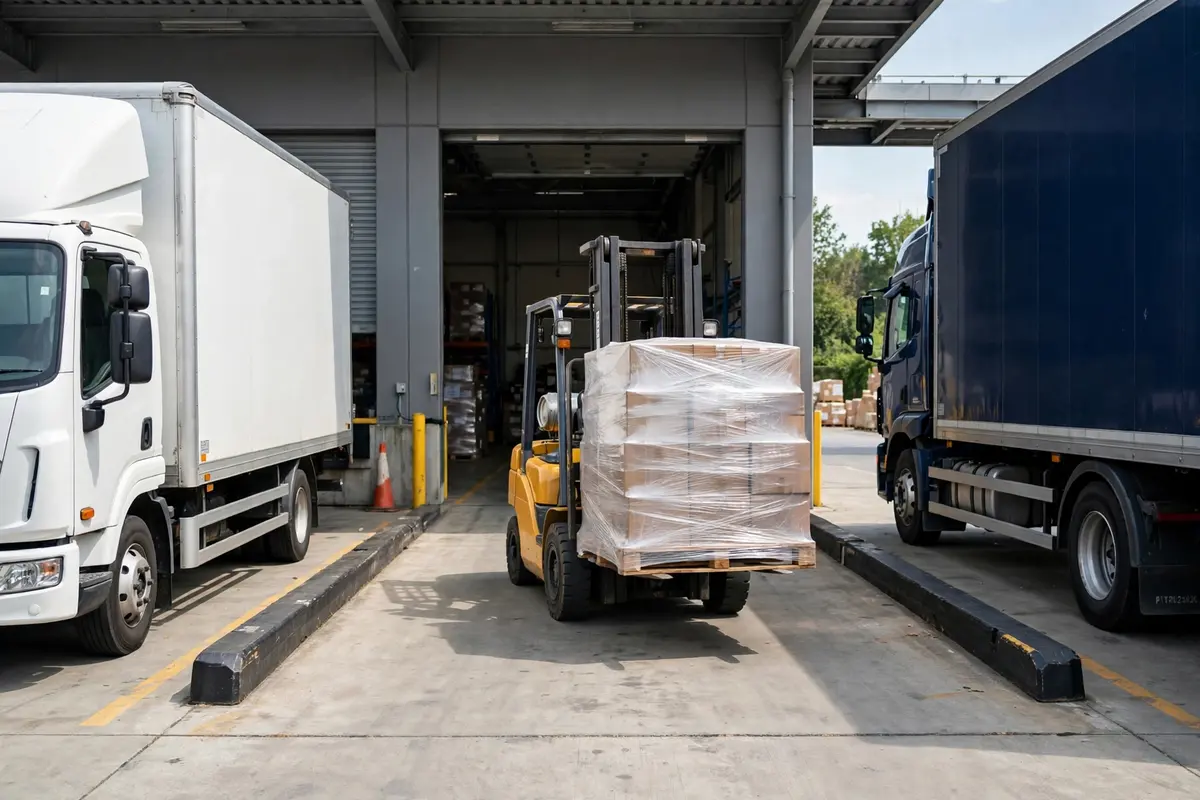
Timing is tight at every step. If an inbound truck arrives late, the outbound truck waiting for its freight leaves late too, or departs without a full load. That dependency is the main reason cross docking demands reliable carriers and disciplined appointment scheduling.
What Are the Main Types of Cross Docking?
Cross docking is usually grouped in two ways: by when the destination decision is made, and by the industry setting where it happens.
Types by Allocation Timing
Pre-distribution cross docking means the supplier decides the destination before the goods move. Products arrive already sorted, labeled, and assigned to a specific store or customer, so the terminal mostly transfers them without re-sorting. This is the fastest form, and it suits retailers with stable ordering patterns.
Post-distribution cross docking works the other way around. Goods arrive in bulk without a fixed destination, and the terminal allocates them to stores or orders after arrival, based on current demand. It offers more flexibility, but it needs more labor and better systems at the dock.
Opportunistic cross docking happens inside a regular warehouse. When an inbound item matches an open customer order, the warehouse management system routes it directly to outbound shipping instead of putting it into stock. The same product then skips storage entirely, even though the building itself is not a dedicated cross-dock.
Types by Application
Manufacturing cross docking feeds production lines just in time. Components from several suppliers are received, combined, and sent straight to the plant, so the manufacturer holds very little parts inventory on site.
Distributor cross docking consolidates products from many manufacturers into mixed loads for customers or retail outlets. Distributors use it to offer a wide product range without stocking everything for long periods.
Retail cross docking moves case-packed goods from supplier trucks to store-bound trucks. Large retail chains are the best-known users, because store replenishment is high-volume and predictable.
Transportation cross docking is the model behind less-than-truckload (LTL) shipping. Carriers unload partial shipments at a terminal, combine freight headed in the same direction, and send out fuller trucks. Many LTL networks would not be economical without this step.
What Are the Main Cross Docking Benefits?
The cross docking benefits that matter most are financial and operational, and they all come from removing storage from the flow:
- Lower inventory holding costs. Goods that spend hours in a terminal instead of weeks on shelves tie up far less working capital, and the business pays for much less storage space.
- Faster delivery times. Removing put-away and picking from the journey shortens the path from supplier to customer, which helps companies hit tight delivery windows.
- Cheaper freight through consolidation. Combining several small inbound shipments into full outbound loads means fewer half-empty trucks and a lower transport cost per unit.
- Less handling, less damage. Every touch is a chance to drop, crush, or misplace a product. Cross docking removes touches, so damage and loss rates tend to fall.
- Better freshness for perishables. Food, flowers, and other short-life products reach shelves with more of their shelf life intact because they never wait in storage.
- Smaller facility footprint. A cross-dock needs dock doors and staging lanes rather than tall racking and large storage zones, so the real estate can be cheaper per unit of throughput.
None of these benefits are automatic. They appear only when freight volume is steady enough to keep dock doors and labor busy without long idle gaps.
What Are the Disadvantages and Risks of Cross Docking?
Cross docking removes the safety net that storage provides, and that creates real exposure:
- No buffer stock. If demand spikes or a store sells out early, there is no reserve inventory in the building to draw on. The next supply has to arrive before the shelf can be refilled.
- High coordination demands. Suppliers, carriers, and the terminal must all hit their time windows. One late truck can cascade through the day’s outbound schedule.
- Technology dependence. The operation relies on ASNs, barcode or RFID scanning, and a warehouse or transportation management system feeding accurate data in real time. Bad data turns a sorted dock into a congested one quickly.
- Unsuitable freight exists. Slow-moving items, products needing quality inspection, goods that require labeling or repacking, and erratic order volumes all fit cross docking poorly.
- Setup costs. Dock equipment, sortation systems, and software need investment before the first load moves, and the layout of the building itself has to support fast flow.
For these reasons, many companies run a hybrid model: fast-moving, predictable products flow through a cross-dock, while slower or less predictable products stay in conventional storage.
Cross Docking vs Warehousing: What’s the Difference?
Cross docking vs warehousing is really a choice between flow and storage. The comparison below shows how the two models differ on the points that drive the decision:
| Factor | Cross Docking | Traditional Warehousing |
|---|---|---|
| Storage time | Hours, usually under 24 | Days, weeks, or months |
| Main purpose | Sort and transfer freight quickly | Hold inventory until it is needed |
| Inventory on site | Minimal, mostly in transit | Deliberate stock, including safety stock |
| Cost pattern | Low storage cost, higher coordination and tech cost | Ongoing rent, labor, and holding costs |
| Speed to customer | Fast, same-day turnaround possible | Slower, picking happens after an order arrives |
| Flexibility | Low; needs predictable, pre-sold or fast-moving freight | High; absorbs demand swings and seasonal stock |
| Facility design | Many dock doors, staging lanes, little racking | Racking, storage zones, pick faces |
| Best fit | Perishables, retail replenishment, LTL freight | Seasonal goods, wide SKU ranges, inspection-heavy products |
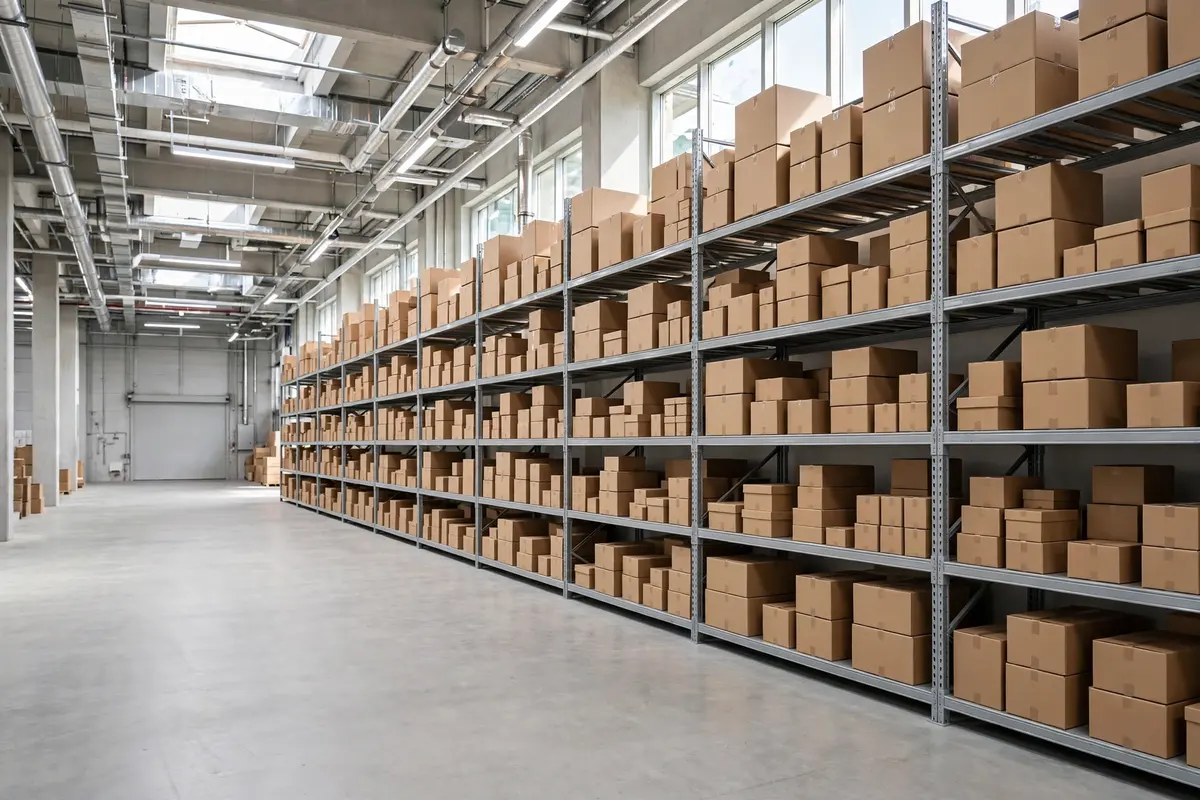
Neither model wins in every network. The right answer depends on turnover speed, demand predictability, and how much value-added work — labeling, kitting, inspection — the product needs before it ships.
How Is Cross Docking Different From Transloading?
These two terms are often confused, but they solve different problems. Cross docking changes a shipment’s place in the distribution flow: freight is sorted and redirected toward its final destination without storage. Transloading changes how the freight travels: goods are transferred between transport modes or vehicle types, for example from a shipping container at a port to trucks or railcars for the inland journey. A shipment can pass through both processes, but only cross docking is built around eliminating storage.
Which Products and Companies Use Cross Docking?
Cross docking works best for products with three traits: predictable demand, fast turnover, and no need for inspection or extra processing at the hub. Common examples include:
- Grocery and fresh food distribution, where shelf life is short
- Retail store replenishment of staple, high-volume products
- Promotional and seasonal displays that are pre-sold before they ship
- Automotive parts delivered just in time to assembly plants
- LTL and parcel freight moving through carrier terminals
Walmart is the example most often credited with proving the model at scale in retail, using cross-docking through its distribution network to keep stores stocked with minimal back-room inventory. Large grocery chains and parcel carriers run similar systems. Ecommerce sellers use cross docking in a narrower way, mainly to break down bulk imports and forward them to fulfillment centers quickly — although pure ecommerce fulfillment, where individual orders are picked from stock, is still a warehousing job. If you are importing that bulk freight, a freight forwarder usually arranges the international leg before it reaches the cross-dock.
What Do You Need to Run Cross Docking Well?
Companies that succeed with cross docking usually get four things in place before volume grows:
- Reliable data before arrival. Suppliers must send accurate ASNs, and labeling standards have to be enforced, or sorting at the dock slows to a crawl.
- Disciplined scheduling. Dock appointments, cutoff times, and departure windows need active management, with a plan for late arrivals.
- The right facility layout. Enough dock doors, clear staging lanes, and short travel distances between receiving and shipping keep freight moving.
- Aligned partners. Carriers and suppliers feel the discipline too, so expectations about timing, packaging, and labeling need to be agreed in writing.
Starting with one product family or one retail region is a common way to learn the rhythm before expanding the model across a network.
Frequently Asked Questions
How long do goods stay in a cross-dock facility?
Goods typically stay less than 24 hours, and in many operations only a few hours. The exact dwell time depends on outbound departure schedules, but if freight is sitting for days, the facility is effectively doing short-term warehousing rather than cross docking.
Is cross docking the same as just-in-time (JIT)?
No, although the two support each other. Just-in-time is an inventory philosophy: materials arrive only as they are needed. Cross docking is a physical handling method that moves goods through a facility without storage. Manufacturing cross docking often serves a JIT production line, but retail and LTL cross-docking have nothing to do with factory scheduling.
Can small businesses use cross docking?
Yes, on a limited scale. A small business rarely needs its own terminal, but many 3PLs and carriers offer cross-dock services, so a growing brand can route pre-sold or bulk freight through a provider’s facility instead of paying for its own storage. The model only pays off once shipment volume and predictability reach a steady level.
Does cross docking eliminate the need for a warehouse completely?
Rarely. Most companies that cross-dock still keep some storage for slow-moving products, returns, and buffer stock. Cross docking usually handles the fast, predictable share of volume, while a warehouse covers the rest.
What technology does cross docking require?
At minimum, a warehouse or transportation management system that can receive ASNs, direct sorting by destination, and track freight by scan. Larger operations add barcode or RFID scanning points, dock scheduling software, and sometimes automated sortation conveyors as volume justifies them.
What happens if an inbound truck arrives late to a cross-dock?
The outbound loads depending on that freight are delayed, depart partially filled, or get rebuilt from other stock if any exists. Because there is no storage buffer, late arrivals are the most common cause of disruption, which is why cross-dock operators track carrier on-time performance closely and build slack into departure schedules.

1 Comment
Pingback: Warehouse for Sale: The Complete Guide to Finding & Buying the Right One