


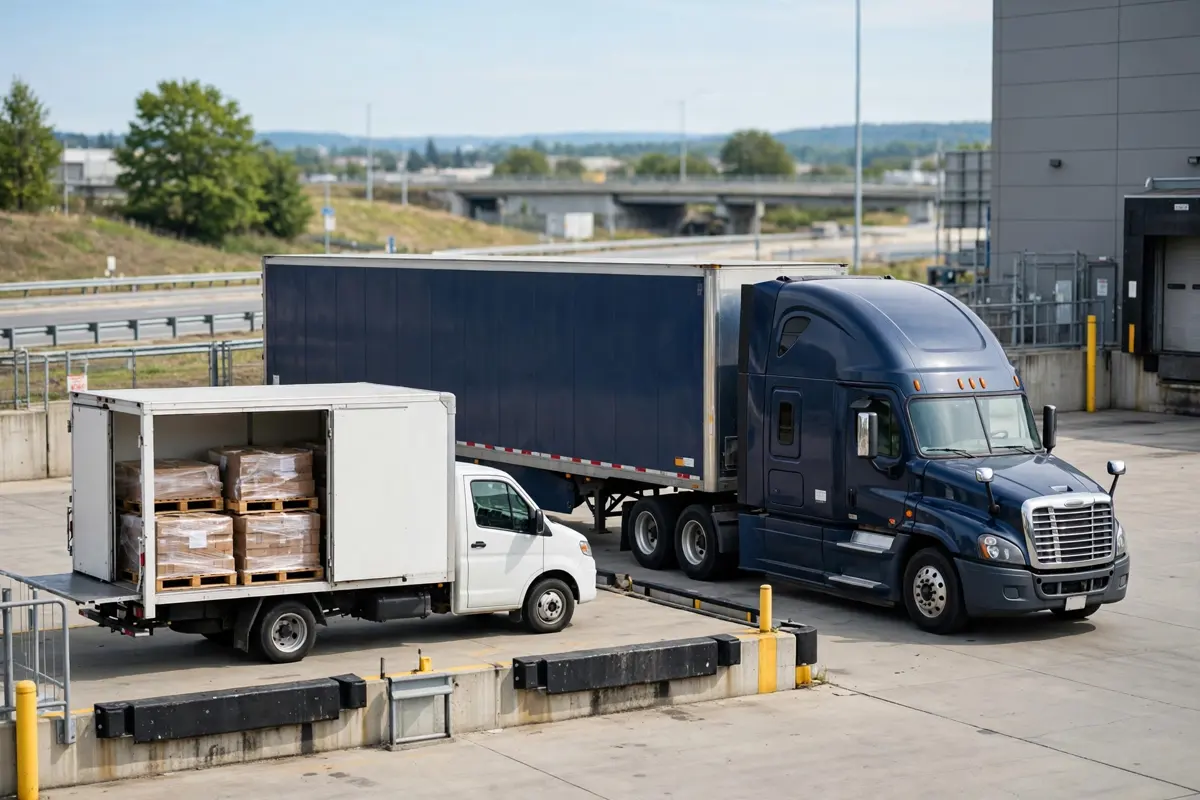
LTL vs FTL shipping is a choice between sharing a trailer and booking the whole trailer. LTL, or less than truckload, moves your freight alongside shipments from other companies, and you pay only for the space and weight you use. FTL, or full truckload, reserves an entire trailer for one shipper, and the truck usually runs direct from pickup to delivery. For most small and mid-size loads, LTL costs less. For large, fragile, or time-sensitive loads, FTL often costs less per pound and gets there faster with far less handling.
The right choice depends on more than weight alone: pricing, transit, and risk all differ between the modes.
What Is LTL Shipping?
What is LTL shipping in practice? It is a network service for freight too large for parcel carriers but too small to fill a trailer. A typical LTL shipment is palletized, weighs roughly 150 to 15,000 pounds, and takes up about one to six pallets. Those ranges are typical guidance, not hard rules.
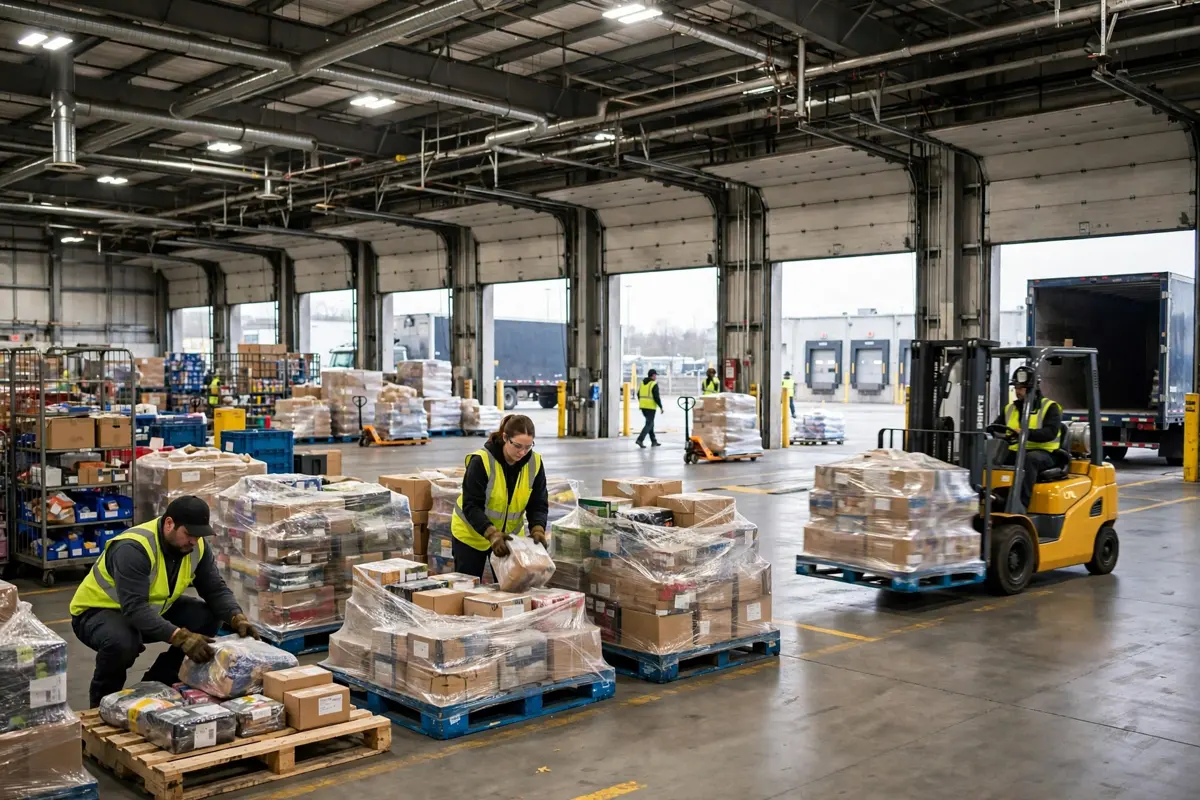
Your freight does not travel in a straight line. The carrier collects loads from several shippers, sorts them at a local terminal by direction, and sends them by linehaul to a terminal nearer the destination, where they are sorted again onto a local delivery truck. A long shipment may pass through more than one terminal.
This hub-and-spoke pattern keeps LTL prices low on small loads: the carrier fills trailers with freight from many customers, so no one pays for empty space. The trade-off is time and handling — each terminal stop adds sorting, waiting, and a chance of damage. Many terminals use cross docking, moving freight straight from an inbound trailer to an outbound one with little or no storage, to keep the network moving.
What Is FTL Shipping?
FTL shipping means one shipper books the full capacity of a trailer, whether the freight fills it or not. A standard dry van in the United States is commonly 48 or 53 feet long and holds about 26 pallet positions. FTL loads are often discussed around roughly 42,000 to 45,000 pounds of cargo, within legal limits that depend on equipment and route. Those are typical working numbers, not a definition: a load can be booked as FTL well below that weight for speed, security, or special equipment.
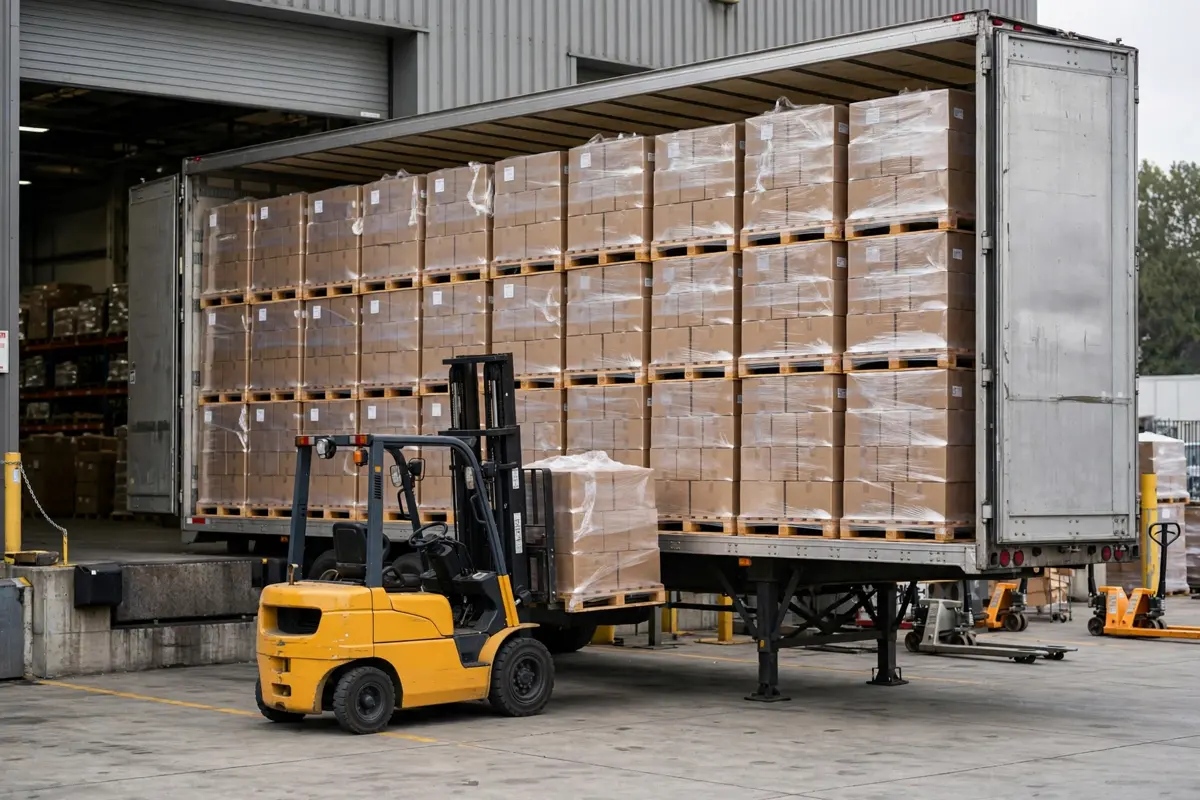
The journey is simpler. The carrier loads at origin, drives to the destination, and unloads there, with no terminal sorts and no other customers’ freight to wait for. The shipper gets more control over times and equipment. Dry vans handle most general freight, refrigerated trailers (reefers) move temperature-sensitive goods, and flatbeds and step decks handle oversized or tall freight. If your load needs special equipment, that need can decide the mode before price does, since LTL networks are built around standard palletized freight.
LTL vs FTL Shipping: Side-by-Side Comparison
| Factor | LTL Shipping | FTL Shipping |
|---|---|---|
| Trailer use | Shared with other shippers | Reserved for one shipper |
| Typical size | About 150 to 15,000 lb, roughly 1 to 6 pallets | Often 10+ pallets or about 15,000 lb and up, to a full trailer |
| Pricing basis | Weight, dimensions, freight class, and lane | Flat rate for the load, often per mile plus fuel surcharge |
| Route | Terminal to terminal through a hub network | Direct, point to point |
| Transit time | Slower, with terminal stops and sorting | Faster, with no intermediate handling |
| Handling | Multiple loading and unloading steps | Usually loaded once, unloaded once |
| Damage risk | Higher, due to repeated handling | Lower, since freight stays on one trailer |
| Scheduling | Carrier sets network schedules and windows | More shipper control over times |
| Best fit | Smaller, frequent, cost-sensitive shipments | Large, fragile, high-value, or time-sensitive shipments |
Treat these ranges as typical patterns, not fixed cutoffs: a light but fragile load can belong on FTL.
How Does Pricing Work in LTL vs FTL Shipping?
How LTL Pricing Is Calculated
LTL carriers combine several factors:
- Weight. Total weight sets the rate tier. The price per pound usually falls as weight rises, even though the total bill grows.
- Density and freight class. Weight compared with the space a pallet takes up helps set its class, and class sets the rate level. Dense, compact freight costs less per pound than light, bulky freight.
- Distance and lane. Busy lanes with freight moving both ways often price better than lanes where trucks return empty.
- Fuel surcharge and accessorials. A fuel amount that moves with diesel prices, plus fees for extra services.
Small errors change the bill, though. If the carrier reweighs the freight or finds a different density than stated, the shipment can be reclassed and the invoice adjusted after pickup, so accurate details at booking matter.
How FTL Pricing Is Calculated
FTL pricing is simpler. You pay for the truck, not a slice of it. Quotes are usually a flat rate for the load, often built from a per-mile rate plus a fuel surcharge. Adding a few more pallets does not change the total, as long as the load stays legal and fits. Distance, equipment type, truck capacity on the lane, and lead time move the quote most: rates rise when trucks are scarce or the booking is last-minute.
This explains the crossover between the modes. Spread across a few pallets, an FTL flat rate makes a high cost per pound. As pallet count climbs, FTL can become cheaper per pound than LTL. A freight forwarder or broker can quote both modes on the same lane to find the real crossover for your freight.
What Is Freight Class, and Why Does It Only Apply to LTL?
Freight class helps LTL carriers price how transportable a shipment is. In the United States, the National Motor Freight Classification system, maintained by the National Motor Freight Traffic Association, sorts freight into classes from 50 to 500. Lower classes cost less.
Four characteristics shape the class: density (weight per cubic foot), stowability (how well it fits and stacks), handling (care or special equipment needed), and liability (value and theft or damage risk).
Density does much of the work, and you can estimate it before booking. Measure the pallet as shipped, including packaging: multiply length, width, and height in inches, divide by 1,728 to get cubic feet, then divide total weight by cubic feet. Some products carry a fixed class regardless of density, so confirm the class with the carrier or a lookup tool.
FTL does not use freight class, since one shipper pays for the whole trailer. Weight and dimensions still matter for legality and loading, but class plays no part in the quote.
How Do Transit Time and Handling Risk Differ?
FTL is usually faster on the same lane because the truck drives direct, with no terminal sorts and no deliveries ahead of yours. On a long lane that can mean one to several days less than LTL, although exact times depend on the lane, carrier, and service level booked.
LTL transit times are estimates built around a network schedule. Freight may sit at a terminal waiting for the next outbound trailer, and delivery usually falls within a window rather than at a set hour. Many carriers sell guaranteed LTL service, backed by a refund policy if they miss the stated date, which can close much of the gap at a higher price.
Handling explains the damage gap. Every forklift lift is a chance to drop, crush, or puncture freight. LTL freight is handled at origin, at terminals, and at delivery, alongside other shippers’ goods. FTL freight is loaded once, unloaded once, and can stay sealed on the same trailer. That is why FTL is the default for fragile goods and loads where one damaged unit spoils the whole shipment. Packaging still matters in both modes.
What Shipment Size Points Toward LTL or FTL?
Size works as a first filter, if you treat the numbers as typical ranges rather than hard rules:
- Under about 150 pounds, parcel carriers are usually the better comparison, since LTL minimum charges make very small freight expensive for its size.
- About 150 to 10,000 pounds, or one to six pallets, sits squarely in LTL territory on most lanes.
- Around 10,000 to 15,000 pounds, or roughly six to twelve pallets, is the gray zone. Quote both modes; lane, class, and timing can swing the answer, and partial truckload sometimes lands between the two.
- Above about 15,000 pounds, or loads filling half a trailer or more, FTL usually wins on cost per pound and handling.
Volume can matter as much as weight. Bulky goods can fill a trailer by space first, and in LTL that bulk shows up as a high freight class.
When Should You Choose LTL?
Choose LTL when the load is too big for parcel but well short of a full trailer, cost matters more than the fastest transit, and the delivery date has some flexibility or guaranteed service covers your deadline. It also fits sturdy, well-packaged freight and businesses that ship smaller quantities often and cannot wait to build a full load.
That pattern shows up in the order fulfillment process, where restock freight arrives in regular, moderate quantities. Forcing those flows into FTL would mean waiting to accumulate freight or paying for empty space.
When Should You Choose FTL?
Choose FTL when the load fills most of a trailer or weighs enough that FTL quotes beat LTL per pound. It also fits firm delivery dates where a delay carries a real cost, fragile or high-value freight that needs minimal handling, and loads needing special equipment such as a reefer or flatbed. Set appointments, a sealed trailer, and multi-stop runs under your own schedule all point the same way.
Businesses shipping these loads regularly often hand the flow to a 3PL provider, since steady volume can support negotiated lane rates. For wider context, the logistics guide collects the related guides in one place.
What Are Accessorials and Extra Charges?
The linehaul rate is rarely the whole bill. Accessorials are fees for services beyond the standard dock-to-dock move, and they appear in both modes, in more variety on LTL invoices.
Common LTL accessorials include liftgate service where there is no dock or forklift, residential or limited-access delivery, inside delivery beyond the door, delivery appointments, detention when a driver waits beyond the allowed time, overlength fees, and reweigh or reclass fees when the booking details were wrong. FTL extras are fewer: detention, layover fees when a delay pushes the load into another day, lumper fees for third-party loading crews, and stop-off charges.
Two habits keep these charges under control: state every service you need at booking, so it is priced into the quote, and describe the freight and sites honestly — dock or no dock, business or residence, exact weight and size.
What Mistakes Do Shippers Make Choosing Between LTL and FTL?
- Deciding on weight alone. A 12,000-pound load of fragile, high-class freight on a tight deadline can belong on FTL, while a heavier load of dense, sturdy goods with a flexible date may still price well as volume LTL.
- Guessing weight, dimensions, or class. Guessed figures lead to reweigh and reclass fees and an invoice that looks nothing like the quote. Weigh and measure the finished, packaged pallet.
- Comparing unlike quotes. If an LTL quote leaves out liftgate or appointment fees the shipment needs, the comparison is false from the start. Quote both modes with the same services.
- Ignoring the gray zone. Shippers who always default to LTL often overpay once loads pass ten pallets or so, because LTL rates climb with weight while FTL stays flat.
- Underpacking for LTL, or booking FTL too late. Freight packed for a gentle direct ride may not survive several forklift moves, and last-hour FTL bookings narrow your options and raise the rate.
A short sequence settles most shipments: measure the load, fix the delivery requirement, judge the freight, and in the gray zone quote both modes with identical services.
Frequently Asked Questions
Is FTL always faster than LTL?
On the same lane, usually yes, because the FTL truck drives direct while LTL freight stops at terminals for sorting. The gap grows with distance. A short regional LTL move can still arrive next day, so check the quoted transit time for your lane rather than assuming a fixed gap.
What is partial truckload, and where does it fit?
Partial truckload sits between the two modes. Your freight shares a trailer with one or a few other loads but usually stays on the same truck, so it is handled less than LTL freight. It often suits loads of roughly 5,000 to 20,000 pounds or six or more pallets, at a price between LTL and FTL. Ask for it when LTL quotes look high but a full trailer is too much.
Do you have to fill the trailer to book FTL?
No. FTL means you reserve the trailer, not that you must fill it. Shippers book FTL for half-full loads when freight is fragile, a deadline is firm, or specific equipment is needed. You pay the same flat rate either way, so the question is whether that rate is worth it for that shipment.
Can an LTL shipment be too big?
Yes. Past a certain size, carriers refuse standard LTL or price it as a volume quote that often costs more than booking FTL directly. Loads approaching a full trailer, and single pieces that are very long or hard to stack, commonly fall outside standard LTL. If your load is near that edge, ask the carrier before booking.
How does liability for damaged freight differ between the modes?
LTL claim payouts are commonly tied to freight class and weight, which can limit recovery to less than the full product value. FTL liability is set by the carrier’s terms and the contract for that load. In both modes, high-value freight often needs separate cargo insurance or a higher declared value arranged before pickup.
