



How much does a pallet weigh? A standard 48 × 40 wooden pallet typically weighs 30 to 48 pounds when empty. The exact weight depends on the wood type, board thickness, and moisture level. Plastic pallets usually weigh 30 to 50 pounds, while metal pallets weigh more. So plan on roughly 30 to 50 pounds for most standard pallets in daily warehouse use.
That number is the pallet’s own weight, often called its tare weight. It is not the weight the pallet can carry. Confusing the two causes real problems. Freight bills, rack ratings, and lifting limits all depend on knowing the difference.
This guide gives the typical weights for wood and plastic pallets. It also explains what changes the weight, how much a pallet can hold, and why the numbers matter for shipping. For sizes and footprints, see our guide to standard pallet dimensions.
How much does a standard wooden pallet weigh?
A standard wooden pallet weighs about 30 to 48 pounds. This covers the common 48 × 40 GMA pallet used across North America. Light pine pallets sit near the low end of the range. Dense hardwood pallets sit near the top. According to pallet manufacturer PalletOne, standard pallet weight generally falls between 30 and 48 pounds.
Wood species explains much of the spread. Southern yellow pine is dense and strong, so pine pallets run heavier. Softer mixed hardwoods and recycled boards often weigh less. A pallet built from thick deck boards also weighs more than one with thin boards.
Moisture matters too. Fresh, or “green,” lumber holds a lot of water. A green pallet can weigh several pounds more than the same pallet dried. Heat-treated pallets, stamped HT for export use, are usually dried during treatment. They tend to sit at the lighter, more stable end of the range.
Recycled pallets vary the most. Repairs add boards, blocks, and metal plates over time. One used pallet might weigh 35 pounds, while a repaired twin weighs 45 pounds. If you ship on recycled pallets, weigh a sample from each batch instead of guessing.
Other wood pallets fall outside that range. Lightweight one-way shipping pallets can weigh as little as 20 to 25 pounds. They use thin boards and are built for a single trip. Heavy block pallets and double-faced warehouse pallets can reach 50 to 60 pounds. If your pallet has nine solid blocks and thick deck boards, expect the top end. Weigh one pallet from each style you use, and keep a note of each figure.
How much do plastic pallets weigh?
Plastic pallets usually weigh 30 to 50 pounds in standard 48 × 40 sizes. Light nestable models can weigh as little as 15 to 25 pounds. Heavy-duty rackable models can pass 50 pounds. Design drives the difference. Solid decks, thick walls, and steel reinforcements all add weight, while open, nestable designs strip material away to save it.
Plastic pallets also vary by job. Export and one-way nestable pallets are built light to cut freight cost. Rackable pallets are built stiff for warehouse racking, so they weigh more. Stackable pallets fall in between. Check the maker’s spec sheet, since plastic designs differ far more than wood designs.
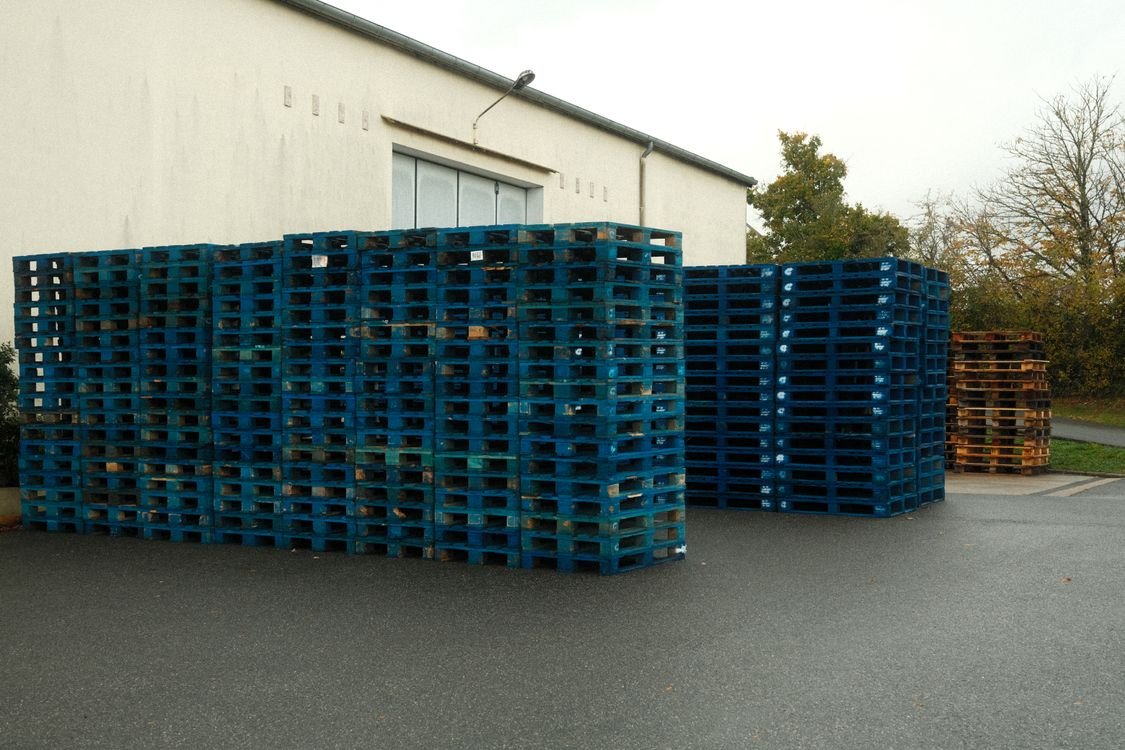
In kilos, a typical plastic pallet weighs about 14 to 23 kg. A standard wooden pallet weighs about 14 to 22 kg. These conversions help when suppliers quote specs in metric.
One plastic advantage is consistency. A plastic pallet weighs almost the same wet or dry. It does not soak up water, grow mold, or gain weight in humid storage. That consistency helps when carriers charge by exact weight.
What affects a pallet’s weight?
Five factors decide a pallet’s weight: material, size, design, wood moisture, and build quality. Material sets the baseline, since wood, plastic, and metal all differ in density. Size and design add or remove material. Moisture can swing a wooden pallet’s weight by several pounds, and repairs or extra boards push older pallets above their original spec.
Material. Wood is the baseline most people know. Plastic runs similar in standard sizes but varies more by design. Metal pallets, usually steel or aluminum, are the heaviest. A steel pallet can weigh 60 pounds or more.
Size. Bigger footprints need more material. A 48 × 48 pallet weighs more than a 48 × 40. A half pallet weighs much less. Always match the weight figure to the exact size you use.
Design. Stringer pallets and block pallets use wood differently. Block pallets have nine solid blocks and often weigh more. Extra deck boards, double faces, and winged designs all add pounds.
Moisture and condition. Rain, humidity, and spills soak into wood. A pallet stored outdoors can gain noticeable weight. Dirt, ice, shrink wrap residue, and repair plates add a little more.
The table below sums up the typical ranges side by side.
| Pallet type | Typical weight (lbs) | Typical weight (kg) | Notes |
|---|---|---|---|
| Wood, 48 × 40 GMA | 30–48 | 14–22 | Varies with wood type and moisture |
| Plastic, standard | 30–50 | 14–23 | Nestable types weigh less; rackable types weigh more |
| Metal (steel) | 60+ | 27+ | Heavy duty, long life |
How much weight can a pallet hold?
A pallet’s weight and its capacity are different numbers. The pallet’s own weight is 30 to 48 pounds for a standard wooden pallet. Its load capacity is far higher. A standard GMA pallet in good condition can support loads up to 4,600 pounds in ideal static conditions, per PalletOne. For normal dynamic use, plan around 2,500 pounds or less for a standard wooden pallet.
Capacity also changes with how the load sits. Static capacity means the pallet rests on a flat floor. Dynamic capacity means a forklift is lifting or moving it. Racking capacity is the lowest, since the pallet spans open beams. The same pallet has three different safe limits.
Load shape matters as well. Even, centered loads spread force across the deck. Point loads and overhanging boxes stress boards and crack them. A pallet rated for 2,500 pounds can fail early under a poorly placed load.
Never load a damaged pallet to its full rating. Split boards, loose blocks, and missing deck boards cut capacity fast. Inspect pallets before loading, and pull cracked or repaired-weak units out of service.
Why does pallet weight matter for shipping?
Pallet weight matters because carriers charge for every pound you ship. A 40-pound pallet adds 40 pounds to each shipment’s gross weight. Across a full truckload of 26 pallets, that is about 1,040 pounds of pallet weight alone. It also affects forklift safety, rack ratings, and how much product you can legally load before hitting road weight limits.
Freight pricing makes this real money. In LTL vs FTL shipping, LTL rates depend on weight and freight class. Wrong pallet weights mean wrong quotes and reweigh fees. Carriers reweigh pallets that look heavier than declared. The correction charge usually costs more than the original saving.
Gross weight is simple math. Add the product weight, the pallet weight, and the packaging. A 2,000-pound load on a 40-pound pallet with 20 pounds of wrap and boxes grosses 2,060 pounds. Bills of lading should show that gross figure, not just the product weight.
Here is a quick way to get your pallet weight right:
- Weigh one empty pallet on a floor scale.
- Repeat with two or three more pallets from the same batch.
- Average the results and note the range.
- Add that average to your product and packaging weights.
- Record the figure on your spec sheet and bills of lading.
Weighing takes two minutes per batch. It prevents billing disputes, overloaded racks, and rejected loads. For mixed pallet types, keep a separate average for each type.
Frequently asked questions
How much does a pallet weigh in kg?
A standard wooden pallet weighs about 14 to 22 kg. That converts from the typical 30 to 48 pound range. Plastic pallets weigh about 14 to 23 kg. Use the mid-range figure, around 18 kg, for quick estimates.
How much does a pallet weight?
People often type the question this way, and the answer is the same. A standard empty pallet weighs 30 to 48 pounds in wood. Plastic versions weigh about 30 to 50 pounds. The exact figure depends on material, size, design, and moisture.
How much does an empty pallet weigh?
An empty standard 48 × 40 wooden pallet weighs 30 to 48 pounds. Empty plastic pallets weigh about 30 to 50 pounds, with light nestable types below that. “Empty” means no load, wrap, or attachments. Always weigh your own stock, since recycled pallets vary widely.
How much does a loaded pallet weigh?
A loaded pallet weighs the product weight plus the pallet and packaging. Most loaded pallets gross between 1,000 and 2,500 pounds. Heavy loads can reach 4,000 pounds or more. Stay within the pallet’s rated capacity and your carrier’s limits.
Does a wet pallet weigh more than a dry pallet?
Yes. Wood absorbs water from rain, humidity, and spills. A soaked wooden pallet can weigh several pounds more than a dry one. Plastic pallets do not absorb water, so their weight stays stable. Dry storage keeps wooden pallet weights consistent and predictable.
