


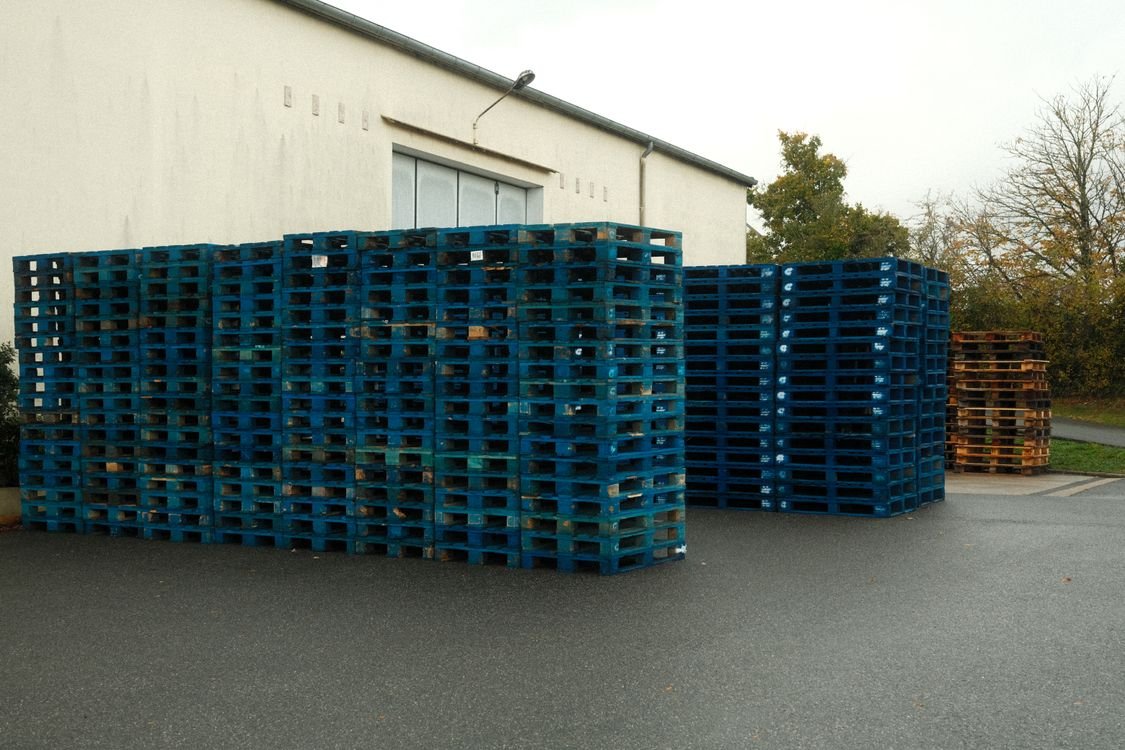
Pallet dimensions standard sizes give you a fast way to match a pallet to your load, truck, and market. In North America, the standard is 48 × 40 inches (1,219 × 1,016 mm). In Europe, it is 1,200 × 800 mm. This chart lists every common size in inches and millimeters, so you can check a size in seconds before you ship or store goods.
This post is a quick reference, not a full course. For example, it keeps each explanation short and clear. For the full story, read our complete guide to standard pallet dimensions. That guide covers height, weight, and measuring steps in depth.
What does ‘pallet dimensions standard’ mean?
A pallet dimensions standard is a recognized footprint size that an industry or region agrees to use. It is not one global size. Instead, it is a set of common sizes. Each size helps pallets fit trucks, racks, and containers the same way every time. That shared fit cuts handling time and damage.
First, the standard covers the footprint. The footprint is the length and width on the floor. Next, the full spec also covers height and build. For example, it can cover deck boards, blocks, and fork entry. However, most buyers quote only the footprint. So this chart starts with footprint sizes.
Also, a standard size brings a shared language. Buyers, carriers, and warehouses all mean the same pallet. As a result, orders move faster and errors drop. In short, the pallet dimensions standard you choose shapes cost, fit, and speed across the whole lane.
Moreover, a standard is not a law for every load. Custom pallets still exist for drums, machines, and displays. However, custom sizes sit outside the shared pool. That is why this post stays with the standard sizes that most lanes use every day.
What is the standard pallet size chart?
The standard pallet size chart below lists the main US, European, and ISO sizes in one place. It shows size in inches, size in millimeters, region, and common use. Start with 48 × 40 inches in North America and 1,200 × 800 millimeters in Europe. Then compare the rest.
| Standard / type | Size (in) | Size (mm) | Region | Common use |
|---|---|---|---|---|
| GMA | 48 × 40 | 1,219 × 1,016 | North America | Grocery, retail, and general freight |
| US industrial | 42 × 42 | 1,067 × 1,067 | North America | Paint, telecom, and auto parts |
| US drum | 48 × 48 | 1,219 × 1,219 | North America | Drums, chemicals, and heavy loads |
| US square | 40 × 40 | 1,016 × 1,016 | North America | Square loads and retail displays |
| US beverage | 36 × 36 | 914 × 914 | North America | Beverage and compact loads |
| US roofing | 48 × 36 | 1,219 × 914 | North America | Shingles and roofing materials |
| EUR1 (EPAL 1) | 47.2 × 31.5 | 1,200 × 800 | Europe | General freight and retail |
| EUR2 | 47.2 × 39.4 | 1,200 × 1,000 | Europe | Larger general loads |
| ISO | 44.9 × 44.9 | 1,140 × 1,140 | Asia-Pacific | Regional freight |
| ISO | 43.3 × 43.3 | 1,100 × 1,100 | Asia | Regional freight |
| Australian standard | 45.9 × 45.9 | 1,165 × 1,165 | Australia | Regional freight |
For example, EPAL lists the Euro pallet (EPAL 1) at 1,200 × 800 mm, with a height of 144 mm. You can check the full spec on the EPAL Euro pallet page.
Also, save this chart for spec checks. First, find your region in the chart. Next, match the footprint to your load. Then confirm height and entry with your supplier. In short, the right pallet dimensions standard starts with the right row.
Finally, note the pattern in the chart. North American sizes stress inches and even numbers. Metric sizes stress round millimeter figures. Both systems, however, aim at the same goal. Each size must fill a truck floor well and leave little wasted space.
How do pallet standards differ by country?
Pallet standards differ by country because each region built its trucks, containers, doors, and racks to local sizes. North America uses inches and the 48 × 40 GMA size. Europe uses millimeters and the 1,200 × 800 EUR1 size. Asia and Australia use square ISO sizes that suit their own equipment.
North America and Europe
First, North America centers on the GMA footprint. Grocery and retail supply chains built their systems around 48 × 40. Pooling firms also use this footprint, so supply stays deep. In contrast, Europe centers on the EUR family. EUR1 leads, and EUR2 adds a wider option for larger loads.
Next, units signal the region at a glance. US quotes use inches first. European quotes use millimeters first. However, both quotes can describe the same type of load. So always convert the units before you compare two quotes side by side.
Asia-Pacific, Australia, and industry sizes
Meanwhile, Asia often uses square footprints. The 1,100 × 1,100 mm size is common in Asia. The 1,140 × 1,140 mm size is also an ISO size. Similarly, Australia uses its own square size, 1,165 × 1,165 mm. Square pallets suit square loads well and stack in neat patterns.
In addition, industry can matter more than country. For example, beverage firms often use 36 × 36. Drum handlers often use 48 × 48, because drums sit well in a two-by-two pattern. Paint and telecom users often use 42 × 42. So check your trade first, then your map. That mix is why a single pallet dimensions standard cannot fit every lane.
What does 48×40 mean in pallet notation?
48 × 40 means a pallet is 48 inches long and 40 inches wide. Length comes first. Width comes second. In metric, the same pallet is 1,219 × 1,016 millimeters. The first number follows the stringer or length direction. Read every pallet size in that same order to avoid mistakes.

For example, read EUR1 notation the same way. In metric, teams write 1,200 × 800 mm. In inches, that size is 47.2 × 31.5. The long side still comes first. However, some suppliers list width first in their spec tables. So always check which order a supplier uses.
Also, square sizes hide this trap. A 42 × 42 pallet reads the same both ways. A 48 × 48 pallet does too. Next, note height as a third figure, if a quote gives one. A full quote can read 48 × 40 × 6.5 inches, for example.
In short, notation is simple once you fix the order. First comes length. Then comes width. Finally, height comes last, if the quote includes height at all. Keep that order, and the pallet dimensions standard on any quote will read clearly.
How do I pick the right standard size?
Pick the right standard size by matching your market, your load, and your equipment first. Ship grocery or retail in the US? Use 48 × 40. Ship in Europe? Use EUR1 1,200 × 800. Then check rack depth, trailer fit, and load overhang before you order in bulk.
- First, match the market your customer uses.
- Next, match the load shape and weight.
- Then, check rack depth and door height.
- Also, check fork entry: two-way or four-way.
- Finally, test one lane before a bulk order.
For example, export loads add one more rule. Wood pallets for export must meet ISPM 15 heat-treatment rules. Our pillar guide explains those rules in full. So read the full standard pallet dimensions guide before you book an export lane.
Overall, the best size is rarely the cheapest pallet. The best size fits your whole system. It fits your racks, your trucks, and your customer’s dock. In short, pick the pallet dimensions standard your lane already runs on, and you will cut damage, delays, and rework.
Frequently Asked Questions
Here are quick answers to common chart questions.
What is the most common pallet size?
The most common pallet size in North America is 48 × 40 inches, the GMA size. In Europe, the EUR1 at 1,200 × 800 mm leads the market. Each region treats its top size as the default. So quote the market first, then the size.
How many sizes does ISO 6780 list?
ISO 6780 lists six main pallet sizes for global trade. They are 1,200 × 800, 1,200 × 1,000, and 1,219 × 1,016 mm. The list also adds 1,140 × 1,140, 1,100 × 1,100, and 1,067 × 1,067 mm. Our chart above includes each ISO size.
Is 48 × 40 the same as 1,200 × 800?
No. A 48 × 40 pallet is 1,219 × 1,016 mm. A EUR1 pallet is 1,200 × 800 mm, or 47.2 × 31.5 inches. The EUR1 is much narrower. So the two sizes do not swap cleanly in racks or trucks.
How tall is a standard pallet?
A GMA 48 × 40 pallet stands about 6.5 inches tall. A EUR1 pallet stands 144 mm tall, or about 5.7 inches. EPAL confirms that 144 mm height in its Euro pallet spec. Always add load height on top for total height.
Can I use a custom size instead of a standard?
Yes, but a custom size usually costs more. It can also limit pooling, resale, and rack fit. Most teams gain more from a standard size. In short, choose custom only when your load shape truly needs it.
