

Supply chain optimization is the process of improving how products, information, inventory, and resources move through a supply network. The goal is not simply to reduce costs. A well-optimized supply chain aims to balance cost, efficiency, inventory availability, delivery performance, reliability, and customer requirements.
From demand forecasting and inventory management to supplier performance, transportation, warehousing, and order fulfillment, optimization requires businesses to look at how different parts of the supply chain work together.
What Is Supply Chain Optimization?
Supply chain optimization focuses on improving the overall performance of a supply chain rather than optimizing one department in isolation.
It can involve sourcing, procurement, inventory, warehousing, transportation, order fulfillment, demand planning, and supply chain visibility.
A practical optimization effort usually begins by identifying problems such as:
- Excess inventory
- Frequent stockouts
- Long supplier lead times
- High transportation costs
- Slow order fulfillment
- Poor demand forecasts
- Warehouse inefficiencies
- Limited visibility across shipments and inventory
The next step is to identify the causes of these problems and determine how changes in one area may affect the rest of the supply chain.
For example, reducing warehouse costs may seem beneficial. But if fewer warehouse employees result in slower order processing, the business could experience higher fulfillment costs or lower customer satisfaction.
This is why supply chain optimization should consider the wider network instead of focusing on a single metric.
For a broader introduction to how supply chains are structured, see our guide to the parts of a supply chain.
Supply Chain Optimization Strategies
There is no single strategy that works for every business. The right approach depends on the company’s products, suppliers, customers, geography, inventory requirements, and operating model.
However, several areas commonly deserve attention.
Improve Demand Forecasting
Demand forecasting helps businesses estimate future customer demand so they can plan purchasing, production, inventory, and distribution.
Forecasts should not be treated as fixed predictions. Demand can change because of seasonality, promotions, product availability, market conditions, or changes in customer behavior.
One useful approach is to regularly compare forecasted demand with actual demand. This can help identify recurring forecasting errors and areas where planning needs improvement.
Businesses can also use historical data and supply chain analytics to understand demand patterns and support planning decisions.
Optimize Inventory Levels
Inventory optimization is about maintaining enough stock to support customer demand without unnecessarily tying up capital and storage capacity.
Too much inventory can increase holding and storage costs. Too little inventory can result in stockouts, delayed orders, and missed sales.
Inventory policies may need to differ between products. High-volume or critical products may require tighter controls than slow-moving items.
Businesses should consider factors such as:
- Demand patterns
- Supplier lead times
- Reorder points
- Order quantities
- Product importance
- Seasonal demand
- Stockout risk
For businesses using just-in-time approaches, our guide to JIT inventory management provides additional context.
Improve Supplier Management
Supplier performance can have a direct effect on production, inventory, and customer fulfillment.
Businesses can monitor factors such as:
- Delivery reliability
- Supplier lead time
- Product quality
- Order accuracy
- Responsiveness
- Availability
Purchase price should not be the only consideration.
A supplier offering a lower unit price may create additional costs if it frequently delivers late, supplies inconsistent quality, or requires additional operational work.
Supplier performance should therefore be evaluated as part of the wider supply chain rather than as a simple purchasing decision.
Optimize Transportation
Transportation can have a significant effect on both cost and service performance.
Businesses can review:
- Shipment frequency
- Carrier selection
- Transportation modes
- Delivery schedules
- Routes
- Load utilization
- Shipment consolidation
For example, consolidating several smaller shipments may reduce transportation costs, but it may also increase delivery time.
The appropriate decision depends on shipment requirements, customer expectations, distance, product characteristics, and service commitments.
Improve Warehouse Operations
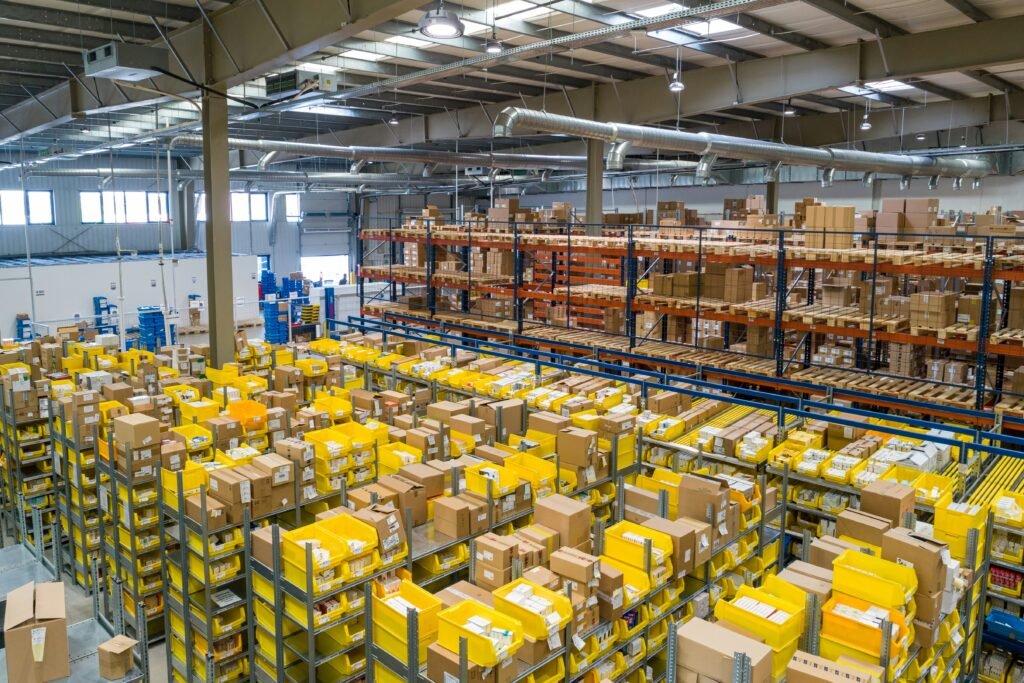
Warehouse optimization focuses on how products are received, stored, picked, packed, and dispatched.
Improving inventory visibility can make it easier for warehouse teams to locate products and reduce unnecessary handling.
Storage locations can also be organized around product demand and operational requirements. Fast-moving products, for example, may need to be positioned differently from slow-moving inventory.
The objective should not simply be to reduce warehouse costs. Warehouse decisions should support inventory availability, order accuracy, fulfillment speed, and the wider supply chain.
Supply Chain Optimization Techniques
Different techniques can be used depending on the problem a business is trying to solve.
Common supply chain optimization techniques include:
- Demand forecasting
- Inventory analysis
- Supplier performance analysis
- Route optimization
- Warehouse slotting
- Shipment consolidation
- Network analysis
- Sales and operations planning
- Supply chain analytics
- Process automation
- Supply chain visibility
For example, a company experiencing excess inventory may need better forecasting and inventory controls, while a company experiencing frequent delivery delays may need to examine transportation and supplier performance.
There is no reason to implement every technique at once. A more practical approach is to identify the most important operational problem and select techniques that directly address it.
How Does Supply Chain Optimization Work?
A practical supply chain optimization process can be broken into several steps.
1. Map the Current Supply Chain
Start by understanding how products, information, inventory, and decisions move through the business.
This may include suppliers, purchasing, production, warehouses, carriers, distributors, and customers.
2. Identify Measurable Problems
Look for specific problems instead of trying to optimize everything at once.
Examples include:
- High inventory levels
- Frequent stockouts
- Long lead times
- Poor order fulfillment
- High transportation costs
- Low supplier reliability
- Warehouse delays
3. Find the Root Causes
The visible problem may not be the actual cause.
For example, frequent stockouts could result from inaccurate forecasts, supplier delays, incorrect inventory records, poor reorder points, or a combination of several factors.
Finding the underlying cause helps businesses avoid applying a solution that only treats the symptom.
4. Test and Implement Changes
Once the causes are understood, businesses can test potential changes and monitor their results.
Depending on the situation, this could involve changing inventory policies, adjusting supplier processes, redesigning warehouse workflows, changing transportation arrangements, or improving data systems.
5. Measure the Results
Optimization should be measurable.
Useful performance measures can include:
- Inventory turnover
- Order fulfillment time
- On-time delivery
- Stockout frequency
- Forecast accuracy
- Transportation cost
- Warehouse productivity
- Supplier lead time
These metrics should be considered together. Improving one metric should not create a larger problem somewhere else.
The SCOR framework from ASCM also provides a structured way to think about supply chain processes, including planning, sourcing, transformation, fulfillment, and returns.
Supply Chain Optimization Tools
Technology can make optimization easier by bringing operational information together.
Supply chain tools may support areas such as:
- Inventory management
- Demand planning
- Transportation management
- Warehouse management
- Procurement
- Order management
- Supply chain analytics
However, implementing new software does not automatically optimize a supply chain.
Poor-quality data, disconnected processes, and unclear responsibilities can continue to create problems even after new technology is introduced.
Before selecting a supply chain tool, businesses should identify the operational problem it needs to solve and determine what data is required.
For example, AI in supply chain can support forecasting, planning, visibility, and decision-making, but its usefulness still depends on the quality and availability of the underlying data.
The Role of Supply Chain Visibility
Supply chain visibility helps businesses understand what is happening across their supply network.
Without reliable information, it can be difficult to determine whether a delay is caused by a supplier, warehouse, carrier, inventory issue, or another part of the process.
Better visibility can give teams a clearer view of:
- Inventory levels
- Orders
- Shipments
- Supplier activity
- Delivery status
- Potential disruptions
This can support faster responses when conditions change.
However, visibility by itself does not fix an inefficient process. Information must lead to appropriate decisions and actions.
For more on this topic, see our guide to supply chain alerts.
Common Supply Chain Optimization Mistakes
Optimizing One Department in Isolation
A purchasing team may reduce unit costs by ordering larger quantities.
However, larger orders can increase inventory and storage requirements.
Similarly, a warehouse may reduce staffing costs while creating slower order fulfillment.
Supply chain optimization should therefore consider the complete flow rather than maximizing the performance of one department.
Focusing Only on Cost
Lower cost does not always mean better supply chain performance.
A decision that reduces immediate spending may increase lead times, reduce service levels, or create additional operational work.
Cost should be evaluated alongside reliability, speed, quality, inventory availability, and customer requirements.
Using Poor-Quality Data
Optimization depends on the information used to make decisions.
Incorrect inventory records, outdated supplier information, inconsistent product data, and unreliable forecasts can all lead to poor decisions.
Improving data quality should therefore be part of the optimization process.
Ignoring Supply Chain Risk
A highly efficient supply chain can still be vulnerable if it depends heavily on one supplier, one transportation route, or another single point of failure.
Risk assessment should be considered alongside efficiency.
In some situations, maintaining an alternative supplier or transportation option may cost more but provide additional resilience when disruptions occur.
When Supply Chain Optimization Needs a Different Approach
There is no single supply chain optimization method that works for every company.
A manufacturer may focus heavily on production planning and raw-material availability.
A retailer may prioritize inventory availability, order fulfillment, and delivery speed.
A global importer may place greater emphasis on transportation, supplier lead times, sourcing, and international trade processes.
Business size also matters.
A smaller company may benefit from improving basic inventory records, supplier management, and demand planning before investing in complex technology.
Likewise, highly automated systems may not solve problems caused by unclear processes or poor data.
The most useful optimization strategy is therefore the one that addresses the company’s actual operational constraints.
Supply Chain Optimization vs. Supply Chain Efficiency
| Supply Chain Optimization | Supply Chain Efficiency |
|---|---|
| Looks at multiple connected decisions across the supply chain | Focuses more directly on reducing waste, time, or cost |
| Considers trade-offs between different operations | Often focuses on improving resource use |
| May involve inventory, suppliers, transportation, warehousing, and planning | May involve reducing unnecessary handling, delays, or expenses |
| Example: balancing inventory, transportation, supplier reliability, and service levels | Example: reducing unnecessary warehouse handling |
Efficiency can be part of optimization, but the two terms are not identical.
Optimization considers how changes in one area affect the wider supply chain.
Frequently Asked Questions
What is supply chain optimization?
Supply chain optimization is the process of improving how products, information, inventory, and resources move through a supply network while balancing factors such as cost, efficiency, availability, and service.
Why is supply chain optimization important?
It can help businesses identify inefficiencies, manage inventory, improve transportation, strengthen supplier performance, and make better operational decisions.
What are the main supply chain optimization strategies?
Common strategies include improving demand forecasting, optimizing inventory, managing supplier performance, improving transportation, strengthening warehouse operations, and increasing supply chain visibility.
How can a company optimize its supply chain?
Start by mapping the current supply chain and identifying measurable problems. Then investigate the root causes, select appropriate changes, implement them, and monitor relevant performance measures.
What role does technology play in supply chain optimization?
Technology can improve visibility, planning, forecasting, analytics, inventory management, transportation management, and warehouse operations. However, technology works best when the underlying processes and data are reliable.
What is the difference between supply chain optimization and efficiency?
Supply chain efficiency generally focuses on reducing waste, time, or cost, while supply chain optimization considers how multiple connected decisions affect overall supply chain performance.
Final Thoughts
Supply chain optimization is not about making every individual process as cheap or fast as possible.
It is about understanding how the different parts of a supply network interact and making decisions that improve overall performance.
Businesses can start by identifying their biggest operational problems, examining the underlying causes, improving data quality, and measuring the results of changes over time.
Whether the focus is inventory, transportation, suppliers, warehousing, demand planning, or technology, the strongest optimization efforts look beyond individual departments and consider the supply chain as a connected system.
