


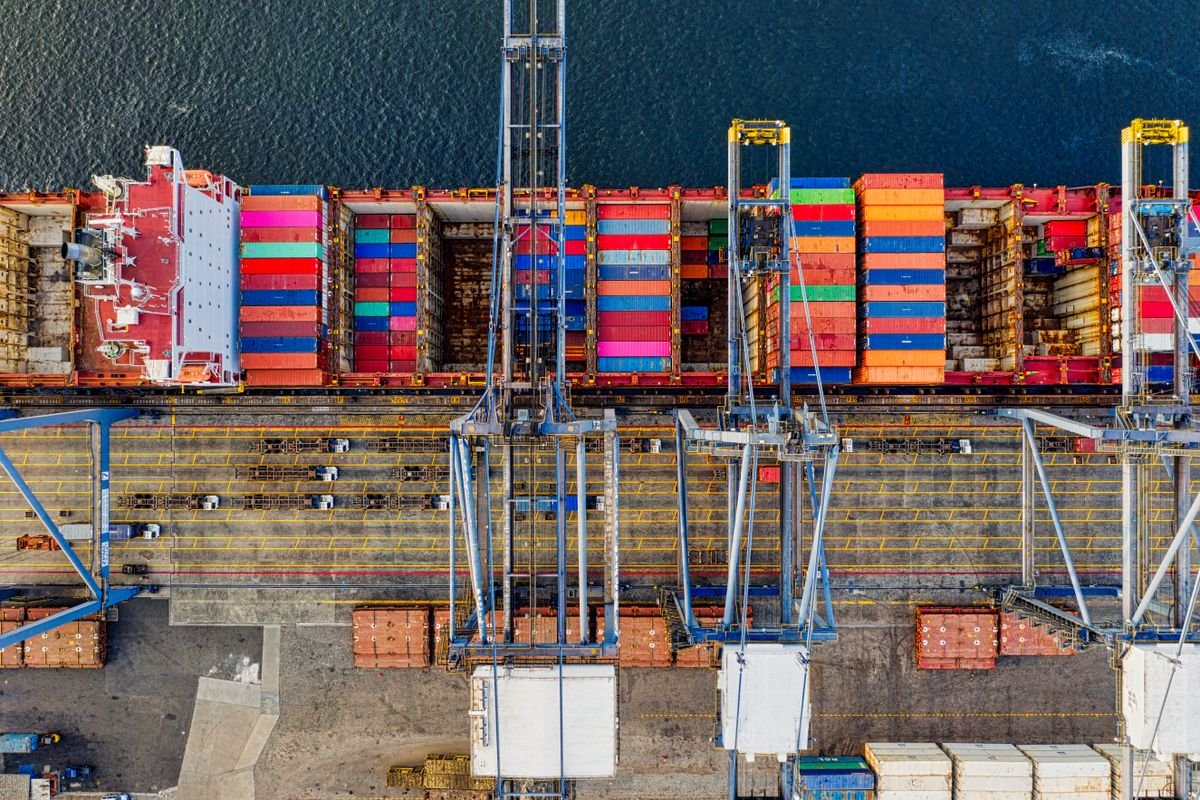
Demurrage vs detention is simple once you know the rule. You pay demurrage while a full container stays inside the terminal past its free time. You pay detention while the carrier’s container stays outside the terminal past its free time. Location separates the two charges, not the reason for the delay.
Both are daily charges. The rate rises in tiers the longer you hold the container. You can avoid both with the same discipline. Track your free days, clear customs early, and return the empty container fast.
This guide explains each charge and shows the import and export clocks. It also works through a cost example and gives you a checklist to avoid both. Read on for the full demurrage vs detention breakdown. For the company that books the container in the first place, see our guide to freight forwarding.
What Is Demurrage?
Demurrage is the charge for keeping a container inside the port or terminal past free time. On an import, the clock usually starts when the vessel discharges the container. It stops when the full container leaves the terminal gate. On an export, the clock runs from gate-in until the vessel loads the container.
Demurrage exists because terminal space is scarce. A container sitting in the yard blocks a slot the next vessel needs. So the charge pushes importers to collect their cargo promptly. Typical free time for demurrage is 2 to 7 days. It depends on the port, carrier and contract. The daily rate rises in tiers the longer the container stays. A customs hold does not pause the demurrage clock. That is why delayed documents cause most demurrage bills.
What Is Detention?
Detention is the charge for keeping the carrier’s container outside the terminal beyond its free time. On an import, the clock starts when the container leaves the terminal. It stops when you return the empty container to the carrier’s depot. On an export, the clock runs from empty pickup until the full container reaches the terminal gate.
Detention exists because the carrier wants its equipment back in circulation. Every day a container sits at your warehouse, it cannot carry the next shipment. The same applies while it waits for a truck. Typical free time for detention is 2 to 5 days for the empty return on imports. Some contracts allow up to 7 to 10 days. Like demurrage, the daily rate rises in tiers the longer you hold the container.
Demurrage vs Detention: Side-by-Side Comparison
| Feature | Demurrage | Detention |
|---|---|---|
| Where it applies | Inside the terminal, port or container yard | Outside the terminal, at your facility or with the trucker |
| What it bills for | A full container occupying terminal space | The carrier’s container held past free time |
| Who bills it | Terminal operator, or the carrier on its behalf | Ocean carrier |
| Import clock | From discharge until the full container leaves the gate | From gate-out until you return the empty |
| Export clock | From gate-in until loading on the vessel | From empty pickup until you gate in the full container |
| Typical free time | 2 to 7 days | 2 to 10 days, depending on the contract |
| Typical cause | Customs holds, missing documents, delayed pickup | Slow unloading, late empty return, chassis shortage |
| Who usually pays | Consignee or importer of record | Consignee or the party holding the container |
A single shipment can incur both charges at different stages. First, demurrage applies while the loaded container waits at the terminal. Then detention applies if you return the empty late. That is why the two charges often appear on one bill. It is also why importers confuse them.
Free Time and the Last Free Day
Free time is the number of days you may hold the container without charge. The last free day, often shortened to LFD, is the final charge-free day. Charges start the day after the LFD, and they run per container per day.
Your booking terms set the free time. Check your service contract, the carrier’s tariff, or the terms of a spot booking. It is not a fixed industry standard. It varies by carrier, port, route and season. Some carriers sell combined free time. That is one shared pool of days for the whole period, inside and outside the terminal. It replaces separate allowances for demurrage and detention. Combined free time is simpler to track. But it can run out faster if one stage eats most of the days.
Write the LFD for every container on your tracking sheet. Do it the moment the booking is confirmed. Set an alert for the day before it expires. Most demurrage vs detention bills come from containers whose LFD nobody was watching.

Demurrage, Detention, Storage and Per Diem: Clearing Up the Confusion
Three more terms appear on the same invoices, and mixing them up makes disputes harder.
Storage is the terminal’s charge for its space, billed separately from demurrage. Demurrage pays the carrier for the container sitting in the terminal. Storage pays the terminal for the land it sits on. A shipment can incur both at once, and storage can also apply to containers you own yourself.
Per diem is the name United States carriers often give this charge. It means the same thing as detention in most of the world. The Federal Maritime Commission counts any charge for terminal space or container use as demurrage and detention under its rules. That includes per diem.
Drayage detention is a different charge with a similar name. In United States trucking, detention bills for a driver and truck that wait past a free window. That window is usually one to two hours. It applies at a terminal, rail ramp or consignee dock. The drayage carrier charges it by the hour. It has nothing to do with where the container physically sits. When a trucker mentions detention, check what they mean. Do they mean the container clock or the driver’s waiting time? Different parties bill each one.
How Much Do Demurrage vs Detention Charges Cost?
There is no universal rate. Daily rates vary by carrier, port, route, equipment type and season. They rise in tiers the longer you hold the container. As a rough guide, per diem rates commonly run $75 to $300 per container per day. They compound quickly once free time runs out.
To show how tiering works, here is one carrier’s published example for a United States import. Maersk’s 2026 tariff gives four free days of detention on a dry container. It then charges $210 per day for days 5 to 8. For days 9 to 12, the rate is $260 per day. Its demurrage at default United States ports starts at about $300 per day. Those are one carrier’s figures for one trade, not a market rate. Your own tariff will differ. But the pattern is the same everywhere. The rate climbs the longer the box stays.
The formula is simple. Multiply the number of containers by the daily rate for each tier. Then multiply by the number of days past free time. Here is a worked example. One container held 4 days past a 4-day free time costs $840 at $210 per day. Held 8 days past free time, it costs $1,880. That uses $210 for the first 4 days and $260 for the next 4. Two containers double it. That is how a small delay becomes a four-figure invoice.
The FMC Billing Rules: Your Rights as a Shipper
In the United States, the Demurrage and Detention Billing Requirements rule took full effect on 28 May 2024. The Federal Maritime Commission issued it under 46 CFR Part 541. It requires invoices to arrive within 30 calendar days of the last charge. If the invoice arrives later, the billed party does not have to pay it. Invoices must also show enough detail for the shipper to understand the charge. That includes the dates and the rate applied.
That gives you a real defence. When an invoice arrives, check three things. Did it arrive within 30 days? Does it name the correct paying party? Does it show the free days and the daily rate for each day charged? If any of those are wrong or missing, dispute it in writing and ask for a corrected invoice. Keep the arrival notice, the gate-out record and the empty-return receipt. Those three documents prove when each clock started and stopped.
How to Avoid Demurrage vs Detention Charges
Avoiding both charges comes down to different actions for each one. For demurrage, the work happens before the vessel arrives. File customs entries early. Make sure documents are complete. Confirm the pickup appointment. Arrange trucking before the container discharges. For detention, the work happens after pickup. Unload promptly. Return the empty to the correct depot. Then confirm the depot accepted the return.
- Track the last free day for every container and set an alert the day before it expires.
- Pre-clear customs so the container can leave the terminal the day it becomes available.
- Book trucking before discharge rather than after the vessel arrives.
- Negotiate free days in your contract before you book, especially on lanes where delays are common. Extra free days are often cheaper than the charges they prevent.
- Return empties to the right depot and keep the return receipt. A return to the wrong location does not stop the clock.
- Ask about combined free time if your cargo needs more days on one side of the gate.
- Check who pays under your Incoterm, because responsibility for these charges follows the sales terms, not a fixed industry rule. Our guide to Incoterms explains which party bears the cost under each term.

Watch: Demurrage and Detention Explained on Video
The short video below shows where each charge applies and which deadlines to watch.
Frequently Asked Questions About Demurrage vs Detention
What is the difference between demurrage and detention?
You pay demurrage when a container stays inside the port or terminal past its free time. You pay detention when the carrier’s container stays outside the terminal past its free time. Location is what separates them: inside the gate means demurrage, outside the gate means detention.
How many free days do you get for demurrage and detention?
It varies by carrier, port, route and contract. Demurrage free time is commonly 2 to 7 days, and detention free time is commonly 2 to 10 days. There is no universal figure. So check the demurrage vs detention free days on each booking. Note the last free day for every container.
Who pays demurrage and detention charges?
Usually the consignee or importer of record pays. But responsibility follows the Incoterm and the service agreement, not a fixed industry rule. Under some terms the seller bears the cost. Check your sales contract and your forwarder’s terms before the shipment sails, not after the invoice arrives.
Can demurrage charges be disputed?
Yes. In the United States, the FMC billing rule requires invoices within 30 days of the last charge incurred. They must show enough detail to explain the basis of the charge. Dispute any invoice that is late, names the wrong payer, or hides the free days and daily rates. Do it in writing. Ask for a corrected invoice. Keep the arrival notice, gate-out record and empty-return receipt as evidence.
Is storage the same as demurrage?
No. Demurrage is the carrier’s charge for a container sitting in the terminal past free time. Storage is the terminal’s separate charge for its space, and it can apply even to containers you own. A shipment can incur both charges at the same time.
What is combined free time?
Combined free time is a single shared allowance. It covers the whole period, both inside and outside the terminal. Separate allowances for demurrage and detention do not apply here. It is simpler to track, but it can run out faster if one stage uses most of the days.
Putting It All Together
Demurrage vs detention comes down to two clocks on the same container. The only question is where the container is when the clock runs out. Inside the terminal, the charge is demurrage. Outside the terminal, it is detention. Both are avoidable with the same habits. Know the last free day. Clear customs before the vessel arrives. Book trucking early. Unload fast and return the empty to the right depot with a receipt. And when an invoice does arrive, check it against the FMC rules before you pay it. A container that moves on schedule costs nothing extra. A container that sits still is the most expensive box in your supply chain. For the wider picture, see our guides to freight forwarding services, logistics, lead time and LTL vs FTL.
