


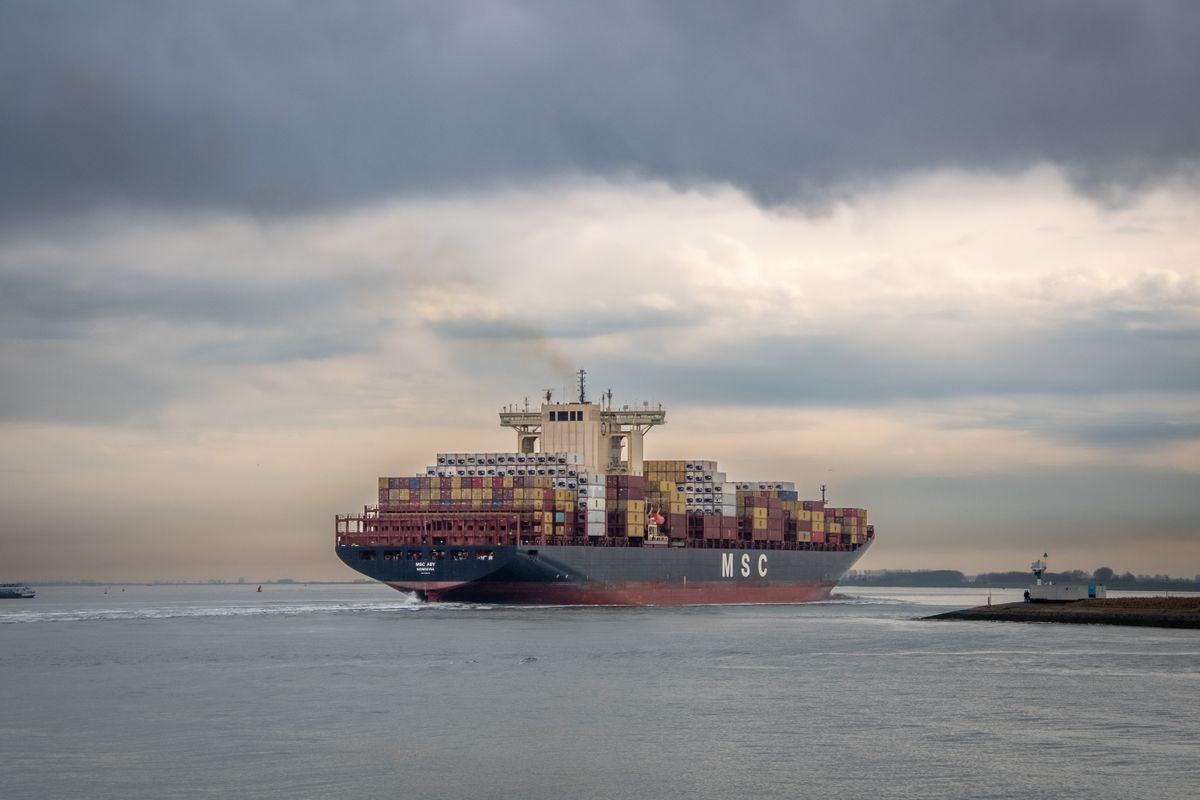
The largest freight forwarding companies in the world are Kuehne+Nagel and DSV, which share the top position in the Armstrong & Associates ranking based on 2025 data, followed by DHL Supply Chain & Global Forwarding and Sinotrans. In addition, DSV has the highest gross revenue of the group, Sinotrans moves the most ocean containers, and Kuehne+Nagel leads on air freight volume. No single number decides the ranking, because each company leads on a different measure. This guide lists the top ten, explains what each one is best for, and shows how to pick the right one for your own shipments. For the basics of what these companies actually do, start with our guide to freight forwarding.
What Is a Freight Forwarding Company?
A freight forwarding company organises the movement of goods from one place to another, usually across borders, without owning the ships, planes or trucks that carry the cargo. It books space with carriers, arranges pickup and delivery, prepares shipping documents, clears customs and tracks the shipment. Think of it as a travel agent for freight: you tell it where the goods need to go, and it plans the route, buys the capacity and handles the paperwork. Our guide to what a freight forwarder is explains the role in full.
Forwarders differ from carriers in one important way. A carrier owns the transport asset, such as a container ship or an aircraft. A forwarder owns the relationships, the booking systems and the local agents, and buys space from many carriers. That is why a forwarder can offer a route that mixes ocean, air and road transport in one booking, while a single carrier can usually only offer its own network.
Some forwarders also act as NVOCCs, which stands for non-vessel-operating common carrier. An NVOCC buys container space from shipping lines in bulk, then sells it to shippers in smaller lots and issues its own house bill of lading. If you ship less than a full container, your cargo very likely travels under an NVOCC booking.
The Largest Freight Forwarding Companies in the World
The ranking below follows the Armstrong & Associates ranking of the top 25 freight forwarders, based on 2025 data and published in September 2026. It combines gross revenue, ocean container volume in TEUs and air freight volume, so the order reflects overall scale rather than one single figure.
| Position | Company | Gross revenue | Ocean TEUs | Air tonnes | Best for |
|---|---|---|---|---|---|
| 1 (tie) | Kuehne+Nagel | $33.84B | 4,325,000 | 2,030,280 | Ocean freight and global scale |
| 1 (tie) | DSV | $37.38B | 3,695,424 | 2,013,127 | Highest revenue; European and US lanes |
| 2 | DHL Supply Chain & Global Forwarding | $35.54B | 3,274,000 | 1,767,000 | Worldwide coverage and customs |
| 3 | Sinotrans | $13.58B | 4,925,154 | 912,000 | China and intra-Asia ocean freight |
| 4 | Nippon Express | Not shown | Not shown | Not shown | Transpacific lanes and high-tech cargo |
| 5 | CEVA Logistics | Not shown | Not shown | Not shown | Contract logistics and automotive |
| 6 | Expeditors | Not shown | Not shown | Not shown | Customs brokerage and compliance |
| 7 | C.H. Robinson | Not shown | Not shown | Not shown | North American road freight and brokerage |
| 8 | Kerry Logistics Network | Not shown | Not shown | Not shown | Asia-focused freight and e-commerce |
| 9 | Geodis | Not shown | Not shown | Not shown | European freight and supply chain solutions |
Two points in the ranking deserve attention. First, DSV completed its acquisition of DB Schenker on 30 April 2025, so Schenker no longer appears as a separate company in the ranking; its volume now sits inside DSV. Second, the revenue figures above are gross revenue as reported for 2025, and they change every year, so treat the order as a snapshot of scale rather than a permanent league table. What matters for your shipment is not who is biggest overall, but who is strongest on your trade lane and cargo type.

Types of Freight Forwarding Companies
Not every forwarder works the same way. Knowing the types helps you shortlist the right kind before you compare names.
Global forwarders
Global forwarders such as Kuehne+Nagel, DSV and DHL run offices in dozens of countries and move freight on every major trade lane. They suit companies that ship regularly to many destinations and need one partner for the whole network. Their size buys carrier capacity and negotiating power, but smaller shippers sometimes get less personal attention than they would from a smaller firm.
Digital forwarders
Digital forwarders such as Flexport run the booking, documents and tracking through an online platform, with live visibility as the standard rather than an add-on. They suit shippers who value instant quotes, self-service booking and clear tracking, and who are comfortable managing the process on screen rather than by phone. Our guide to freight forwarding services explains which services these platforms usually cover.
Regional and niche forwarders
Regional forwarders specialise in one trade lane, such as China to the United States, or one cargo type, such as pharmaceuticals, perishables or oversized project cargo. They often know their lane better than any global firm, including which ports, carriers and customs offices perform best. If your freight is unusual or your lane is narrow, a specialist usually beats a generalist.
Freight brokers vs forwarders
A freight broker connects a shipper with a carrier and takes a fee, but does not usually take responsibility for the shipment end to end. A forwarder takes responsibility for the whole move, including documents and customs. For international shipping, a forwarder is normally the right choice; for a one-off domestic truckload, a broker can be enough. The difference matters most when something goes wrong, because the forwarder is the party you call.
What Each Leading Forwarder Is Best For
Size alone does not make a forwarder right for you. The points below use the strengths the ranking and the companies’ own service profiles show most clearly.
- Kuehne+Nagel: best for ocean freight at scale, with the highest air freight volume of the top ten and digital quoting for full and shared containers.
- DSV: best for shippers who want one of the largest networks after the Schenker acquisition, with strong air freight and European road networks.
- DHL Global Forwarding: best for worldwide coverage and customs brokerage, including pharmaceutical cold chain networks.
- Sinotrans: best for China-origin ocean freight and intra-Asia consolidation, with the highest container volume of the group.
- Expeditors: best for customs clearance and compliance-heavy shipments, with a large network of offices worldwide.
- C.H. Robinson: best for North American domestic freight and cross-border Mexico and Canada capacity.
- Flexport: best for technology-led visibility, with one dashboard for booking, tracking and customs.
- Nippon Express: best for transpacific lanes and precision cargo such as automotive parts and high-tech equipment.
For example, if you ship mainly by ocean in full containers, the ocean volume leaders matter most. If you ship small, urgent air freight, the air volume leaders matter more. And if your cargo needs customs brokerage on every shipment, pick the forwarder whose brokerage team is strongest on your lane, not the one with the biggest headline revenue.

How to Choose a Freight Forwarding Company
Choosing well is a short process if you follow it in order. First, write down your shipment profile: what you ship, how often, from where to where, and what service level you need. Second, shortlist three forwarders that already handle your cargo type and trade lane. Third, ask each one for an itemised quote on the same shipment, so the prices are comparable. Fourth, check licences and references before you sign anything. For the full step-by-step version, see our guide on how to choose a freight forwarder, which covers the complete checklist.
Three checks separate good forwarders from risky ones. First, check the licence: for United States ocean freight, the forwarder should appear on the Federal Maritime Commission’s public list of licensed ocean transportation intermediaries, and for air freight it should hold IATA accreditation. Second, check the quote: a good quote lists the base freight, fuel surcharge, terminal handling, documentation, customs brokerage and destination delivery as separate lines, so you can see what is included. Finally, check the communication: you should have one named contact who answers, and tracking that updates without you having to ask.
Price still matters, but the cheapest quote is often the most expensive shipment. A low base rate with terminal, documentation and destination fees added later usually costs more than a higher all-in quote. Compare landed cost, not the headline freight rate. And remember that Incoterms decide who pays for what, so confirm the Incoterm on every quote; our guide to Incoterms explains the main terms in plain language.
Watch: Freight Forwarding Explained on Video
The video below explains what freight forwarders do and how they move goods through the supply chain, from pickup to final delivery.
Frequently Asked Questions About Freight Forwarding Companies
Who is the largest freight forwarder in the world?
Kuehne+Nagel and DSV share the top position in the Armstrong & Associates ranking based on 2025 data. DSV has the highest gross revenue at $37.38 billion, while Kuehne+Nagel leads on air freight volume. Sinotrans moves the most ocean containers of the top ten.
What is the difference between a freight forwarder and a carrier?
A carrier owns the transport asset, such as a ship or an aircraft, and moves the cargo. A freight forwarder does not usually own transport assets; it buys space from carriers, arranges the route, prepares documents and clears customs. The forwarder is your single point of contact for the whole shipment.
Do freight forwarding companies own ships or planes?
Most do not. The largest forwarders are non-asset based, which means they buy capacity from shipping lines and airlines rather than owning vessels or aircraft. A few large logistics groups own some assets, but the forwarding business itself is built on carrier relationships, not on owning transport.
Which freight forwarder is best for a small business?
It depends on your lanes and cargo, but small businesses often do best with a digital forwarder or a regional specialist rather than the largest global firm. Digital forwarders give instant quotes and clear tracking, while regional specialists give personal service on the lanes they know best. Get quotes from three forwarders and compare landed cost, not just the freight rate.
How do freight forwarding companies charge?
They charge for the freight itself plus the services around it: pickup, documentation, customs brokerage, terminal handling, insurance and destination delivery. A transparent quote lists each charge separately. Ask for the full landed cost before you book, and confirm which Incoterm applies, because the Incoterm decides which charges fall on you and which fall on the other party.
What is an NVOCC?
An NVOCC, or non-vessel-operating common carrier, is a forwarder that buys container space from shipping lines in bulk and sells it to shippers in smaller lots. It issues its own house bill of lading. If you ship less than a full container, your cargo very likely travels under an NVOCC booking.
Putting It All Together
The biggest freight forwarding companies are Kuehne+Nagel, DSV, DHL and Sinotrans, but biggest is not the same as best for your shipment. Match the forwarder to your trade lane, cargo type and service needs, compare itemised quotes on identical scope, and check licences and references before you commit. As a result, a forwarder that is strong on your lane, transparent on price and reachable when problems arise will save more money over a year than the cheapest quote on a single shipment. That is the real test, and it applies whether you ship ten containers a month or one carton a year. For the wider picture, see our guides to logistics and supply chain management, and our comparison of LTL vs FTL for domestic legs of an international move.
