


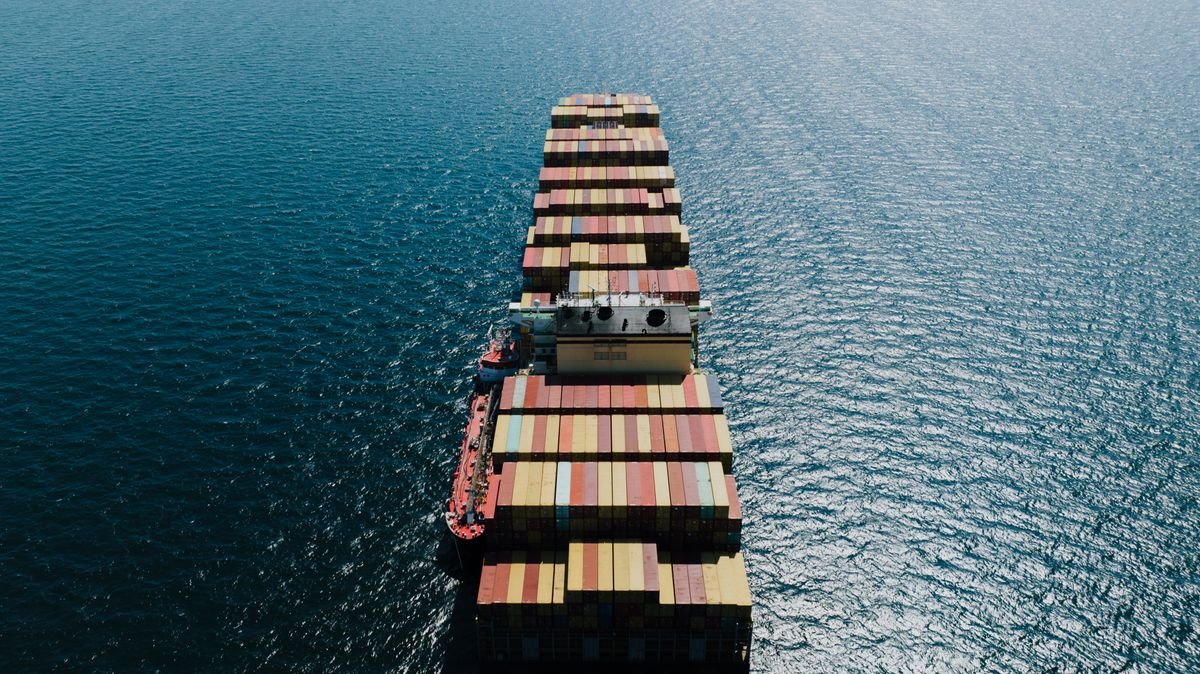
Ocean freight vs air freight comes down to one trade-off: air freight is roughly 4 to 8 times faster and roughly 8 to 16 times more expensive per kilogram than ocean freight. Ocean freight carries about 80% of world trade by volume, while air cargo carries less than 1% of volume but more than 35% of world trade by value. Choose ocean when cost matters more than speed and the cargo is large, heavy or non-urgent. Choose air when the goods are time-sensitive, high-value or perishable. This guide compares the two modes on cost, speed, capacity, reliability and emissions, works through a real example, and gives you a simple decision framework. For the company that arranges either mode, see our guide to freight forwarding.
What Is Ocean Freight?
Ocean freight, also called sea freight, moves goods by container ship across oceans. Cargo travels in standard containers, usually 20-foot or 40-foot, either as a full container load (FCL) when one shipper fills the whole box, or as a less-than-container load (LCL) when several shippers share one container. It is the cheapest way to move large volumes internationally, and it handles cargo that air freight cannot, such as heavy machinery, bulk goods and hazardous materials that airlines refuse.
The price of ocean freight is set per container for FCL, or per cubic metre for LCL. The cost per kilogram falls as the shipment gets bigger, because the container costs roughly the same whether it is half full or full. That is why ocean freight dominates for heavy, dense or voluminous goods. The trade-off is time: an ocean shipment is measured in weeks, not days.
What Is Air Freight?
Air freight moves goods by aircraft, either in dedicated cargo planes or in the belly hold of passenger flights. It is the fastest way to move goods over long distances, and it is the standard choice for urgent, high-value or perishable cargo such as electronics, pharmaceuticals, fashion samples and spare parts for a broken machine.
Air freight is priced by chargeable weight, which is the greater of the actual weight and the volumetric weight. The industry standard conversion treats one cubic metre as 167 kilograms, so a large, light box costs far more than its scale weight suggests. That is the detail that surprises first-time air shippers most: you pay for the space your cargo occupies, not just what it weighs.
Ocean Freight vs Air Freight: Side-by-Side Comparison
| Factor | Ocean Freight | Air Freight |
|---|---|---|
| Transit time | 20 to 45 days door to door | 1 to 7 days door to door |
| Cost per kg | Low; roughly $0.20 to $0.50 per kg for FCL | High; roughly $4.50 to $7.50 per kg standard |
| How priced | Per container (FCL) or per cubic metre (LCL) | By chargeable weight (actual vs volumetric) |
| Capacity | Very high; a single ship carries thousands of containers | Limited; aircraft space is scarce and size-restricted |
| Best for | Large, heavy, bulky or non-urgent goods | Urgent, high-value, perishable or small goods |
| Reliability | Schedules hold but port congestion causes delays | Fast but cargo can be bumped off passenger flights |
| Emissions | Low per tonne-km; about 8 to 25 g CO2 per tonne-km | High per tonne-km; about 380 to 680 g CO2 per tonne-km |
| Cargo limits | Few; handles oversized and most hazardous goods | Strict size, weight and dangerous-goods limits |
The cost figures above are indicative 2026 market rates for a China to United States lane, as published by freight guides; actual rates move with fuel, season and capacity, so always get a live quote. The emissions figures come from Global Logistics Emissions Council factors: a large container vessel emits roughly 8 to 12 grams of CO2 per tonne-kilometre, while a long-haul freighter emits roughly 560 to 680 grams. Air freight is roughly 25 to 50 times more carbon-intensive per tonne-kilometre than ocean freight.
Cost Comparison in Detail
Cost is where ocean freight wins by a wide margin. Industry guides put air freight at roughly 4 to 8 times the cost of ocean freight per kilogram, and on some lanes the gap is wider: a shipment that costs $195 by sea can cost over $1,000 by air. The gap widens as weight rises, because ocean pricing is per container while air pricing is per kilogram.
As a rough rule, sea freight becomes the cheaper option once a shipment passes about 500 kilograms or takes up a large share of a container. Below that weight, air can work out cheaper once port handling, customs and minimum ocean charges are added in. Remember that the freight rate is only part of the bill: origin handling, customs, destination handling and delivery all add up, and the Incoterm decides who pays each part. Our guide to Incoterms explains the main terms.
There is also a hidden cost that favours air freight. Goods in transit tie up cash, and slow ocean transit means more inventory sitting on the water. For high-value or fast-moving products, the inventory savings from air freight can offset much of the freight premium. That is why electronics and fashion brands often fly stock even when the freight bill looks painful: the goods sell sooner, and less capital sits idle.

Transit Time Comparison
Air freight is measured in days and ocean freight in weeks. On major routes, express air services deliver in 2 to 4 days door to door, and standard consolidated air freight in 5 to 8 days. Ocean freight from China to the United States West Coast takes roughly 14 to 22 days at sea, plus 5 to 8 days inland, giving 25 to 32 days door to door; to the East Coast it is longer still.
Reliability cuts both ways. Ocean schedules are fixed and a booked container usually sails, but port congestion, weather and blank sailings can add days without warning, and on-time performance on many ocean lanes runs below 50%. Air freight is faster but less predictable in a different way: cargo booked on passenger flights can be bumped when baggage, mail and military freight take priority, sometimes for several days in a row. Dedicated freighters avoid that problem, which is why urgent cargo usually flies on freighters rather than in belly holds.
For a fuller picture of how the modes fit into a complete shipment, see our guide to freight forwarding services, which covers how forwarders combine modes and handle the handover between them.
Worked Example: 500 kg of Electronics, China to the United States
Take a 500-kilogram shipment of electronics from Shanghai to Los Angeles. By ocean FCL rates at roughly $0.20 to $0.50 per kilogram, the freight element works out to about $100 to $250, but the shipment also needs port handling, customs and inland delivery, and it will take roughly 25 to 32 days door to door. By standard air freight at roughly $4.50 to $7.50 per kilogram, the freight element is about $2,250 to $3,750, and the goods arrive in 5 to 8 days.
The air option costs roughly ten times more in freight, but the goods arrive three to four weeks sooner. If those electronics sell at a high margin and would otherwise sit in a warehouse waiting for a ship, the earlier sales and lower inventory holding can justify the premium. If the goods are low-margin accessories with no deadline, the ocean option wins easily. The maths is simple; the judgment is in knowing which side of that line your shipment sits on.
When to Choose Ocean Freight
Choose ocean freight when cost matters more than speed, when the shipment is large or heavy, when the goods are bulky or oversized, and when the delivery date has slack. It is the default for raw materials, furniture, machinery, building products and any cargo that cannot fly. It is also the right choice for regular, planned replenishment, where you can order earlier and let the goods travel slowly.
Ocean freight also suits hazardous goods that airlines restrict, and it is the only practical option for very large single items. If your cargo fills a container, or would fill a large part of one, ocean freight is almost always the cheaper answer.
When to Choose Air Freight
Choose air freight when the shipment must arrive in days, when the goods are high-value, perishable or urgently needed, and when the cargo is small and light. Typical air cargo includes pharmaceuticals, fresh produce, fashion launches, electronics and spare parts for equipment that is standing idle. A single day of a factory stopped for a missing part can cost far more than the air freight premium.
Air freight also suits product launches and seasonal peaks, where missing the selling window costs more than the freight. And it suits samples and prototypes, where a small, fast shipment matters more than the per-kilogram rate.

The Sea-Air Hybrid Option
There is a third option that many shippers miss: sea-air combination. The cargo travels by ocean to a hub such as Dubai or Singapore, then flies the last leg to its destination. It costs more than pure ocean and less than pure air, and it arrives faster than a full ocean journey. It suits shipments that are too urgent for a full sea voyage but too heavy for a full air journey, and it is a useful fallback when ocean schedules slip or air capacity is tight.
Ask your forwarder for a sea-air quote alongside the pure ocean and pure air quotes. Comparing all three on the same shipment is the quickest way to see which trade-off your cargo actually needs. A forwarder that can arrange all three modes will usually find the best balance; our guide to what a freight forwarder is explains what to look for.
Watch: Freight Transport Modes Explained on Video
The video below walks through the main freight transport modes, including sea and air, and how to pick between them.
Frequently Asked Questions About Ocean Freight vs Air Freight
Is air freight faster than ocean freight?
Yes, by a wide margin. Air freight typically delivers in 1 to 7 days door to door on major routes, while ocean freight takes 20 to 45 days. Air freight is roughly 4 to 8 times faster than ocean freight, which is why it is used for urgent and time-sensitive cargo.
Is ocean freight always cheaper than air freight?
Almost always, but not quite. Ocean freight is dramatically cheaper per kilogram for most shipments, often 4 to 8 times cheaper, and the gap widens as weight increases. For a very small parcel, air freight can be cheaper once port handling, customs and minimum ocean charges are counted, so compare landed cost for shipments under roughly 500 kilograms.
How is air freight charged?
Air freight is charged by chargeable weight, which is the greater of the actual weight and the volumetric weight. The standard conversion treats one cubic metre as 167 kilograms. A large, light box therefore costs far more than its scale weight suggests, because you pay for the space it occupies.
How is ocean freight charged?
Ocean freight is charged per container for a full container load (FCL), or per cubic metre for a less-than-container load (LCL). The cost per kilogram falls as the shipment gets bigger, because the container costs roughly the same whether it is half full or full.
Which is better for the environment, ocean or air freight?
Ocean freight, by a large margin. A large container vessel emits roughly 8 to 12 grams of CO2 per tonne-kilometre, while a long-haul freighter emits roughly 560 to 680 grams. Air freight is roughly 25 to 50 times more carbon-intensive per tonne-kilometre, so shippers with emissions targets should use ocean freight wherever the schedule allows.
Can all cargo go by air?
No. Air freight has strict size, weight and dangerous-goods limits, and airlines refuse many hazardous materials that ships carry routinely. Oversized cargo that does not fit through an aircraft door must travel by sea. Check the airline’s limits before you book, and ask your forwarder if you are unsure.
Putting It All Together
Ocean freight vs air freight is a choice between cost and speed, and the right answer depends on the cargo, not on the mode. Use ocean freight for large, heavy or non-urgent goods and for planned replenishment, where the savings are large and the delay is harmless. Use air freight for urgent, high-value or perishable goods, where a few days matter more than the freight bill. And when neither extreme fits, ask for a sea-air hybrid quote. The decision framework is simple: set your deadline first, weigh the cargo, compare landed cost for all three options, and let the numbers decide. For the wider context, see our guides to logistics, supply chain management and cold chain logistics, and our comparison of LTL vs FTL for the domestic leg of the journey.
